North Carolina Duke Energy Net Metering Bridge Rider Guide
Updated 17 September 2026 · By SolarNevs Research Desk, Dealer surveys + verified sources · 1 source · Method ↗
Key Takeaways
- The federal income tax credit for residential solar and storage is 30% of eligible costs.
- Energy storage systems must have a capacity of 3 kilowatt-hours or greater to qualify.
- Strict electrical codes (e.g., NEC, UL) govern system installation and safety.
- You must receive written Permission to Operate from your utility before energizing your system.
What is the US Federal Solar Tax Credit?
The US federal solar tax credit, officially known as the Residential Clean Energy Credit, allows homeowners to claim a percentage of the cost of new, qualified residential clean energy property as a credit against their federal income tax liability. This credit is a significant incentive for installing solar photovoltaic (PV) systems and energy storage.
Under Section 25D of the Internal Revenue Code, residential solar installations claim a 30% credit against total federal tax liability. This means that 30% of your eligible expenditures for solar and residential storage can reduce the amount of federal income tax you owe.
How do I qualify for the 30% Federal Tax Credit?
To qualify for the 30% federal income tax credit, your expenditures must be for "qualified residential clean energy expenditures." This includes costs associated with solar electric property and qualified energy storage property.
For energy storage, the property must have a capacity of 3 kilowatt-hours or greater to qualify for federal credits. This ensures that smaller, non-energy-related battery systems are not eligible. The credit applies to the cost of the equipment and installation.
Essential Interconnection and Safety Requirements
Beyond financial incentives, specific technical and safety standards govern the installation and operation of grid-tied solar and energy storage systems in the United States. These requirements ensure the safety of homeowners, utility workers, and the stability of the electrical grid.
Technical & Regulatory Benchmark | Code / Standard Requirement | Installation & Operational Role |
|---|---|---|
Federal Solar Tax Credit | Section 25D (30% tax credit) | Reduces federal tax liability for qualified solar and battery expenditures |
Energy Storage Qualification | Minimum 3 kWh capacity | Eligibility threshold for energy storage property under Section 25D |
Inverter Grid Protection | UL 1741-SB & IEEE 1547-2018 | Governs smart inverter grid support and automatic anti-islanding isolation |
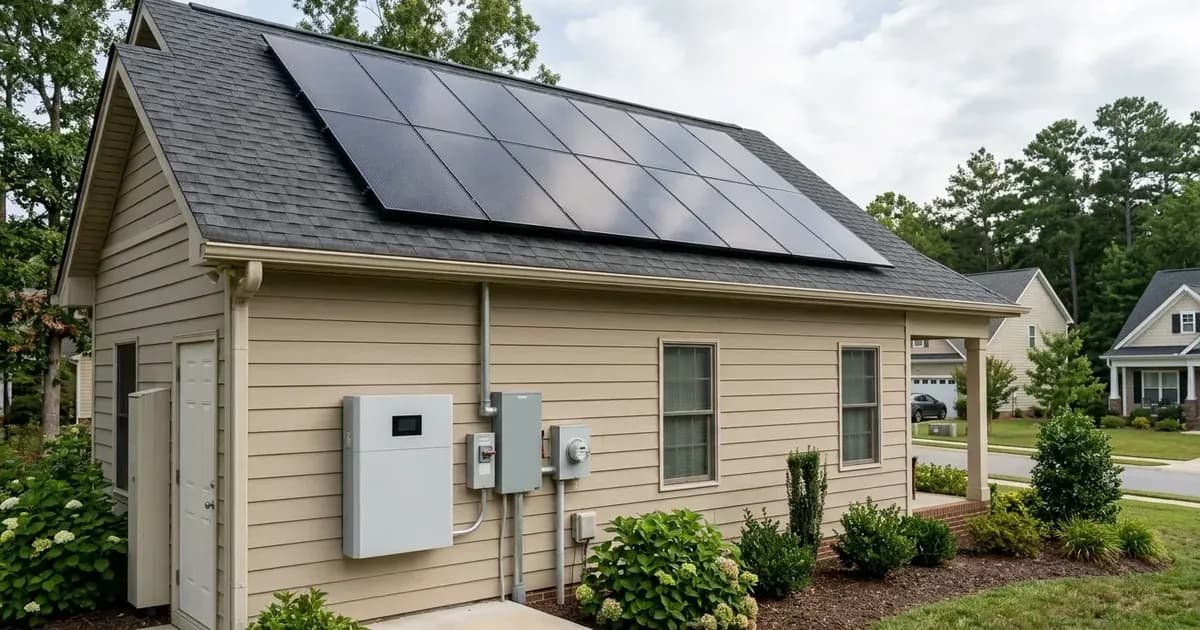
AC Disconnect Switch | Lockable, utility-accessible switch | Located within 10 feet of revenue meter for emergency isolation |
Panel Busbar Sizing | NEC 705.12 120% busbar rule | Prevents combined utility and solar current from exceeding busbar rating |
Rooftop Rapid Shutdown | NEC 690.12 specifications | Module-level de-energisation for emergency responders |
DC Arc-Fault Protection | Certified Type 1 AFCI | Detects and interrupts electrical arcs on PV circuits operating at >= 80V DC |
Utility Grid Energisation | Written Permission to Operate (PTO) | Mandatory utility authorization prior to operating the generation facility |
Inverter Standards
Grid-tied solar inverters must comply with UL 1741-SB and IEEE 1547-2018 anti-islanding parameters. These standards dictate how inverters interact with the grid, particularly ensuring they disconnect safely during power outages to prevent backfeeding the grid when utility workers are present.
Disconnect Switches
A lockable utility-accessible AC disconnect switch is required within 10 feet of the revenue meter. This allows utility personnel to safely de-energize your system from the grid if maintenance or emergency work is needed.
Overcurrent Protection and Panelboard Connection
Dedicated overcurrent protection devices must be sized according to NEC 705.12 120% busbar rules. This rule prevents the total current from utility and solar sources from exceeding the panelboard's rated capacity. Connection of generating sources to panelboards must follow the 120% ampacity calculation in NEC 705.12.
Rapid Shutdown for Rooftop PV
Rooftop PV systems must incorporate rapid shutdown devices complying with NEC 690.12 specifications. This safety feature allows firefighters and emergency responders to quickly de-energize the PV array at the module level, reducing electrical hazards during emergencies.
Grounding and Arc-Fault Protection
Equipment grounding conductors must be bonded directly to the main building service grounding electrode. Proper grounding is critical for electrical safety, providing a path for fault currents. Additionally, photovoltaic systems operating at 80 volts DC or greater require certified Type 1 AFCI protection. Arc-fault circuit interrupters detect dangerous electrical arcs and shut down the circuit to prevent fires.
Permission to Operate (PTO)
A critical step before energizing your solar or energy storage system is obtaining written Permission to Operate (PTO) from your utility. Operating the generating facility prior to receiving written Permission to Operate is strictly prohibited. This ensures that your system has been inspected, meets all local and utility-specific interconnection requirements, and is safe to connect to the grid.
What you can check yourself, and what you cannot
As a homeowner, you can review your system's documentation to ensure it lists compliant equipment (e.g., UL 1741-SB inverters, NEC 690.12 rapid shutdown devices). You can also visually confirm the presence of a utility-accessible AC disconnect switch.
However, sizing overcurrent protection, verifying busbar ampacity calculations, ensuring proper grounding, or confirming AFCI protection are complex tasks that require specialized knowledge and equipment. These are the responsibility of a licensed electrician or certified solar installer. Attempting to modify or inspect these components yourself can be dangerous and may void warranties or violate electrical codes.
What the published sources do not tell you
The provided federal guidelines and general electrical codes do not specify the exact process or timeline for obtaining Permission to Operate (PTO) from your local utility. These details vary significantly by utility and jurisdiction. Similarly, specific local permitting requirements, inspection schedules, and any utility-specific fees or forms are not covered by federal tax credit instructions or national electrical codes. You will need to consult your local utility and municipal building department for these specifics. ---
Frequently asked questions
What are the primary technical requirements for north carolina duke energy net metering bridge rider guide?
Key requirements include compliance with local grid codes, correct equipment certification, and proper electrical isolation.
Who is authorized to install and inspect north carolina duke energy net metering bridge rider guide?
All high-voltage DC, AC grid tie-in, and switchboard modifications must be performed by a qualified, accredited electrical professional.
How is export power limited in north carolina duke energy net metering bridge rider guide?
Export limiting is achieved using certified bidirectional smart meters or power sensors providing dynamic feedback to the inverter system.
References
Related guides
More from schemes, subsidies & financing.