North Carolina Duke Energy Rule 23 Solar Interconnection Guide
Updated 17 September 2026 · By SolarNevs Research Desk, Dealer surveys + verified sources · 1 source · Method ↗
Key Takeaways
- Duke Energy North Carolina Rule 23 governs simplified solar interconnection.
- Inverters must meet UL 1741-SB and IEEE 1547-2018 standards.
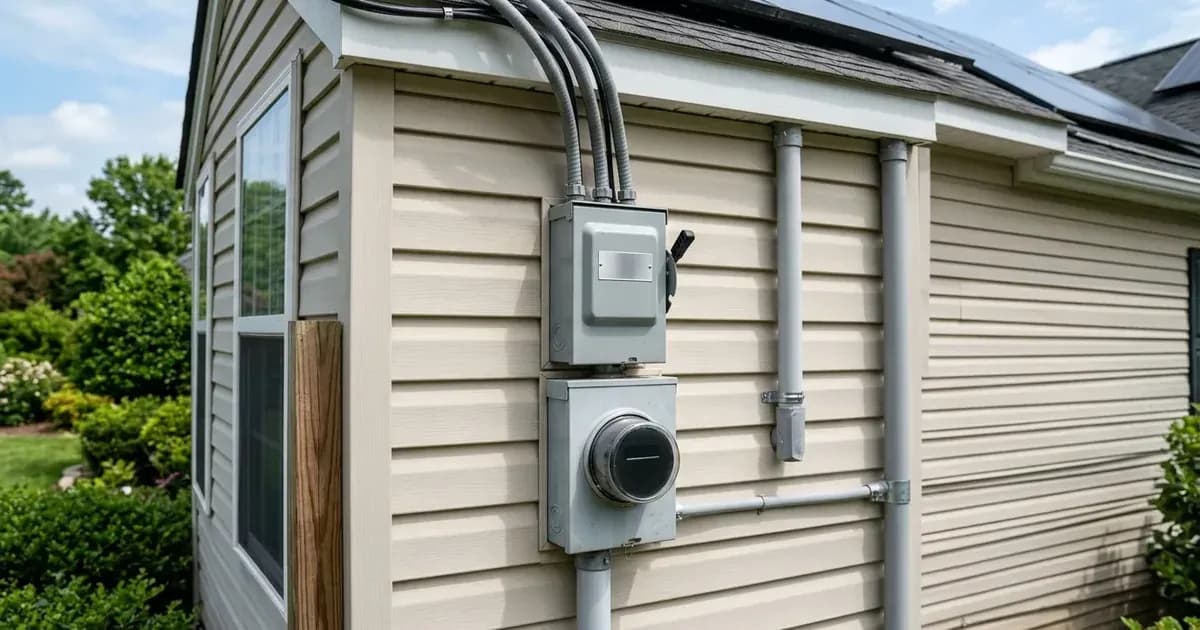
- A lockable, utility-accessible AC disconnect switch is mandatory near the meter.
- Operating your system before written Permission to Operate is strictly prohibited.
Understanding Duke Energy North Carolina Rule 23 for Solar Interconnection
Duke Energy North Carolina's Rule 23 establishes the technical protocol for interconnecting solar generating facilities to the grid. This guide focuses on the simplified interconnection process, particularly for residential systems. Adhering to these rules ensures safe and compliant operation of your solar installation.
The process involves meeting specific equipment standards, safety requirements, and obtaining formal permission before energising your system. These rules are in place to protect both the homeowner and the utility grid.
What is actually going on with solar interconnection?
Connecting a solar photovoltaic (PV) system to the electricity grid requires adherence to specific technical and safety standards. This is to ensure that your system operates harmoniously with the utility's infrastructure, does not pose a hazard to utility workers, and does not negatively impact grid stability. Interconnection rules, like Duke Energy North Carolina's Rule 23, define these requirements.
Key aspects include ensuring that your inverter can safely disconnect from the grid during outages (anti-islanding), that all electrical components are properly protected, and that utility personnel can safely de-energise your system if needed. The utility also needs to verify that your system meets these standards before allowing it to operate and export power.
Key Interconnection Requirements
Meeting specific technical and safety requirements is crucial for interconnecting your solar system with Duke Energy North Carolina. These requirements cover equipment, safety devices, and operational protocols.
Requirement | What it means | What to do |
|---|---|---|
Inverter Compliance | Grid-tied solar inverters must comply with UL 1741-SB and IEEE 1547-2018 anti-islanding parameters. | Ensure your chosen inverter model is certified to these standards. |
AC Disconnect Switch | A lockable utility-accessible AC disconnect switch is required within 10 feet of the revenue meter. | Install a clearly labelled, lockable AC disconnect switch in the specified location. |
Rapid Shutdown | Rooftop PV systems must incorporate rapid shutdown devices complying with NEC 690.12 specifications. | Install certified rapid shutdown equipment for rooftop arrays. |
Overcurrent Protection | Dedicated overcurrent protection devices must be sized according to NEC 705.12 120% busbar rules. | Ensure your electrical design includes correctly sized overcurrent protection. |
Grounding | Equipment grounding conductors must be bonded directly to the main building service grounding electrode. | Verify proper bonding of all grounding conductors to the main service ground. |
AFCI Protection | Photovoltaic systems operating at 80 volts DC or greater require certified Type 1 AFCI protection. | Install appropriate Arc-Fault Circuit Interrupter (AFCI) protection for DC circuits over 80V. |
Permission to Operate (PTO) | Operating the generating facility prior to receiving written Permission to Operate is strictly prohibited. | Do not energise your system until you have received formal written PTO from Duke Energy. |
What you can check yourself, and what you cannot
As a homeowner, you can perform several checks to ensure your solar installation is progressing towards compliance, but certain tasks require an accredited installer or licensed electrician.
What you can check yourself:
- Location of AC Disconnect: Verify that the lockable utility-accessible AC disconnect switch is installed within 10 feet of your revenue meter.
- System Documentation: Ensure you have all necessary documentation, including inverter specifications showing UL 1741-SB and IEEE 1547-2018 compliance, and proof of rapid shutdown device installation.
- Permit Status: Track the status of your interconnection application and building permits with Duke Energy and local authorities.
- Visual Inspection: Check for obvious signs of damage or loose connections, though do not attempt to fix them yourself.
What you cannot check yourself (requires an accredited installer or licensed electrician):
- Electrical Wiring and Sizing: Only qualified professionals can verify that all DC conductors, AC feeders, and auxiliary control cables comply with national electrical codes and that overcurrent protection is correctly sized (e.g., according to NEC 705.12 120% busbar rules).
- Inverter Settings and Anti-Islanding: Inverter settings, particularly those related to grid protection and anti-islanding, are configured by accredited installers. Changing these settings yourself can breach your connection agreement and create safety hazards.
- Bonding and Grounding: Verification that equipment grounding conductors are bonded directly to the main building service grounding electrode requires professional expertise.
- Pre-Commissioning Checks: Insulation resistance testing, polarity verification, and other pre-commissioning checks must be performed by qualified personnel prior to final energisation.
- Energising the System: Never energise your solar system before receiving written Permission to Operate from Duke Energy. This is a critical safety and compliance step.
Federal Tax Credits for Solar and Storage
Residential solar installations may be eligible for federal tax credits. These credits can significantly reduce the overall cost of installing a solar PV system and qualifying energy storage.
Residential solar installations claim a 30% credit against total federal tax liability under Section 25D of the Internal Revenue Code (IRC). This credit applies to qualified residential clean energy expenditures. Expenditures for solar and residential storage qualify for this 30% credit under Section 25D of the IRC. Additionally, qualified energy storage property with a capacity of 3 kilowatt-hours or greater also qualifies for these federal credits.
It is important to consult with a tax professional for advice specific to your financial situation, as this information is general and not tax advice.
What the published sources do not tell you
While Duke Energy North Carolina's Rule 23 official documentation provides essential technical requirements, it does not detail site-specific engineering drawings or local utility connection capacity limits. These are determined on a case-by-case basis during the application process. official documentation also does not provide specific wiring diagrams or detailed installation instructions, which are typically found in equipment manuals and national electrical codes. The exact timeline for receiving Permission to Operate (PTO) can vary and is not specified, as it depends on application volume and inspection schedules.
Frequently asked questions
What are the primary technical requirements for north carolina duke energy rule 23 solar interconnection guide?
Key requirements include compliance with local grid codes, correct equipment certification, and proper electrical isolation.
Who is authorized to install and inspect north carolina duke energy rule 23 solar interconnection guide?
All high-voltage DC, AC grid tie-in, and switchboard modifications must be performed by a qualified, accredited electrical professional.
How is export power limited in north carolina duke energy rule 23 solar interconnection guide?
Export limiting is achieved using certified bidirectional smart meters or power sensors providing dynamic feedback to the inverter system.
References
Related guides
More from schemes, subsidies & financing.