Pnm And El Paso Electric New Mexico Solar Interconnection Guide
Updated 17 September 2026 · By SolarNevs Research Desk, Dealer surveys + verified sources · 1 source · Method ↗
Key Takeaways
- Solar installations up to 10kW in New Mexico qualify for a Simplified Level 1 review process with PNM and El Paso Electric.
- A certified bidirectional smart revenue meter is installed by the utility to track both imported and exported power.
- Formal written Permission to Operate (PTO) from the utility is mandatory before energising your grid-tied solar system.
- All grid-tied inverters must be certified to UL 1741-SB standards and incorporate anti-islanding protection.
Navigating Solar Interconnection in New Mexico for PNM and El Paso Electric
Connecting a solar energy system to the grid in New Mexico, specifically within the service territories of PNM and El Paso Electric, involves adhering to specific utility interconnection standards. These standards are primarily governed by the New Mexico Public Regulation Commission (NMPRC) Rule 17.9.568. This guide outlines the key requirements and processes for homeowners seeking to interconnect their solar installations.
Understanding the Interconnection Process
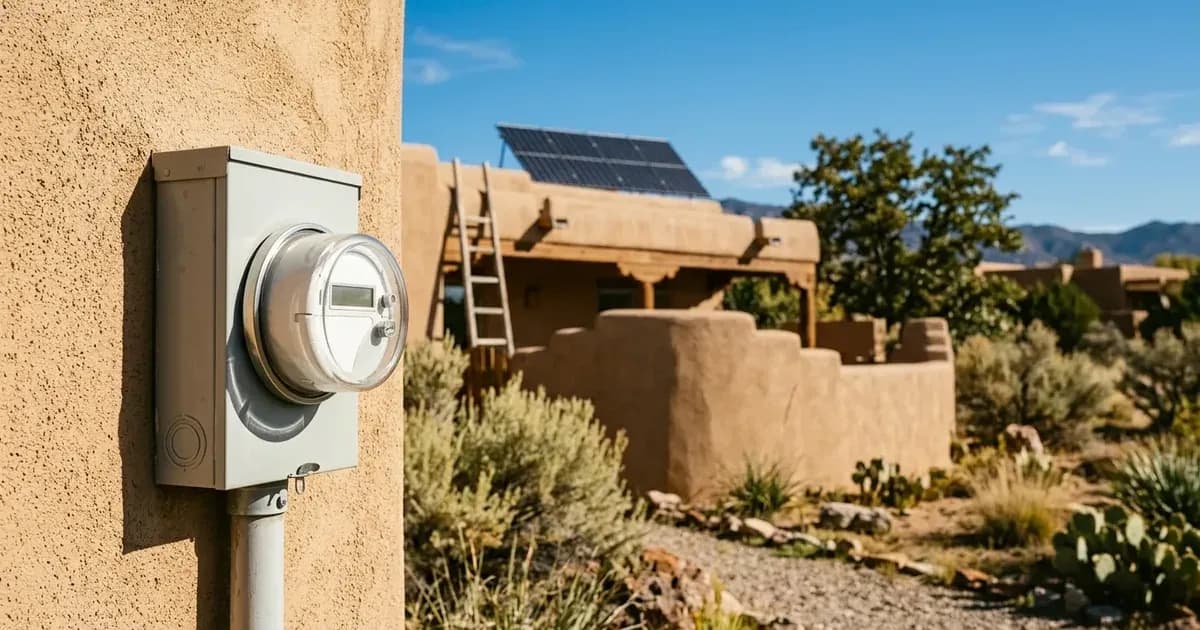
The interconnection process ensures that your solar system can safely and reliably operate in parallel with the utility grid. For most residential solar installations, a simplified review process is available. This streamlined approach applies to certified inverter-based systems up to 10kW in aggregate capacity. The utility will install a certified bidirectional smart revenue meter to record both the electricity you draw from the grid and the excess electricity your system exports.
Key technical requirements include using inverters certified to UL 1741-SB standards, which support autonomous voltage and frequency regulation. Rooftop PV systems must also incorporate rapid shutdown initiation, complying with standard safety distances. Grid-tied inverters are required to automatically isolate within milliseconds during distribution grid outages, a safety feature known as anti-islanding protection. Before your system can be energised, you must obtain formal written Permission to Operate (PTO) from PNM or El Paso Electric.
Key Interconnection Requirements
Requirement | Description | What to do |
|---|---|---|
Simplified Interconnection Screening | Applies to certified inverter-based systems up to 10kW in aggregate capacity. | Ensure your system design is within the 10kW limit for a streamlined review. |
Certified Bidirectional Smart Revenue Meter | The utility installs a certified bidirectional smart revenue meter to record import and export power flows. | Cooperate with the utility for meter installation; this meter is essential for billing. |
Lockable Exterior AC Disconnect Switch | Tier 2 and larger installations require an exterior, lockable, visible-break manual disconnect switch adjacent to the meter. | Consult your installer to ensure the correct disconnect switch is installed and accessible. |
Smart Inverter UL 1741-SB Grid Standard | Inverters must be certified to UL 1741-SB standards supporting autonomous voltage and frequency regulation. | Verify your chosen inverter model meets this certification with your installer. |
Rapid Shutdown Safety Compliance | Rooftop PV systems must incorporate rapid shutdown initiation complying with standard safety distances. | Ensure your system design includes rapid shutdown features for firefighter safety. |
Anti-Islanding Inverter Protection | Grid-tied inverters must automatically isolate within milliseconds during distribution grid outages. | This is a built-in safety feature of compliant inverters; confirm its presence. |
Safe Working Earthing and Bonding | Verify earth continuity and bond all solar array frames to the main electrical installation earthing terminal. | Your installer is responsible for ensuring proper earthing and bonding for safety. |
Local Electrical Permitting and Inspection | Final electrical inspection and AHJ sign-off are required prior to submission of the formal PTO request. | Obtain all necessary local permits and pass final inspections before applying for PTO. |
Permission to Operate (PTO) Issuance | Customer generation must receive formal written Permission to Operate from PNM or EPE prior to grid energisation. | Do not energise your system until you have received the official PTO letter. |
What You Can Check Yourself, and What You Cannot
As a homeowner, you have a role in understanding the interconnection process, but certain tasks require certified professionals.
What you can check yourself:
- Permit Status: Verify that your installer has secured all necessary local electrical permits and that final inspections have been scheduled and passed by the Authority Having Jurisdiction (AHJ).
- PTO Application: Confirm with your installer that the formal Permission to Operate (PTO) request has been submitted to PNM or El Paso Electric after all inspections are complete.
- System Energisation: Ensure that your system is not energised until you have received the formal written PTO from the utility. Energising a system without PTO can lead to penalties and safety hazards.
- Meter Installation: Be aware that the utility will install a certified bidirectional smart revenue meter. You can confirm its presence and functionality once installed.
What you cannot (and should not) do yourself:
- Inverter Certification: You cannot certify an inverter to UL 1741-SB standards. This is a manufacturer responsibility, and your installer must select compliant equipment.
- Rapid Shutdown Installation: The installation and verification of rapid shutdown initiation systems require specialised knowledge and must be performed by your accredited installer.
- Earthing and Bonding: Ensuring earth continuity and bonding all solar array frames to the main electrical installation earthing terminal is a critical safety task for your licensed electrician or installer.
- Disconnect Switch Installation: The installation of the exterior, lockable, visible-break manual disconnect switch is an installer's task, ensuring it meets utility specifications.
- Grid Interconnection Wiring: Any work involving connecting your system to the utility grid, including the meter base or utility service entrance, must be performed by qualified and licensed professionals.
What the Published Sources Do Not Tell You
While the NMPRC Rule 17.9.568 and IRS instructions provide a framework, specific details and timelines can vary. The provided source, primarily focused on federal tax credit instructions, does not detail the exact application forms, fees, or typical processing times for interconnection requests with PNM or El Paso Electric. These operational specifics are often found on the individual utility's website or in their dedicated interconnection handbooks, which may be subject to change.
Additionally, while the federal 30% Section 25D tax credit is clearly defined, the precise calculation of your eligible expenses and how to apply it to your individual tax situation is general information. For specific tax advice, you should consult a qualified tax professional. official documentation also notes that in PNM service territory, residential installations up to 10kW require a standard Certificate of Completion before the meter swap, a detail not explicitly covered in the general rule descriptions.
Frequently asked questions
What are the primary technical requirements for pnm and el paso electric new mexico solar interconnection guide?
Key requirements include compliance with local grid codes, correct equipment certification, and proper electrical isolation.
Who is authorized to install and inspect pnm and el paso electric new mexico solar interconnection guide?
All high-voltage DC, AC grid tie-in, and switchboard modifications must be performed by a qualified, accredited electrical professional.
How is export power limited in pnm and el paso electric new mexico solar interconnection guide?
Export limiting is achieved using certified bidirectional smart meters or power sensors providing dynamic feedback to the inverter system.
References
Related guides
More from schemes, subsidies & financing.