TVA Dispersed Power Production and Solar Interconnection Guide
Updated 18 September 2026 · By SolarNevs Research Desk, Dealer surveys + verified sources · 1 source · Method ↗
Key Takeaways
- The TVA Dispersed Power Production (DPP) program serves customers of 153 Local Power Companies (LPCs) across seven states.
- Compensation for exported solar power is based on wholesale avoided-cost rates, typically 2.0 to 2.5 cents per kWh (August 2026).
- DPP contracts are for standard multi-year terms, such as 5 years.
- All inverters must be certified to IEEE 1547 and UL 1741 standards for interconnection.
What is the TVA Dispersed Power Production Program?
The Tennessee Valley Authority (TVA) Dispersed Power Production (DPP) program allows customers of 153 Local Power Companies (LPCs) across Tennessee and parts of MS, AL, KY, GA, NC, and VA to sell electricity to TVA. This program facilitates the interconnection of qualifying renewable generation facilities with the grid. It operates as an avoided-cost purchase program. It is not traditional retail 1-to-1 net metering.
Compensation for exported power is paid at TVA's monthly published avoided-cost rate. This rate reflects the wholesale generation value. It typically fluctuates between 2.0 to 2.5 cents per kWh (August 2026). DPP power sales contracts are established for standard multi-year terms, such as 5 years.
How does TVA DPP meter solar generation?
The TVA DPP program offers two primary metering configurations for solar generation. Your choice impacts how your on-site power is managed and compensated.
Sell-All Configuration
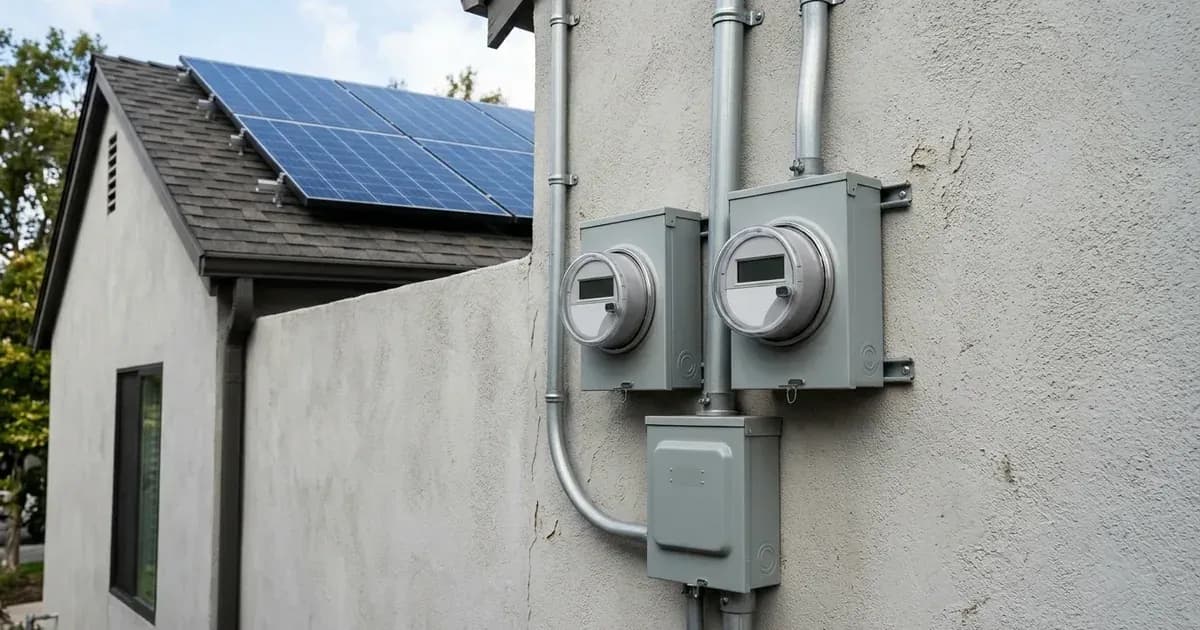
In the Sell-All Configuration, all on-site solar generation is exported directly to TVA. This setup requires two separate meters. One meter measures the retail power imported from your Local Power Company (LPC). A dedicated generation meter measures the solar output sold to TVA. This configuration maximizes the sale of all generated solar power.
Excess-Generation (Self-Supply) Configuration
The Excess-Generation (Self-Supply) Configuration prioritizes on-site consumption. Solar energy serves your facility loads first. Only surplus generation is exported to the grid. This setup requires a dual-channel bidirectional smart meter. This meter tracks both imported retail power and exported surplus solar power.
What are the interconnection requirements for TVA DPP?
Interconnecting with the TVA DPP program involves specific technical and contractual requirements. These ensure grid stability and safety.
Local Power Company (LPC) Interconnection Agreement
Before parallel operation, the generator must execute an Interconnection Agreement (IA) with the Local Power Company (LPC). This agreement outlines the terms and conditions for connecting your solar system to the local distribution grid.
Inverter Safety and Interconnection Certifications
All inverters used in the DPP program must meet stringent safety and interconnection standards. Inverters must be fully certified to IEEE 1547 interconnection standards. They must also meet UL 1741 safety standards. These certifications confirm the inverter's ability to operate safely and reliably with the grid.
Lockable Manual Disconnect Switch
A lockable, utility-accessible external manual disconnect switch is required. This switch must be located between the inverter and the point of common coupling. It allows utility personnel to safely isolate your solar system from the grid when necessary.
Anti-Islanding Protection
Generators must prevent backfeeding into de-energized distribution circuits. This is known as anti-islanding protection. This safety feature ensures that your solar system does not energize a grid section that utility workers believe to be de-energized.
How does TVA DPP compensation differ from net metering?
The TVA DPP program operates distinctly from traditional retail net metering. Understanding this difference is crucial for participants.
DPP operates as an avoided-cost purchase program. This means compensation is based on the wholesale value of electricity TVA avoids generating or purchasing from other sources. This is typically a lower rate than the retail rate you pay for electricity. As noted, compensation typically fluctuates between 2.0 to 2.5 cents per kWh (August 2026).
This contrasts with traditional retail 1-to-1 net metering. Under net metering, you typically receive a credit on your bill for exported electricity at the same retail rate you pay for imported electricity. The DPP program does not offer this 1-to-1 retail credit. Your exported solar power is sold at a wholesale rate, while you purchase power from your LPC at retail rates.
If you are evaluating other regional programs, you may find different compensation structures. For example, you can review guides on programs like the North Carolina NCUC Net Metering Bridge Rate, the Georgia PSC Solar Interconnection and Monthly Netting Guide, or the Virginia SCC Net Metering Rules.
How do you get approval for TVA DPP?
Participating in the TVA DPP program requires a multi-step approval process. You must secure approval from two entities.
Participants must secure approval from both the Local Power Company (LPC) and TVA. This dual approval process means you will interact with your local utility for interconnection and with TVA for the power purchase agreement. The LPC handles the technical aspects of connecting to the local grid. TVA manages the commercial terms for purchasing your generated electricity.
We have not verified the typical timelines or specific application forms for these approvals. You should contact your specific Local Power Company and TVA directly for detailed application procedures and current requirements.
How we verified TVA DPP information
We compiled this guide based on information published by the Tennessee Valley Authority (TVA) regarding its Dispersed Power Production (DPP) program. We checked the TVA Dispersed Power Production program documentation on 23 August 2026. This information is publicly available on the TVA website.
The details regarding LPC coverage, avoided-cost rates, metering schemes, contract terms, and interconnection requirements were sourced directly from TVA's official program overview. We focused on the regulatory provisions and requirements as outlined by TVA.
We note that specific implementation details, such as application forms or local fees, may vary by individual Local Power Company (LPC). You should consult your specific LPC for local requirements.
Frequently asked questions
What is the TVA Dispersed Power Production (DPP) program?
The DPP program allows customers of 153 Local Power Companies (LPCs) across the TVA service territory to sell electricity to TVA. It is an avoided-cost purchase program, not traditional retail 1-to-1 net metering (August 2026).
How is solar power compensated under TVA DPP?
Compensation is paid at TVA's monthly published avoided-cost rate, which typically fluctuates between 2.0 to 2.5 cents per kWh (August 2026). This is a wholesale generation value, not a retail rate.
What are the metering options for TVA DPP participants?
You can choose between a Sell-All Configuration, requiring two separate meters for retail import and solar export, or an Excess-Generation (Self-Supply) Configuration, which uses a dual-channel bidirectional smart meter (August 2026).
What inverter certifications are required for TVA DPP interconnection?
Inverters must be fully certified to IEEE 1547 interconnection standards and UL 1741 safety standards to qualify for the TVA DPP program (August 2026).
What is the typical contract term for TVA DPP power sales?
DPP power sales contracts are established for standard multi-year terms, such as 5 years (August 2026), providing a defined period for electricity sales to TVA.
References
- TVA Dispersed Power Production Program — accessed 23 August 2026
Related guides
More from schemes, subsidies & financing.