Best Solar Batteries Australia: 2026 Buyers Guide & Brand Comparison
Updated 19 September 2026 · By SolarNevs Research Desk, Dealer surveys + verified sources · 2 sources · Method ↗
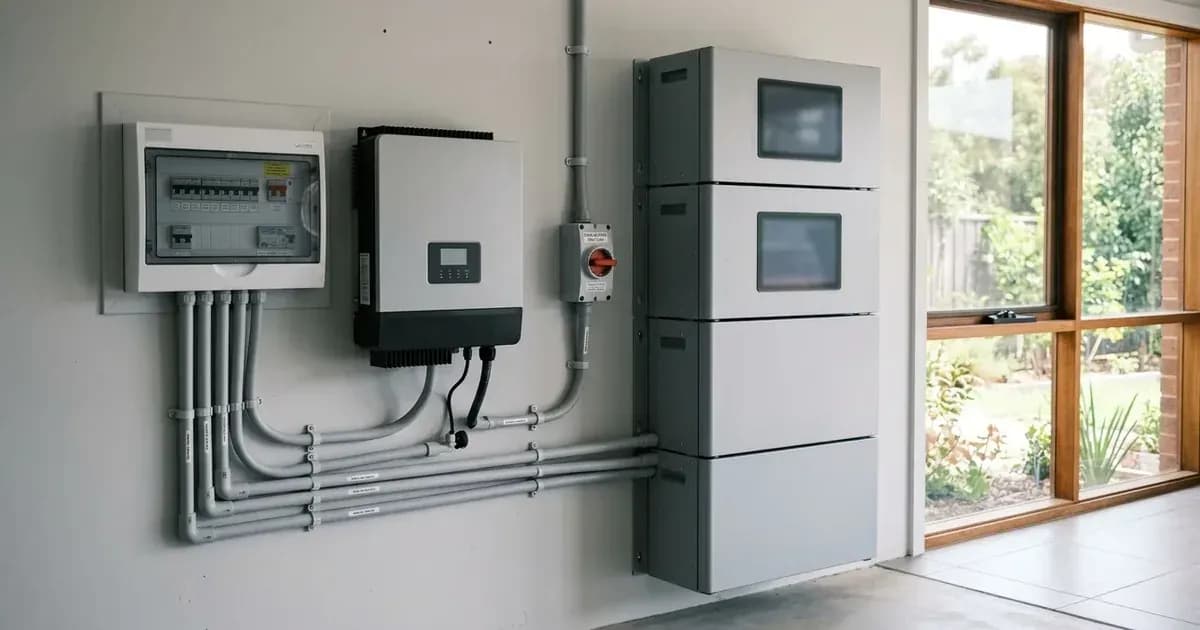
Australia's home energy storage market has matured rapidly into a competitive ecosystem of global technology manufacturers. With electricity prices remaining elevated and solar feed-in tariffs falling below retail replacement value, pairing rooftop solar with a reliable battery has become a primary objective for energy-conscious Australian households.
To navigate the expanding range of available products, in 2017 we launched this solar choice battery price index which is updated every 3 months. Based on real-world quotation data across hundreds of accredited installers, tesla alpha ess and sigenergy are among the most popular brands on the market, joined by established specialists like BYD and Enphase.
2026 National Market Price Benchmarks
Evaluating battery proposals begins with understanding national pricing standards. Verified market benchmarks from the average installed solar battery prices - august 2026 survey establish clear cost guidelines across domestic capacity tiers:
Battery Capacity Tier | Battery-Only (Hybrid Setup) | Installed Cost / kWh | AC-Coupled (Additional Inverter) | AC-Coupled Cost / kWh |
|---|---|---|---|---|
10 kWh | $7,784 | $778/kWh | $8,284 | $828/kWh |
20 kWh | $14,972 | $749/kWh | $15,772 | $789/kWh |
Crucially, the net effect of this is that the installed cost per kwh that a customer pays remains fairly flat through to 50kwh. For a 10kWh installation, verified data confirms 10 kwh $7784 $778 $8284 $828, while double-capacity systems reflect 20 kwh $14972 $749 $15772 $789. These figures factor in installation labour, balance-of-system hardware, and the **federal battery rebate was introduced which offers a discount of around 30% for a typical 10kwh battery**.
Top Solar Battery Brands in Australia Compared
The table below provides a comprehensive comparison of leading residential energy storage brands sold and supported in Australia:
Manufacturer & Model | Cell Chemistry | Usable Storage Capacity | Indicative Installed Cost / kWh | Warranty Duration | Country of Origin | Key Differentiator |
|---|---|---|---|---|---|---|
Tesla Powerwall 3 | NMC | 13.5 kWh | tesla nmc 13.5 kwh $1129 10 years usa | 10 Years | USA | Integrated high-capacity solar inverter, sleek all-in-one aesthetic, proven app ecosystem. |
Alpha ESS SMILE-G3 | LiFePO4 (LFP) | 10.1 kWh | alpha ess lifepo4 10.1 kwh $1025 10 years china | 10 Years | China | Modular stackable design, built-in hybrid transfer switch, budget-friendly entry price. |
Sigenergy SigenStor | LiFePO4 (LFP) | 16.0 kWh | sigenergy lifepo4 16 kwh $999 10 years china | 10 Years | China | 5-in-1 AI architecture, integrated bi-directional DC EV charger, 20ms UPS switchover. |
Enphase IQ Battery 5P | LiFePO4 (LFP) | 10.0 kWh | enphase lifepo4 10 kwh $1497 15 years usa | 15 Years | USA | Distributed microinverter architecture, zero high-voltage DC hazards, industry-leading 15-year warranty. |
BYD Battery-Box HVS/HVM | LiFePO4 (LFP) | 13.8 kWh | byd lifepo4 13.8 kwh $1002 10 years china | 10 Years | China | Automotive-grade LFP cells, open compatibility with Fronius, SMA, and Sungrow inverters. |
```
[Brand Comparison Architecture]
├── All-in-One Enclosures --> Tesla Powerwall (NMC) | Sigenergy SigenStor (LFP)
├── Modular High-Voltage --> BYD Battery-Box (LFP) | Alpha ESS (LFP)
└── Distributed Micro-AC --> Enphase IQ Battery 5P (LFP)
```
Key Technical Evaluation Criteria
When selecting the best battery system for your property, evaluate these essential technical parameters:
1. Cell Chemistry and Fire Safety
Residential battery systems primarily utilise two lithium formulations:
- Lithium Iron Phosphate (LiFePO4): Regarded as the safest residential formulation, especially lithium iron phosphate (lifepo4) batteries which are known for high thermal stability. LFP chemistry operates with higher thermal runaway thresholds and does not release oxygen if punctured.
- Nickel Manganese Cobalt (NMC): Delivers higher energy density, enabling compact single-chassis designs like Tesla, but relies on sophisticated liquid thermal cooling loops to maintain safe cell temperatures.
Across both chemistries, most home solar batteries last between 10 and 15 years, provided the units are installed out of direct Australian summer sunlight.
2. Blackout Protection and Switchover Speed
Not all solar batteries provide power during a grid outage. Emergency backup functionality requires either an internal transfer switch or an external gateway device:
- Tesla Powerwall 2 & 3: Requires the Tesla Backup Gateway device; provides full-home backup with sub-1 second switchover.
- Sigenergy SigenStor: Employs the Sigen Energy Gateway, delivering hospital-grade UPS backup in under 20 milliseconds.
- BYD Battery-Box: Relies on the paired hybrid inverter (e.g. Fronius GEN24 or Sungrow SH) to handle automatic islanding and backup sub-board supply.
3. Warranty Structure: Calendar Years vs Energy Throughput
A 10-year warranty is standard across the Australian market, but the fine print matters. Review the manufacturer's throughput guarantee:
- Throughput Limit: The total amount of energy (in megawatt-hours) the manufacturer warrants the battery to discharge over its lifetime.
- End-of-Warranty Retention: Top-tier systems guarantee that at least 60% to 70% of original usable capacity remains at the conclusion of the 10-year term.
Regulatory Standards and Rebate Rules
All residential battery systems installed in Australia must satisfy Clean Energy Regulator compliance guidelines:
- Safety Standards: Systems must be fully **compliant with Australian and New Zealand standards (AS/NZS 5139:2019)** regarding clearance from windows, doors, and boundary walls.
- Nominal Capacity Window: Eligible systems must provide between 5–100 kWh nominal capacity.
- STC Rebate Cap: Under federal rules, STCs can only be claimed for the first 50 kWh of a solar battery’s usable capacity.
For detailed financial calculations on capital recovery, read our in-depth analysis on Solar Battery Payback and Economics in Australia and review our Solar Battery Sizing Guide Australia.
References
- Solar Choice - Solar Battery Storage System Cost — accessed 16 September 2026
- Clean Energy Regulator - Rooftop Solar Systems — accessed 16 September 2026
Related guides
More from what to buy — and how not to get cheated.