Solar Battery Sizing Guide Australia: How Much Storage Do You Need?
Updated 19 September 2026 · By SolarNevs Research Desk, Dealer surveys + verified sources · 2 sources · Method ↗
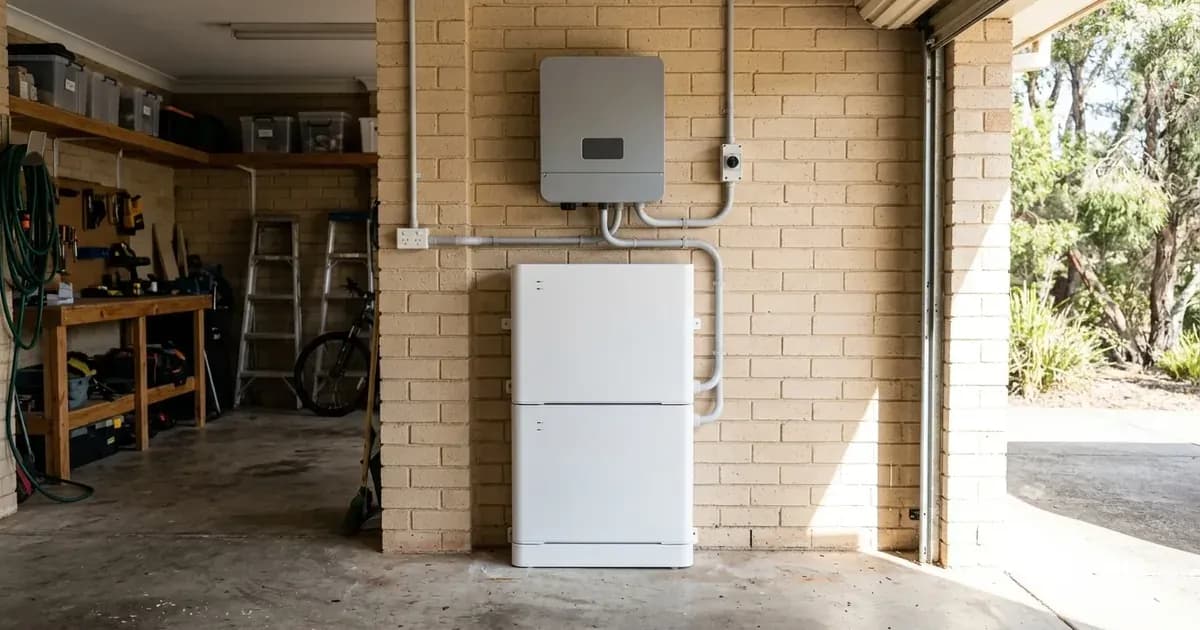
Residential energy storage has transitioned from an experimental technology into an essential pillar of Australian home electrification. National adoption data reveals that by february 2026 approximately 454753 home battery systems were installed in australia, accelerated by a record-breaking deployment including 183245 units installed in the second half of 2025.
Falling battery hardware prices, high grid power prices, and declining solar feed-in tariffs have transformed home energy storage economics. However, sizing a battery incorrectly can either result in thousands of dollars in wasted capital or leave your home dependent on peak-rate grid electricity every evening.
Household Sizing Methodology: Sizing to Load
The fundamental principle of battery sizing is matching storage capacity to your evening, overnight, and early morning consumption—not sizing to your daytime generation. Stored solar energy should be dispatched during expensive peak tariff windows (typically 4:00 PM to 9:00 PM) and through the overnight baseload period until the sun begins recharging the cells the following morning.
Industry benchmarks define three distinct residential sizing categories based on occupancy and daily consumption:
```
[Daily Energy Consumption & Sizing Tiers]
├── 1-2 People (10-15 kWh/day) --> 5-7 kWh Battery Storage
├── 3-4 People (15-25 kWh/day) --> 8-13 kWh Battery Storage
└── 5+ People (25+ kWh/day) --> 13-18+ kWh Battery Storage
```
The verified household sizing brackets are detailed below:
Household Size | Daily Household Electricity Use | Recommended Battery Usable Capacity | Sizing & Operational Rationale |
|---|---|---|---|
1–2 People | 10–15 kWh daily | 1-2 people 10-15 kwh 5-7 kwh | Covers lighting, refrigeration, entertainment, and evening cooking without excess idle capacity. |
3–4 People | 15–25 kWh daily | 3-4 people 15-25 kwh 8-13 kwh | Offsets evening reverse-cycle climate control, dishwasher, laundry, and family entertainment loads. |
5+ People | 25+ kWh daily | 5+ people 25+ kwh 13-18+ kwh | Accommodates multi-zone ducted air conditioning, electric vehicle charging, and pool filtration pumps. |
As a general economic threshold, if you use more than 15 kwh of electricity per day and your solar feed-in tariff is under 8 cents per kwh, installing a home battery provides substantial electricity bill savings.
Comparing Leading Australian Battery Brands
When selecting storage hardware, Australian homeowners can choose from several mature, Tier-1 manufacturers offering distinct chemistries, capacities, and warranty terms:
Manufacturer & Brand | Cell Chemistry | Usable Storage Capacity | Installed Cost per kWh | Product & Throughput Warranty | Manufacturing Origin |
|---|---|---|---|---|---|
Tesla Powerwall | NMC | 13.5 kWh | tesla nmc 13.5 kwh $1129 10 years usa | 10 Years | USA |
Alpha ESS | LiFePO4 (LFP) | 10.1 kWh | alpha ess lifepo4 10.1 kwh $1025 10 years china | 10 Years | China |
Sigenergy SigenStor | LiFePO4 (LFP) | 16.0 kWh | sigenergy lifepo4 16 kwh $999 10 years china | 10 Years | China |
Enphase IQ Battery | LiFePO4 (LFP) | 10.0 kWh | enphase lifepo4 10 kwh $1497 15 years usa | 15 Years | USA |
BYD Battery-Box | LiFePO4 (LFP) | 13.8 kWh | byd lifepo4 13.8 kwh $1002 10 years china | 10 Years | China |
Among these systems, tesla alpha ess and sigenergy are among the most popular brands on the market, offering modular stacking capabilities and seamless integration with hybrid or AC-coupled inverters.
Cell Chemistry: LFP vs NMC
Battery chemistry directly influences safety, thermal performance, and longevity in Australia's harsh climate:
- Lithium Iron Phosphate (LiFePO4): Chemistry of choice for residential systems, especially lithium iron phosphate (lifepo4) batteries which are known for high thermal stability. LFP cells do not release oxygen during thermal events, significantly reducing thermal runaway risks.
- Nickel Manganese Cobalt (NMC): Delivers higher volumetric energy density, allowing compact units like the Tesla Powerwall, but requires sophisticated liquid thermal management systems.
Across all leading chemistries, most home solar batteries last between 10 and 15 years, provided the system is operated within recommended ambient temperature ranges and depth-of-discharge boundaries.
AC-Coupled vs DC-Coupled System Architecture
A common dilemma for homeowners with existing solar is whether their switchboard requires a complete inverter replacement:
- AC-Coupled Retrofits: yes most ac-coupled batteries are compatible with existing solar panel systems. AC batteries incorporate an internal inverter/charger, connecting straight to your AC switchboard without touching your existing solar string inverter.
- DC-Coupled Hybrid Systems: Connect directly to a hybrid solar inverter on the DC bus. While requiring a hybrid inverter, DC systems offer 2% to 4% higher round-trip efficiency by avoiding double AC-DC power conversions.
Regulatory Standards and Federal Incentive Rules
To safeguard consumer safety and maintain grid integrity, residential battery storage in Australia is governed by strict statutory requirements under the Clean Energy Regulator:
- AS/NZS 5139 Compliance: All residential energy storage systems must be fully compliant with Australian and New Zealand standards (AS/NZS 5139:2019). This standard establishes strict clearances from habitable rooms, requires non-combustible backing barriers, and governs garage wall bollard impact protections.
- SRES Rebate Eligibility: Under federal guidelines, qualifying storage systems must sit between 5–100 kWh nominal capacity.
- STC Usable Capacity Cap: While large residential banks can be installed, **STCs can only be claimed for the first 50 kWh of a solar battery’s usable capacity.**
For a comprehensive evaluation of financial returns, explore our detailed analysis of Solar Battery Payback and Economics in Australia and compare options in our 5kWh vs 10kWh vs 13.5kWh Battery Comparison.
References
- Solar Choice - Battery Storage Sizing — accessed 16 September 2026
- Clean Energy Regulator - Rooftop Solar Systems — accessed 16 September 2026
Related guides
More from what to buy — and how not to get cheated.