AS/NZS 5139 Battery Location and Clearance Rules in Australia
Updated 16 September 2026 · By SolarNevs Research Desk, Dealer surveys + verified sources · 1 source · Method ↗
Key Takeaways
- AS/NZS 5139:2019 Amendment 1 became mandatory on 19 December 2025, updating battery installation rules in Australia.
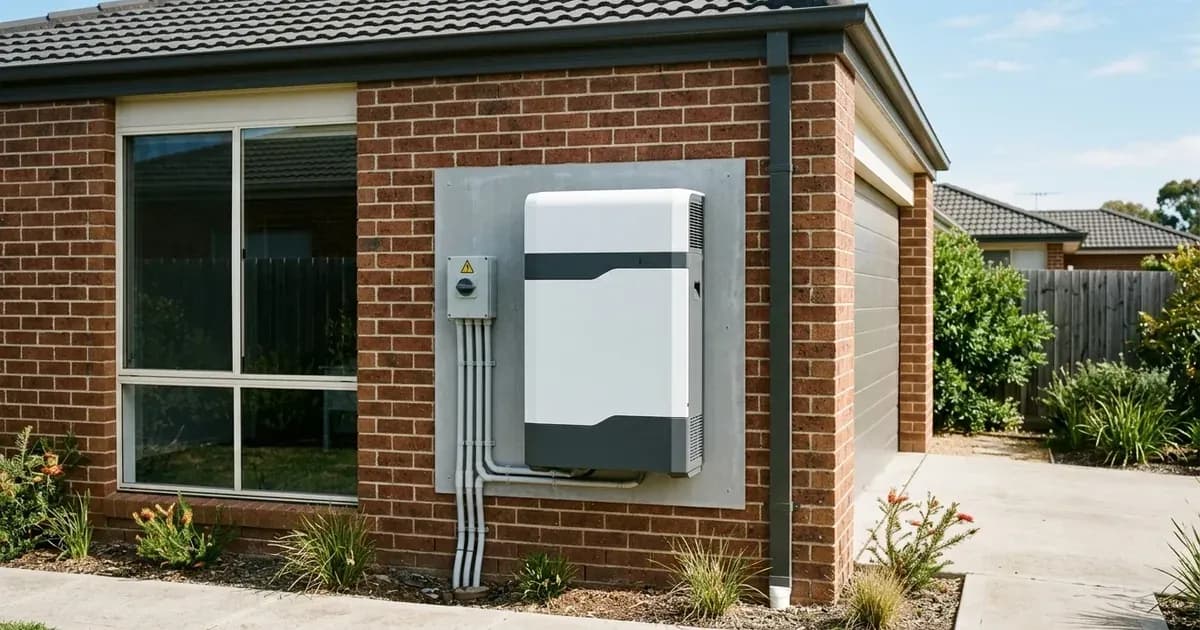
- Battery systems can now be installed closer to large openings like garage doors under specific conditions.
- Fire barriers for habitable rooms must have a minimum thickness of 6mm if exempt materials are used.
- Compliance with AS/NZS 5139 is the responsibility of a registered installer, ensuring safe and legal battery energy storage system installations.
What is AS/NZS 5139 Amendment 1 and why is it important for Australian battery installations?
AS/NZS 5139:2019, with its Amendment 1, is the governing standard for battery energy storage system installations in Australia and New Zealand. This amendment introduces crucial updates to ensure the safety and compliance of home battery systems. It became mandatory on 19 December 2025, meaning all new installations must adhere to its revised requirements.
Understanding the purpose of AS/NZS 5139
The AS/NZS 5139 standard exists to provide a framework for the safe installation of battery energy storage systems (BESS). It addresses potential hazards such as fire, electric shock, and chemical exposure, setting out requirements for location, clearances, protection, and documentation. The standard aims to protect occupants, property, and emergency services by ensuring that BESS installations are robust and mitigate risks effectively. Amendment 1 refines these requirements based on evolving technology and installation practices.
Key changes introduced by AS/NZS 5139:2019 Amendment 1
Amendment 1 to AS/NZS 5139:2019 brings several important updates that impact how battery energy storage systems are installed in Australia. These changes clarify existing rules and introduce new provisions to enhance safety and flexibility.
Feature | Detail | Condition |
|---|---|---|
Standard Version | AS/NZS 5139:2019 Amendment 1 | Mandatory from 19 December 2025 |
Opening Clearance Exception | Battery systems may be installed within 600mm of an opening | Provided the opening is wider than 900mm, such as a garage door |
Fire Barrier Material Thickness | Exempt materials must have a minimum thickness of 6mm | When used as a barrier to habitable rooms |
Inverters in Restricted Locations | Inverters are considered associated appliances and allowed within restricted locations | No specific condition; a general clarification |
SDS Requirements | A physical copy of the SDS must be provided and protected from damage or degradation | For example, stored in a sealed, durable clear pouch |
New Appendix | Appendix I has been introduced | Explains how to calculate cell short-circuit current |
These updates mean that installers must be aware of the revised clearances for openings, the specific material thickness for fire barriers, and the acceptable placement of inverters. Additionally, the requirement for a protected physical Safety Data Sheet (SDS) ensures critical safety information is always accessible.
What you can change yourself, and what you cannot
The AS/NZS 5139 standard primarily governs the installation process of battery energy storage systems, which is work that must be carried out by a registered and qualified installer. As a homeowner, you cannot change the physical location or clearances of an installed battery system, nor can you modify the fire barriers or electrical protections. Such alterations require professional assessment and compliance with the standard.
However, you are responsible for maintaining the integrity of the installation environment. This includes ensuring that the physical copy of the Safety Data Sheet (SDS) remains protected from damage or degradation, for example, by keeping it in a sealed, durable clear pouch. Any work involving the battery system itself, including its electrical connections or internal components, must be performed by a registered person to maintain safety and compliance.
What the published sources do not tell you
While the NSW Government's summary provides a clear overview of the key changes in AS/NZS 5139:2019 Amendment 1, it does not detail every specific aspect of the updated standard. For instance, the exact content of the "new requirements" for building materials within 1 metre of a battery system classified as a chemical hazard is not provided. Similarly, the specific clarifications regarding windows and ventilation in restricted locations are not detailed in the summary.
The full list of updated clauses and their specific changes, beyond the highlighted features, is also not available in this source. The exact content of the revised installation diagrams (Figures 2.11, 2.12, 4.1A, 4.1B, 4.1C, 4.1D, 4.2A) and the full explanation within the new Appendix I on calculating cell short-circuit current are not included. For comprehensive understanding and full compliance, installers must consult the complete AS/NZS 5139:2019 standard with Amendment 1.
```
Frequently asked questions
What is AS/NZS 5139:2019 Amendment 1?
AS/NZS 5139:2019 Amendment 1 is an update to the standard governing battery energy storage system installations in Australia and New Zealand. It introduces new requirements for safety and compliance.
When did AS/NZS 5139 Amendment 1 become mandatory?
Amendment 1 to AS/NZS 5139:2019 was published on 19 December 2025 and became mandatory on that date. All new battery energy storage system installations must comply with these updated rules.
Can a battery system be installed near a garage door under AS/NZS 5139?
Yes, battery systems may now be installed within 600mm of an opening, provided the opening is wider than 900mm. This exception applies to large openings such as a garage door.
What are the fire barrier requirements for batteries near habitable rooms?
If exempt materials are used as a barrier to habitable rooms, they must now have a minimum thickness of 6mm. This ensures adequate protection in residential settings.
Are inverters allowed in restricted battery locations under AS/NZS 5139?
Yes, inverters are now considered associated appliances and are permitted within restricted locations for battery systems. This clarifies their placement within the installation area.
References
- NSW Government - Changes to Battery Standard — accessed 27 August 2026
Related guides
More from sizing, net billing & installation.