Battery Storage RCD and Switchboard Requirements in Australia
Updated 16 September 2026 · By SolarNevs Research Desk, Dealer surveys + verified sources · 1 source · Method ↗
Key Takeaways
- From 1 May 2023, Type AC RCDs must not be installed in Australia for any purpose, including Battery Energy Storage Systems (BESS).
- Only Type A, Type B, and Type F RCDs should be used for BESS installations, with the specific type often guided by the inverter manufacturer.
- Existing switchboards must be assessed for safety and RCDs verified for correct operation when a BESS provides alternative supply.
- Any circuit altered to be supplied by a BESS must have suitable RCD protection, as per AS/NZS 3000:2018 Clause 2.6.3.2.5.
- All work involving BESS and switchboard modifications requires a Licensed Electrical Worker (LEW) or Registered Electrical Contractor (REC) and adherence to Australian Standards.
Understanding RCD Requirements for BESS in Australia
Installing a Battery Energy Storage System (BESS) in Australia requires careful consideration of Residual Current Device (RCD) and switchboard requirements to ensure safety and compliance. Energy Safe Victoria (ESV), as the independent energy safety regulator, provides guidance that outlines these critical safety measures. The primary concern is ensuring adequate protection against fault currents, especially when the BESS provides an alternative or backup supply to the premises.
When a BESS is integrated, the existing electrical installation changes significantly. This can lead to pre-existing RCDs not operating correctly with the new source of supply, or the switchboard not being adequately assessed for safety under these new conditions.
The Ban on Type AC RCDs for BESS and Other Installations
A significant change in Australian electrical safety regulations affects the types of RCDs permitted. From 1 May 2023, Type AC RCDs must not be installed in Australia. This prohibition applies universally and includes installations involving Battery Energy Storage Systems.
This means that for any new BESS installation or any replacement of RCDs, Type AC devices are no longer an option. The regulation further clarifies that in no circumstances should Type AC RCDs be installed or be used to replace faulty or failed RCDs or residual current circuit breakers with overcurrent protection (RCBOs).
Suitable RCD Types for Battery Energy Storage Systems
With the ban on Type AC RCDs, installers must select appropriate alternatives. For BESS applications, only Type A, Type B, and Type F RCDs should be used. The specific RCD type required may also be specified by the inverter manufacturer. It is crucial to consult the inverter's documentation to ensure compatibility and compliance.
RCD Type Selection and Application
RCD Type | Application for BESS | Key Characteristic |
|---|---|---|
Type A | Suitable for AC sinusoidal residual currents and pulsating DC residual currents. | Common for general circuits with electronic equipment. |
Type B | Suitable for AC sinusoidal residual currents, pulsating DC residual currents, and smooth DC residual currents. | Essential for circuits with rectifiers or variable speed drives, often found in BESS. |
Type F | Suitable for AC sinusoidal residual currents, pulsating DC residual currents, and composite residual currents (e.g., from variable speed drives). | Offers enhanced protection against mixed-frequency residual currents. |
Switchboard Modifications and RCD Protection for Altered Circuits
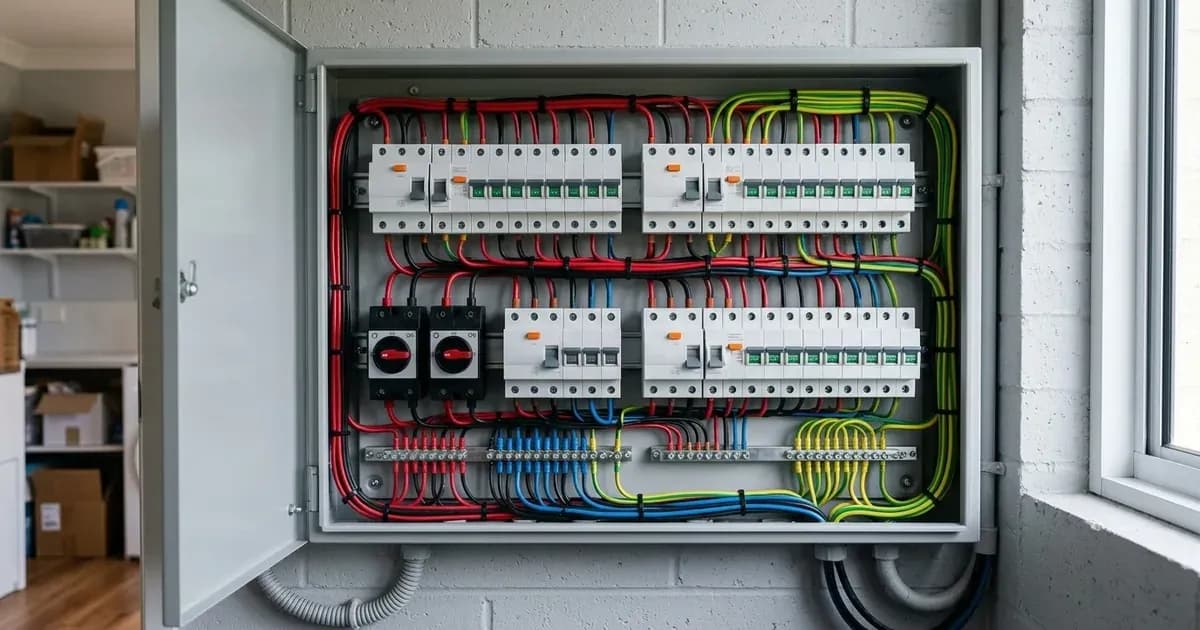
When a BESS is installed, it often involves altering existing circuits to be supplied by the alternative or backup power source. In such cases, suitable RCD protection is mandatory for these altered circuits. This requirement is specified in AS/NZS 3000:2018 Clause 2.6.3.2.5.
The switchboard itself must be assessed by a qualified professional to ensure it can safely accommodate the BESS and its associated fault currents. Inadequate protection against fault currents can occur if the existing switchboard is not properly evaluated and upgraded after a BESS installation.
Handling Existing Type AC RCDs with BESS
While new installations and replacements prohibit Type AC RCDs, specific conditions apply to existing ones. Where a BESS has been installed and supplies power to existing Type AC RCDs, those RCDs may only remain if they have been verified to operate correctly. Furthermore, they must be of an RCD type specified by the inverter manufacturer. This verification process is critical to ensure ongoing safety and compliance.
The verification of correct operation for any RCD, including existing ones, must be performed in accordance with Clause 8.3.10 of AS/NZS 3000:2018. This involves specific testing procedures to confirm the RCD functions as intended under fault conditions.
Applicable Australian Standards for BESS Installations
Compliance with relevant Australian and New Zealand Standards is paramount for safe and legal BESS installations. The key standards that apply include:
- AS/NZS 5139: 2019 Electrical installations – Safety of battery systems for use with power conversion equipment.
- AS/NZS 4777.1: 2024 Grid connection of energy systems via inverters, Part 1: Installation requirements.
- AS/NZS 4509.1:2009 Stand-alone power systems, Part 1: Safety and installation.
- AS/NZS 3000: 2018 Electrical installations (the Wiring Rules).
These standards provide the framework for the design, installation, and verification of BESS, ensuring safety for both the occupants and the electrical network.
What you can change yourself, and what you cannot
The installation, modification, or verification of RCDs and switchboards for a BESS is highly specialised work that impacts the fundamental safety of your electrical system. This work must always be performed by a Licensed Electrical Worker (LEW) or a Registered Electrical Contractor (REC). Changing RCD types, modifying switchboard wiring, or performing RCD verification tests are not tasks for an unqualified person.
Attempting to perform these actions yourself can lead to serious injury, electrical fires, or non-compliance with Australian regulations, which could invalidate your insurance and Certificate of Electrical Safety. As a homeowner, your role is to ensure that any BESS installation or modification is carried out by a qualified professional who adheres to all relevant standards and regulations.
What the published sources do not tell you
While Energy Safe Victoria provides clear guidance on RCD types and standards, some specifics are not detailed in the publicly available information. For instance, the exact "correct operation" verification process for RCDs beyond citing AS/NZS 3000:2018 Clause 8.3.10 is not fully elaborated. This means a qualified professional must interpret and apply the standard's requirements.
Furthermore, detailed guidance on how to determine if an RCD is "of an RCD type specified by the inverter manufacturer" when the inverter manual is not readily available or explicit is not provided. Installers may need to contact inverter manufacturers directly for this specific information. The full text of the Australian Standards referenced is also not included, requiring professionals to access these documents separately.
Frequently asked questions
What types of RCDs are required for Battery Energy Storage Systems (BESS) in Australia?
For BESS installations in Australia, only Type A, Type B, and Type F RCDs should be used. The specific type required may also be specified by the inverter manufacturer. Type AC RCDs must not be installed from 1 May 2023.
Are Type AC RCDs still permitted for new BESS installations in Australia?
No, Type AC RCDs must not be installed in Australia from 1 May 2023. They are also prohibited from being used to replace faulty RCDs or RCBOs in any circumstances.
What are the requirements for existing Type AC RCDs when a BESS is installed?
If a BESS supplies power to existing Type AC RCDs, those RCDs may only remain if they have been verified to operate correctly and are of an RCD type specified by the inverter manufacturer. This verification is crucial for safety.
Which Australian Standards apply to Battery Energy Storage Systems (BESS) installations?
Key Australian Standards include AS/NZS 5139: 2019 (Safety of battery systems), AS/NZS 4777.1: 2024 (Grid connection of energy systems), AS/NZS 4509.1:2009 (Stand-alone power systems), and AS/NZS 3000: 2018 (The Wiring Rules).
Is RCD protection mandatory for circuits altered to be supplied by a BESS?
Yes, any circuit(s) altered to be supplied by an alternative (stand-alone/backup) supply from a BESS must have suitable RCD protection provided. This is mandated by AS/NZS 3000:2018 Clause 2.6.3.2.5.
References
- Energy Safe Victoria – Battery Energy Storage Systems — accessed 27 August 2026
Related guides
More from sizing, net billing & installation.