Best Solar Panels for Canadian Cold Climates: Snow Load & Low Temp Ratings
Updated 19 September 2026 · By SolarNevs Research Desk, Dealer surveys + verified sources · 3 sources · Method ↗
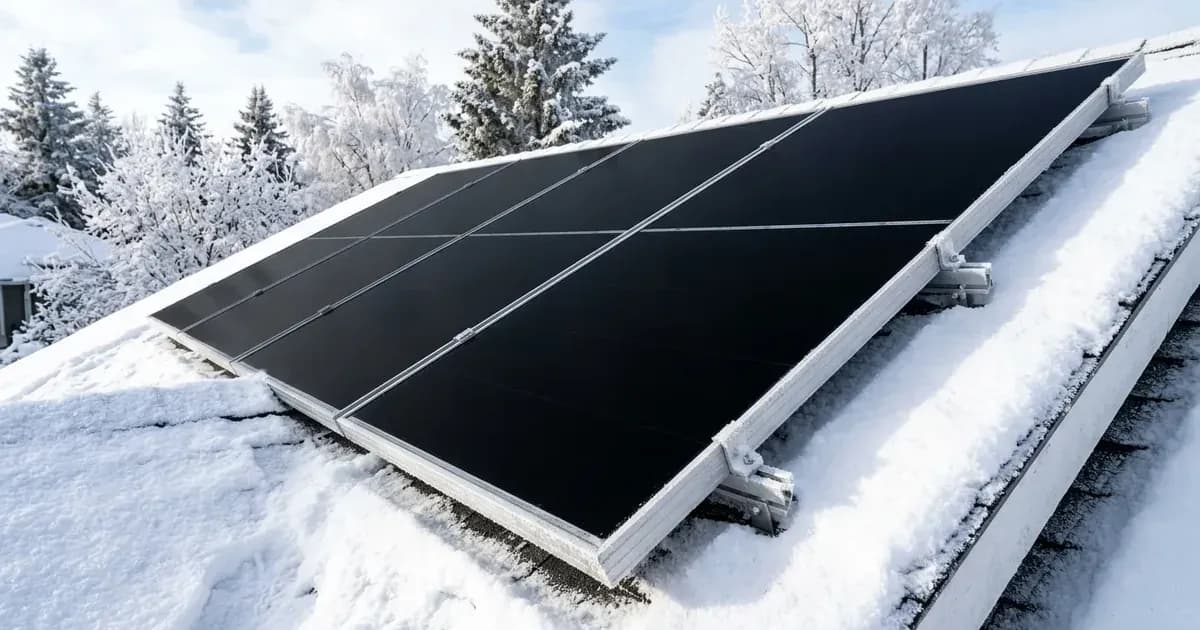
Canadian winters present harsh operating environments for photovoltaic installations. Across provinces from Ontario and Quebec to Alberta and British Columbia, solar arrays must withstand heavy ground snow accumulations, freezing temperatures dropping below minus thirty degrees Celsius, and low winter sun elevations. Selecting the best solar panels requires examining mechanical snow load ratings, temperature coefficients, cell architecture, and verified manufacturing standards.
Key Takeaways
- Modules installed in Canadian snowfall zones should be rated for high front mechanical loads to support heavy snowpack without micro-cracking cell wafers.
- Cold temperatures naturally boost photovoltaic voltage, making panels with robust high-voltage insulation and low temperature degradation highly productive in winter.
- Bifacial solar panels elevate winter energy production by absorbing sunlight reflected from snow blankets across the ground.
- Always verify that modules hold accredited Canadian certification marks like CSA or cUL before purchasing to satisfy local electrical safety inspections.
Tier-1 Cold-Climate Module Comparison
Three dominant module platforms on the Canadian market engineered for extreme sub-zero weather include Canadian Solar, Silfab Solar, and LONGi.
Canadian Solar maintains extensive manufacturing and research operations, delivering over 180 GW of module shipments and 23 GWh of battery storage system shipments globally. Recognized as Tier 1 by BloombergNEF and S&P Global, the company holds 2,195 valid patents maintained, with global subsidiaries in over 20 countries serving customers across more than 160 countries. Their high-capacity modules provide proven mechanical durability for rural and suburban rooftop arrays.
Silfab Solar focuses on premium North American residential installations. The Silfab Elite series utilizes advanced back-contact cell architecture to minimize front metal grid lines. The SIL-420 BG delivers standard rated power of 420W and NOCT power of 313W, operating with a maximum system voltage of 1000 VDC and an impressive module efficiency of 21.9%. For slightly smaller roof sections, the SIL-410 BG offers 410W rated power and 305W NOCT with 21.4% efficiency, providing homeowners with dependable winter output.
LONGi supplies high-efficiency utility and residential bifacial panels. The LONGi LR5-72HBD-540M 540W Bifacial Solar Panel features an IP68 rating junction box, high DC voltage insulation rated for DC1500V (IEC/UL), and an exceptional maximum efficiency of 22.1%. With a high bifaciality ratio of 70% and durable dual-glass construction, LONGi modules experience less than 2% degradation in the first year of operation, ensuring decades of consistent solar harvesting.
Mechanical Snow Load and Cold Temperature Physics
When snow accumulates on solar arrays, heavy mechanical pressure presses downward on module glass and mounting clamps. Standard building codes across Canada require rooftop structures to withstand substantial snow loads. Premium cold-climate modules utilize tempered front glass with reinforced anodized aluminum frames to prevent panel deflection that causes microscopic fractures across silicon wafers.
In addition to mechanical strength, operating temperatures fundamentally influence solar power output. Photovoltaic cells operate more efficiently in cold air than in extreme summer heat. When sunlight strikes cold solar cells on bright January mornings, voltage increases. Pairing high-efficiency modules like the Silfab SIL-420 BG or LONGi 540W with string inverters capable of handling sub-zero open-circuit voltage spikes ensures that homeowners capture peak cold-weather generation without triggering over-voltage shutdown alarms.
To explore how tilt angles and racking affect shedding, consult our guide on solar panel snow load and shedding angles. For details on albedo reflection off fresh snow, review bifacial solar panels snow reflection albedo.
Module Selection: Monofacial vs. Bifacial
For standard flush residential rooftop installations, high-efficiency monofacial panels such as Silfab Elite SIL-420 BG or Canadian Solar HiKu series provide optimal power density. Flush mounting leaves minimal space behind modules, rendering rear light collection negligible.
For ground-mounted arrays, pole mounts, or off-grid cabin arrays, bifacial modules like the LONGi LR5-72HBD-540M excel. Because fresh Canadian snow reflects between 80% and 90% of incoming sunlight, the rear side of a bifacial panel absorbs diffuse snow reflection, generating up to 20% additional energy during winter months when direct overhead sunlight is limited.
Before ordering equipment, confirm that your chosen panels comply with Canadian safety codes by reading our analysis on CSA certification and electrical inspection and comparing top brands in Canadian Solar vs Silfab panels comparison.
References
- Canadian Solar Corporate and Module Shipment Disclosures — accessed 28 August 2026
- Silfab Solar Elite Series Technical Specifications — accessed 28 August 2026
- LONGi LR5-72HBD-540M Bifacial Module Specifications — accessed 28 August 2026
Related guides
More from what to buy — and how not to get cheated.