Best Solar Batteries for Canadian Cold Weather: LiFePO4 & Winter Storage
Updated 19 September 2026 · By SolarNevs Research Desk, Dealer surveys + verified sources · 3 sources · Method ↗
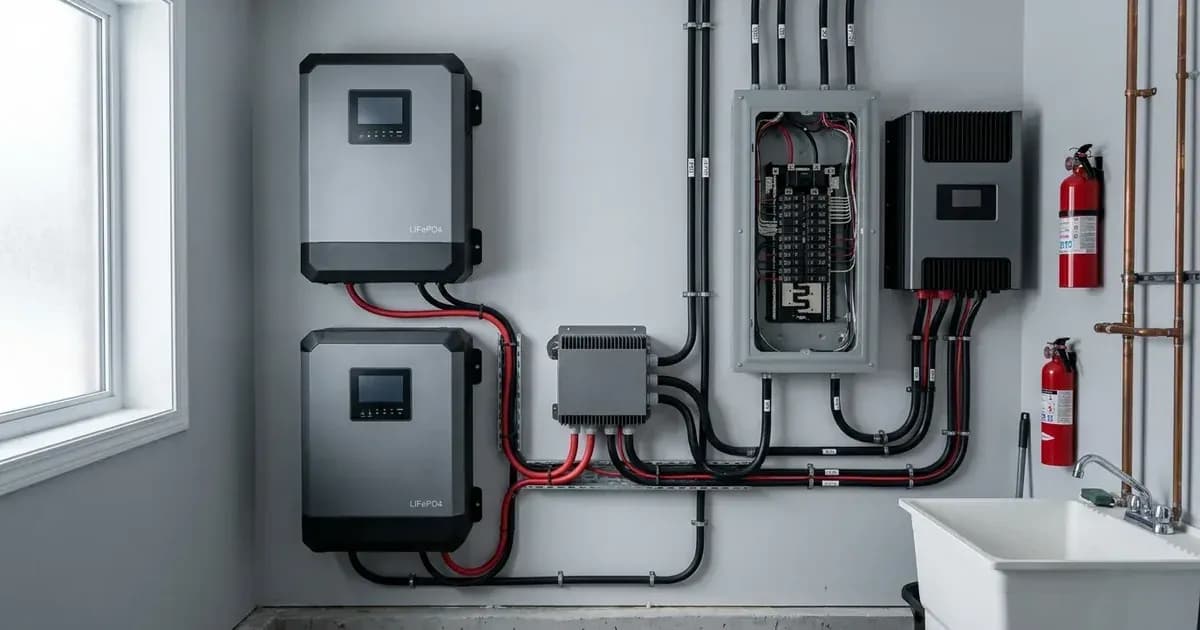
Energy storage systems operating in Canadian climates must endure severe temperature fluctuations between summer highs and deep winter lows. Freezing conditions directly impact battery chemistry, particularly lithium iron phosphate (LiFePO4). Installing a battery bank in an unheated garage or basement requires selecting equipment with comprehensive battery management systems (BMS), high discharge capabilities, closed-loop communications, and certified safety compliance.
Key Takeaways
- LiFePO4 chemistry provides outstanding thermal stability and cycle life, but charging must be regulated when cell temperatures drop below freezing.
- Canadian-engineered Discover AES batteries feature rapid charging capabilities that significantly reduce generator runtimes during winter off-grid operation.
- Victron Smart Lithium systems provide versatile modular blocks with dedicated Bluetooth monitoring and external BMS control.
- Server rack batteries like the Pytes V5 provide standard 48V nominal voltage and 10 years design calendar life for residential off-grid and backup use.
Top Cold-Weather Battery Systems Evaluated
Leading energy storage platforms serving Canadian residential and off-grid markets include Discover Battery AES, Victron Smart Lithium, and Pytes V5 server rack systems.
Discover Battery, engineered in Richmond, British Columbia, has established an international reputation for rugged industrial and off-grid lithium storage. In real-world installations, Discover AES batteries have improved the performance of our electrical system by about 30%, delivering reliable energy transfer under demanding conditions. Discover AES LiFePO 4 batteries ability to charge quickly makes them ideal for off-grid applications to help reduce generator use, allowing homeowners to minimize fuel consumption during overcast winter weeks. With closed-loop communication enabled by the LYNK II Gateway - Mobile, Discover AES is easy to install and has the best power electronics integration for seamless inverter synchronization. Field deployments demonstrate extensive capability: installers report using 48-volt 6.65 kWh Discover lithium batteries, with the largest lithium battery bank to date is for an off-grid system using 10 of the 6.65 kWh packs.
For modular low-voltage installations and mobile applications, the Victron Energy Smart Lithium series provides premium flexibility. The line includes 12.8V and 25.6V models ranging from 50Ah up to 330Ah. These units can be parallel and series connected, featuring an integrated Bluetooth app available to monitor cell voltage and temperature. Because Victron batteries separate cell monitoring from switching, they interface with external battery management systems: they require one of these BMS units, with the VE.Bus BMS or VE.Bus BMS V2 recommended for systems with hybrid inverter-chargers. For mobile vehicle charging, the Smart BMS CL 12/100 is recommended for use in automotive and marine systems, while the SmallBMS serves compact off-grid setups.
For standard residential server-rack configurations, the Pytes V5 provides standard 48V architecture. Operating at a standard nominal voltage of 48V, it supports a standard continuous charge current of 75A. The platform features an extended design calendar life of at least 10 years, incorporating an integrated WiFi connection for remote monitoring and software upgrades.
Cold Temperature Charging Limitations
The primary vulnerability of lithium iron phosphate batteries in Canada is sub-zero charging. When cell temperatures drop below 0°C, lithium ions move slowly through the liquid electrolyte into the graphite anode. Forcing charge current into frozen cells causes metallic lithium plating, permanently destroying storage capacity and risking internal cell short circuits.
To prevent cold-charging damage, reputable battery management systems incorporate low-temperature charge cutoff protections that block incoming current until cells warm up. In off-grid cabins where heating is intermittent, batteries must either be housed in insulated enclosures with thermostatically controlled heating pads or equipped with internal warming elements.
For deep-freeze off-grid cabin design, explore our detailed guide on heated LiFePO4 batteries for Canadian winter cabins.
Winter Outage Backup and Generator Sizing
Winter blizzards and ice storms frequently knock out utility grid power across eastern and central Canada. During extended power outages, solar arrays covered in snow cannot recharge batteries, placing total reliance on stored energy and auxiliary backup generators.
A 48V battery bank comprised of modular units provides essential power for critical household circuits, including furnace circulation blowers, deep-well water pumps, refrigeration, and communication equipment. When battery state of charge drops to 20%, hybrid inverters trigger automatic generator start contacts to recharge the battery bank. Rapid-charging batteries like Discover AES accept high charge currents, enabling generators to run at optimal fuel efficiency for short periods rather than idling continuously.
Learn more about whole-home winter backup strategies in solar battery and generator backup for ice storms and off-grid cabin power in off-grid solar systems Canada winter guide.
References
- Discover Battery AES Lithium Storage Systems — accessed 28 August 2026
- Victron Energy Smart Lithium 12.8V Battery Specifications — accessed 28 August 2026
- Pytes V5 48V 100Ah Server Rack Battery Specifications — accessed 28 August 2026
Related guides
More from what to buy — and how not to get cheated.