Off-Grid Solar System Canada Winter Guide: Inverters, Batteries & Generators
Updated 19 September 2026 · By SolarNevs Research Desk, Dealer surveys + verified sources · 1 source · Method ↗
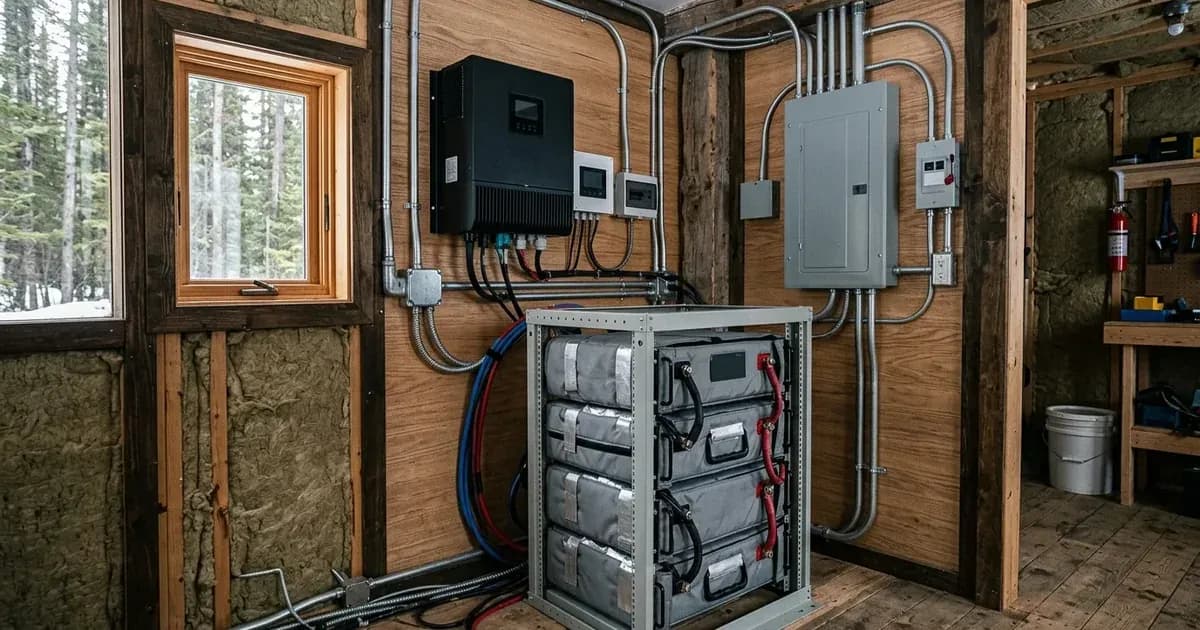
Operating an off-grid solar system through a Canadian winter presents severe environmental challenges that standard summer-focused installations cannot endure. Across provinces from Ontario and Quebec to British Columbia and Alberta, December and January deliver the year's shortest daylight hours, low solar elevation angles between 15° and 22°, and sub-zero temperatures dropping below -30°C. Designing a resilient power system requires robust hardware engineering, high-capacity split-phase power delivery, and tightly integrated auxiliary charging.
Modern rural properties and remote homes rely on industrial-grade power electronics to maintain continuous household operations. Hardware like the luxpower sna-us-15k a 15kw split phase hybrid solar inverter engineered for off-grid and whole-house energy systems. represents the benchmark for residential cold-weather resilience, combining heavy split-phase inversion with high-capacity solar inputs.
High-Capacity Split-Phase Inverter Architecture
Canadian homes operate on three-wire single-phase electrical service delivering 120V line-to-neutral for lights and receptacle circuits and 240V line-to-line for high-draw appliances such as water pumps, workshops, and heating equipment. Off-grid systems must supply this split-phase profile directly without relying on inefficient balancing autotransformers.
Equipping an off-grid home with an inverter delivering 15kw continuous power with 120/240v split phase output this inverter is ideal for whole-house solar installations ensures that essential kitchen appliances, baseboard heaters, and domestic well pumps can start simultaneously without tripping protective overcurrent devices.
Key technical characteristics for winter-rated off-grid inverters include:
- Continuous Split-Phase Delivery: Native 120V/240V line balance capable of handling unbalanced leg currents when heavy 120V loads operate on a single phase.
- Dual High-Voltage Trackers: System efficiency increases drastically when built with dual mppt controllers (maximum power point tracking) it supports up to 24000w pv input and operates across a wide voltage range of 120 to 440 volts, capturing peak solar energy even during short midday winter windows.
- Extreme DC Voltage Windows: Operating across a 120 to 440 volts DC MPPT window allows strings of 8 to 10 high-output solar modules to ignite charging early in the morning and sustain power under diffuse cloud cover.
Component / Parameter | Specification Benchmark | Winter Operational Significance |
|---|---|---|
Continuous AC Inversion | 15 kW split-phase 120V/240V output | Powers deep-well jet pumps, refrigeration, and electric heating circuits simultaneously |
Maximum Solar DC Input | 24000W PV capacity with dual MPPTs | Captures maximum watt-hours during shortened 4-hour winter daylight spans |
DC Input Voltage Range | 120 to 440 volts MPPT tracking span | Keeps string voltages high, reducing resistance line losses in sub-zero wiring |
Battery Bank Integration | 48V DC bus architecture | Standardizes residential battery integration with 250A maximum charging current |
Parallel Scalability | Up to 16 units in parallel | Accommodates large rural homesteads and agricultural workshops up to commercial scales |
Cold-Weather Battery Management and Inverter Integration
Low winter temperatures drastically alter lithium battery chemistry. Standard lithium iron phosphate (LiFePO4) cells suffer metallic lithium plating and permanent capacity degradation if charged below 0°C. Therefore, cold-climate installations require dedicated thermal battery management paired with smart inverter control.
In severe weather, the sna-us-15k is compatible with both lithium-ion and lead-acid batteries (48v). it features an intelligent auto generator start/stop function. When solar generation drops during snowstorms, the inverter's dry contacts automatically trigger the standby generator, powering the AC transfer switch and initiating high-amperage battery recovery.
Charging parameters must match manufacturer limits: battery voltage 48v / 51.2v max charging/discharging current 250a efficiency 93.5% / 99% mppt. With dual MPPT efficiency reaching up to 99%, every photon harvested from reflective snow cover is routed directly into battery reserves. For multi-building rural estates or high-demand workshops, the luxpower 15kw off-grid split phase inverter supports parallel operation of up to 16 units letting you scale your solar energy capacity, delivering modular expansion up to industrial capacities.
Canadian Electrical Code Compliance and Fire Safety
All off-grid electrical installations in Canada must satisfy strict safety requirements established by CSA C22.1 (Canadian Electrical Code Section 64) and provincial inspection authorities. Safety equipment must carry recognized product safety certifications before connection.
The inverter features robust certified under ul1741 and csa c22.2 standards this inverter meets north american electrical safety requirements. Under CSA safety rules, DC solar strings operating at high voltages on residential buildings require rapid shutdown and arc-fault interruption. To satisfy these fire prevention standards, the afci protection for arc fault prevention integrated load and battery breakers surge and overcurrent protection.
When planning rural property improvements, homeowners should note that the federal Canada Greener Homes Grant and Loan programs are closed to new applicants, making self-funded resilient off-grid design essential. For detailed rules regarding string shutdowns and inspection requirements, consult our comprehensive breakdown of Canadian Electrical Code Section 64 solar rules.
Electrical Safety and Equipment Isolation Protocols
Working on high-power off-grid solar equipment involves lethal high-voltage DC arrays and heavy AC circuits. Professional installation and strict adherence to electrical safety protocols prevent severe injury:
- DC Isolation Under Load: Never disconnect solar module MC4 connectors or DC string isolators while the system is generating power. Breaking high-voltage DC current draws intense electrical arcs that can cause severe burns and ignite building framing. Always turn off the inverter DC disconnect switch first.
- Battery Lockout: Before servicing 48V DC busbars, disconnect all battery circuit breakers and verify zero voltage with a calibrated multimeter. High-capacity battery banks deliver instantaneous short-circuit fault currents exceeding thousands of amperes.
- Qualified Electrician Mandate: All AC panel terminations, generator transfer switch interlocks, and utility grounding rods must be installed by a licensed electrical contractor and certified under a provincial inspection permit.
The inverter's physical construction is engineered for harsh mechanical conditions, with dimensions 530 × 830 × 150 mm weight 47.5 kg (104.7 lbs) certifications ul1741 and csa c22.2 ip20. Installing the power unit inside an insulated utility room prevents sub-zero condensation and guarantees dependable year-round performance.
References
- Luxpower SNA-US-15K Split Phase Hybrid Inverter Specifications — accessed 28 August 2026
Related guides
More from sizing, net billing & installation.