Off-Grid Cabin Solar System Sizing Canada: Winter Autonomy & Battery Banks
Updated 19 September 2026 · By SolarNevs Research Desk, Dealer surveys + verified sources · 1 source · Method ↗
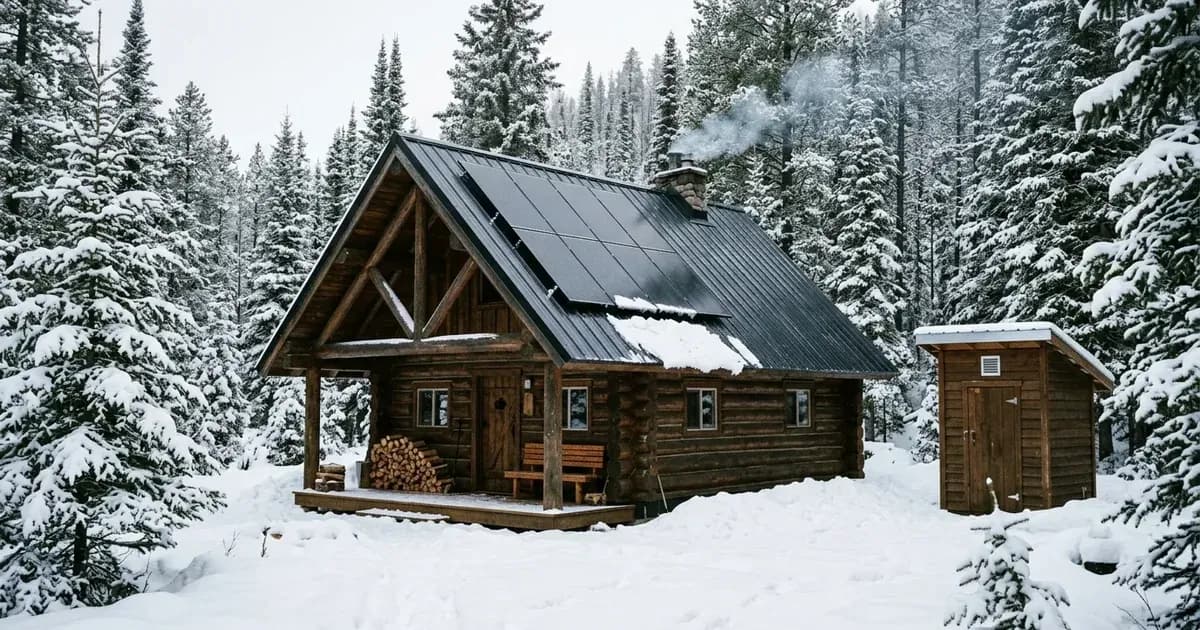
Sizing an off-grid solar and battery system for a Canadian cabin requires designing for worst-case winter conditions rather than optimistic summer averages. In high-latitude regions across Ontario, Quebec, Manitoba, and Alberta, December insolation drops to between 1.0 and 1.5 peak sun hours per day. Cabins that operate electric lighting, Starlink satellite communications, high-efficiency refrigeration, and water pressure pumps must balance daily watt-hour consumption against limited solar harvesting capacity and battery bank autonomy.
A core component in cold-weather cabin power design is deploying dedicated low-temperature lithium storage. Complete equipment kits like maple leaf beaver battery bundles. choose from 2-battery kits 4-battery kits or 6-battery kits. provide modular energy storage engineered specifically for remote off-grid environments.
Daily Cabin Load Audit and Winter Battery Sizing
The sizing calculation begins by compiling an honest audit of daily kilowatt-hour consumption. A typical winter cabin running LED lighting (150 watt-hours daily), an efficient refrigerator (1,200 watt-hours daily), satellite internet (1,000 watt-hours daily), water pump pressure cycles (400 watt-hours daily), and laptop charging (250 watt-hours daily) requires approximately 3,000 watt-hours (3.0 kWh) of daily electrical energy.
To survive a 3-day winter storm with zero solar harvest, the cabin requires at least 9.0 kilowatt-hours of usable battery storage. Utilizing a 48V nominal server rack format, featuring a 48v 100ah heated lifepo4 server rack battery heavy-duty 2 awg cable kit secure stack-mount system and 350a bus bars allows cabin owners to build a clean, busbar-connected storage array capable of delivering high surge currents without voltage sag.
Cabin Load Profile | Typical Daily Consumption | 3-Day Autonomous Storage Need | Recommended Battery Configuration |
|---|---|---|---|
Basic Hunting Camp | 1.5 kilowatt-hours daily | 4.5 kilowatt-hours usable storage | 2-battery bundle (48V dual-pack capacity) |
Standard 3-Season Cabin | 3.5 kilowatt-hours daily | 10.5 kilowatt-hours usable storage | 4-battery bundle (48V four-pack capacity) |
Year-Round Remote Residence | 6.0 kilowatt-hours daily | 18.0 kilowatt-hours usable storage | 6-battery bundle (48V six-pack capacity) |
Multi-Cabin Eco-Retreat | 12.0 kilowatt-hours daily | 36.0 kilowatt-hours usable storage | Custom parallel rack up to 32 modules |
The complete system is engineered for seamless integration in off-grid hybrid and backup solar applications., allowing owners to seamlessly add solar arrays and auto-starting backup generators as their power demands grow.
Heated LiFePO4 Chemistry for Sub-Zero Performance
Standard LiFePO4 cells suffer permanent chemical degradation if charged while internal electrolyte temperatures sit below 0°C. In an unheated or intermittently occupied cabin, charging must be prevented until cells reach safe temperatures.
Advanced battery modules solve this freezing vulnerability through automated thermal circuitry: heating functionality: features intelligent heating that activates in -25°c to 5°c with a current ≥0.08c ensuring optimal performance in cold climates.. When charging power is applied from an inverter or solar charge controller, the internal thermal pads draw incoming current to warm the cell core above 5°C before allowing energy to enter the lithium cells.
Overall, maple leaf beaver battery bundles deliver reliable power in harsh climates simplified installation and expandable capacity, giving cabin owners confidence that their power system will recover after a deep freeze. For small remote properties, these kits serve as the ideal solution for a wide variety of residential solar off-grid power systems and standalone energy setups..
Safety Standards, Pre-Charge Circuits, and Busbar Connections
Installing high-density lithium battery banks requires strict adherence to fire and electrical safety codes. Cabin installations must isolate storage in well-ventilated, fire-rated utility enclosures and implement proper overcurrent protection.
The storage modules are built with premium lifepo4 battery chemistry and certified to stringent north american safety standards including ul 9540a. In addition, they are certified safe - ul9540a compliant: built with safety as a top priority this battery is certified to ansi/can/ul 9540a:2025 standards for thermal runaway fire propagation testing in energy storage systems., proving that adjacent cells will not undergo cascading thermal runaway under abnormal fault conditions.
Connecting battery banks to high-capacitance inverters can create dangerous electrical sparks: pre-charge circuit for smooth connections: b uilt-in pre-charge circuit ensures smooth power transfer averting rush currents. To ensure reliable communication between multiple units, automatic dynamic addressing for multiple units and a robust built-in battery management system (bms). The batteries also feature complete with an led display can/rs485 port and rapid shut-down for the north american market, ensuring full compatibility with Section 64 rapid shutdown initiators.
Homeowners evaluating cabin investments should remember that the Canada Greener Homes Grant and Loan programs are closed to new applicants, meaning off-grid cabin systems do not qualify for federal subsidies. For advice on pairing these storage banks with cold-weather arrays, explore our guide on off-grid solar systems for Canadian winter and our review of solar battery and generator ice storm backup.
Electrical Hazard Mitigation and Installation Safety
High-capacity 48V battery systems store massive amounts of energy and present distinct physical hazards:
- Arc-Flash Prevention: Always use insulated socket wrenches and remove all metallic jewelry when tightening 350A busbar bolts. A dead short across a 48V lithium busbar creates explosive copper vapor and blinding radiant heat.
- Overcurrent Protection: Every parallel battery string must connect to the central busbar through a dedicated Class T fuse or certified DC circuit breaker rated for high interrupt capacities (at least 20 kA).
- Certified Electrician Requirement: All wiring connecting the battery busbar, inverter DC inputs, and AC distribution sub-panels must be installed in accordance with CSA C22.1 Section 64 standards and inspected by local authorities.
References
- Maple Leaf Beaver Heated LiFePO4 48V Battery Specifications — accessed 28 August 2026
Related guides
More from sizing, net billing & installation.