Solar Battery Generator Ice Storm Backup Canada: Resilient Home Power Systems
Updated 19 September 2026 · By SolarNevs Research Desk, Dealer surveys + verified sources · 1 source · Method ↗
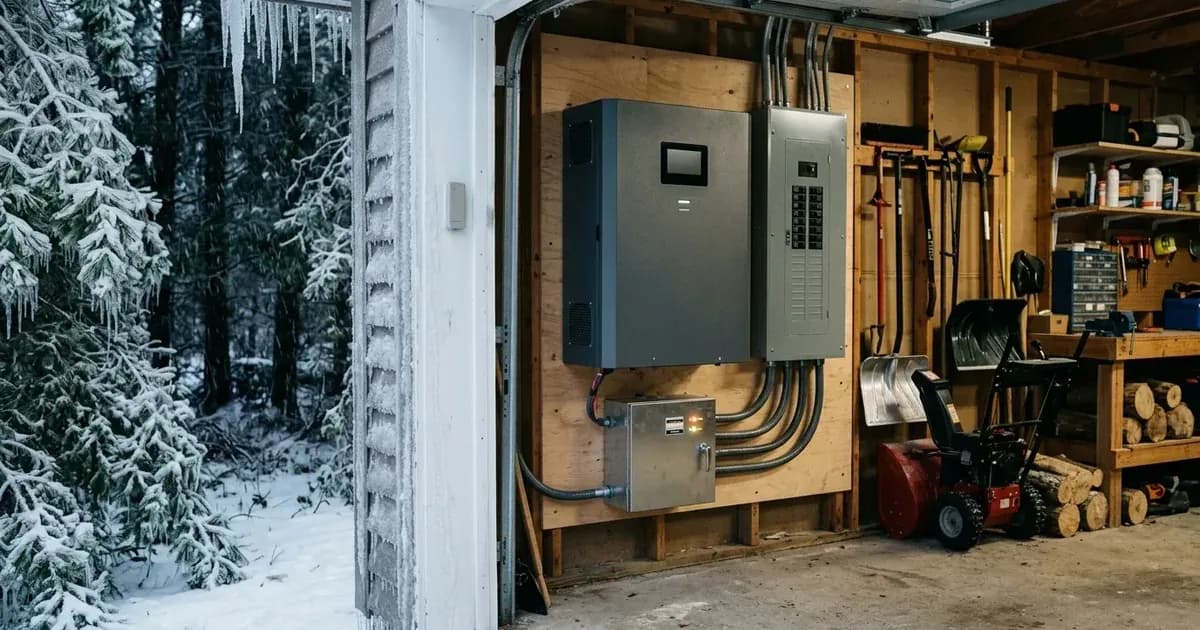
Severe winter ice storms and freezing rain events represent one of the most destructive natural hazards in Eastern Canada, Ontario, and Quebec. Freezing rain accretes thick layers of glaze ice onto electrical distribution conductors and tree limbs, causing widespread grid collapses that can leave hundreds of thousands of homes without utility electricity for days or weeks in sub-zero temperatures. Without electrical power, home heating furnaces, hydronic circulation pumps, deep-well water supplies, and sump pumps cease operating, leading to frozen water pipes, flooded basements, and dangerous indoor hypothermia.
Creating an emergency resilience system capable of withstanding prolonged winter outages requires integrating solar generation, automatic fuel-based standby generators, and cold-rated battery storage. Equipment like the "pytes v5 5.12kwh 100ah 48v lifepo4 solar battery establishes the benchmark for cold-climate residential backup.
The Triad Architecture: Solar, Battery Storage, and Standby Generator
Relying solely on a portable generator or solely on solar panels leaves critical vulnerabilities during a Canadian winter ice storm:
- Solar Alone Fails During Freezing Rain: Ice storms coat rooftop photovoltaic panels in opaque glaze ice, and low winter cloud cover reduces solar yields to near zero for several consecutive days.
- Generators Alone Are Fragile: Standby fossil fuel generators consume large amounts of propane, natural gas, or gasoline. Prolonged regional blackouts disrupt fuel deliveries, and continuous 24/7 generator operation causes mechanical wear and excessive fuel consumption.
- The Triad Solution: A resilient system combines all three elements. The battery bank powers critical household circuits quietly and efficiently. When battery reserves drop below twenty percent, an automatic generator start (AGS) contact ignites the standby generator, running it at peak electrical efficiency for 2 to 3 hours to bulk-charge the battery bank and power heavy loads before shutting down. Once the storm passes and ice melts, solar panels recharge the battery bank automatically.
Emergency Load | Power Draw | Operational Run-Time | 24-Hour Energy Consumption |
|---|---|---|---|
Natural Gas Furnace Blower / Hydronic Circulator | Moderate load | Cycles 15 minutes per hour (6 hrs/day) | 3.6 kilowatt-hours |
Domestic Well Water Pump | High load | Runs 30 minutes total per day | 0.75 kilowatt-hours |
High-Efficiency Refrigerator / Freezer | Continuous load | Cycles 8 hours total per day | 1.2 kilowatt-hours |
LED Emergency Lighting & WiFi / Communications | Low continuous load | Operates 12 hours per day | 1.2 kilowatt-hours |
Basement Sump Pump | Periodic load | Runs 1 hour total per day during thaw | 0.80 kilowatt-hours |
Total Daily Essential Energy Budget | — | — | 7.55 kilowatt-hours daily |
Heated Battery Technology for Sub-Zero Utility Rooms and Garages
In many Canadian homes, backup electrical equipment is housed in unheated garages, utility basements, or exterior outbuildings. When utility grid power collapses, these spaces rapidly plunge below freezing.
Because standard lithium batteries suffer metallic plating if charged below 0°C, cold-climate installations require integrated thermal protection: the pytes v5 lithium-ion battery provides next-level energy storage—it's lightweight powerful and never fails to perform. engineered for cold climates its built-in heating functionality provides maximum efficiency.. When incoming charging power is detected from the solar array or standby generator, in-built heating for extreme cold climates: pytes v5's integrated heating technology allows it to continue working smoothly in cold temperatures maintaining constant charging and discharge..
High-performance technical specifications ensure robust emergency reliability:
- Operating Temperature Range: The battery operates across an operating temperature 14°f ~ 131°f = -10°c~55°c, maintaining steady discharge even in cold rooms.
- Standard and Surge Delivery: Features maximum continuous charge/discharge 100a, backed by a peak charge/discharge 150a (15s) to easily start heavy well pump motors.
- Round-Trip Energy Efficiency: High electrical performance delivering round-trip efficiency ≥95%.
- Extended Longevity: Premium cells engineered where cycle life ≥6000 cycles.
Heavy Busbar Scalability and Certified Safety Standards
Homeowners designing whole-home emergency power systems require modular expansion to match their unique residence: pytes v5 offers parallel interfaces for up to 300a confluence current thereby making it simple to increase power capacity.. For large agricultural properties or luxury rural estates, scalability 16 pcs (82kwh) in a group 7 groups (573kwh) in a system w/a hub.
Emergency backup power systems must satisfy stringent fire and life-safety codes. The equipment holds comprehensive certifications: it also satisfies ul9540 ul9540a ul1973 cec ce and iec62619 safety certifications offering industry-leading compliance. Digital integration is managed via communication protocol can/rs485, allowing direct closed-loop communication with hybrid inverters to control charging currents dynamically.
Homeowners investing in ice-storm resilience should note that the federal Canada Greener Homes Grant and Loan programs are closed to new applicants, making private resilience planning and robust equipment selection essential. For further details on winter solar design, review our guide to off-grid solar systems for Canadian winter and our analysis of Canadian Electrical Code Section 64 solar rules.
Electrical Hazard Prevention and Transfer Switch Safety
Connecting high-capacity battery storage and auxiliary generators to residential electrical wiring presents severe electrical hazards if executed improperly:
- Break-Before-Make Transfer Interlocks: Never connect a generator or battery inverter to a household panel without a certified mechanical interlock or automatic transfer switch (ATS). Backfeeding electrical power into utility lines endangers the lives of utility lineworkers working to restore storm-damaged infrastructure.
- Carbon Monoxide Hazard: Standby generators must be located outdoors at least 6 metres (twenty feet) away from windows, doors, and fresh air intake vents. Never operate a portable generator inside an attached garage or basement, as deadly carbon monoxide gas accumulates rapidly.
- Certified Installation Mandate: All critical load sub-panels, transfer switches, and high-voltage DC battery busbar connections must be installed by a licensed electrical contractor and inspected under an authorized provincial electrical permit.
References
- Pytes V5 48V 100Ah Heated LiFePO4 Battery Specifications — accessed 28 August 2026
Related guides
More from sizing, net billing & installation.