Inverter DC Overvoltage in Canadian Winters: Sizing Fixes & Rules
Updated 19 September 2026 · By SolarNevs Research Desk, Dealer surveys + verified sources · 2 sources · Method ↗
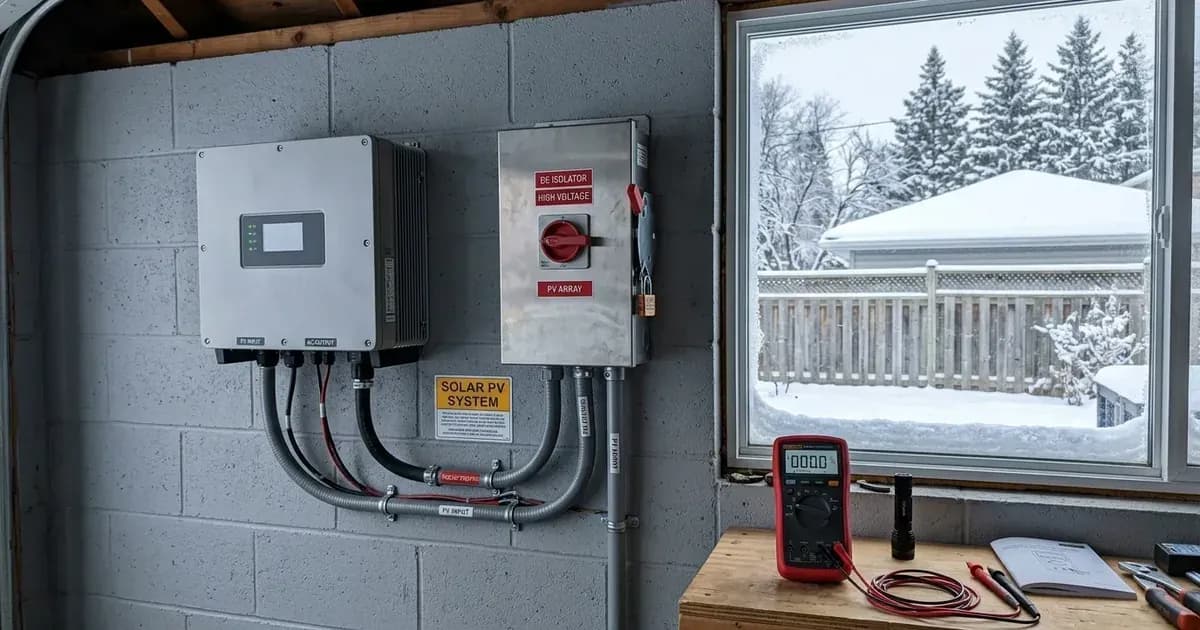
On crisp, cloudless winter mornings across Canada, solar arrays produce substantial energy as bright sunlight reflects off fresh snowpacks. However, precisely during these optimal solar conditions, many string inverters abruptly shut down with flashing red fault indicators displaying "DC Overvoltage," "PV Overvoltage," or "High Input Voltage."
This condition occurs when solar series strings were sized without accounting for extreme Canadian sub-zero ambient temperatures. When outdoor temperatures plunge during arctic cold snaps, open-circuit voltage surges well above nominal room-temperature ratings, exceeding inverter input limits and triggering protective shutdowns.
Key Takeaways
- Semiconductor physics dictate that photovoltaic cell voltage increases as operating temperatures plunge below freezing.
- Modern split-phase hardware like the Luxpower SNA-US-15K delivers 15kW continuous power with 120/240V split phase output and supports dual MPPT tracking.
- High-efficiency modules like the LONGi 500W Bifacial Solar Panel - LR8-54HGBB-500M operate with an open-circuit voltage of Voc 39.58 V and Vmp 33.14 V.
- Resolving winter overvoltage requires recalculating series string lengths under local extreme low temperatures and dividing circuits across separate MPPT channels.
Physics of Cold-Weather DC Voltage Spikes
Solar photovoltaic cells operate with a negative temperature coefficient of open-circuit voltage. As silicon crystal temperatures decrease, semiconductor bandgap energy widens, increasing the voltage potential across each cell.
In Canada, where extreme winter freezes affect arrays from Alberta to Quebec, string voltage spikes significantly above nominal factory ratings. If series strings were sized near an inverter's maximum input threshold at moderate temperatures, freezing morning conditions push total circuit voltage past hardware ceilings. Internal overvoltage protection relays trip immediately to shield sensitive internal capacitors and transistors from dielectric breakdown.
Safety Warning: High-voltage DC circuits operate at hazardous potentials on freezing winter mornings. Always open the main DC array disconnect switch before touching terminals or wiring. Use insulated test equipment when verifying open-circuit voltages under sub-zero conditions.
High-Performance Module Voltage Characteristics
Selecting premium photovoltaic hardware requires understanding electrical voltage parameters under real Canadian weather conditions:
The LONGi 500W Bifacial Solar Panel - LR8-54HGBB-500M represents a dependable 500W bifacial module for high output and long-term reliability. Solid choice for rooftops and ground mounts in Canadian conditions.
The panel features a robust 500W nameplate power rating with an advanced module efficiency 22.5%. From an electrical engineering perspective, its baseline factory electrical characteristics include a nominal Voc 39.58 V and a maximum power point operating voltage of Vmp 33.14 V. Each sturdy panel construction features a physical weight 61.7 lb (28 kg) to withstand heavy winter snow loads.
When designing series strings, engineers must apply the manufacturer's negative voltage temperature coefficient to the base Voc 39.58 V. On a severe morning where ambient temperatures reach sub-zero minimums, module open-circuit voltage increases by approximately fifteen to twenty percent. If ten modules are wired in series, the cold open-circuit string voltage easily exceeds hardware limits if string lengths were not calculated properly.
Inverter MPPT Channel Architecture and Sizing Fixes
When inverters trip on DC overvoltage, the permanent engineering fix is to shorten series strings and utilize multi-channel Maximum Power Point Tracking (MPPT).
Advanced platforms like the Luxpower SNA-US-15K provide substantial configuration flexibility. Delivering 15kW continuous power with 120/240V split phase output, the unit is built with dual MPPT controllers (Maximum Power Point Tracking).
The platform supports up to 24,000W PV input and operates across a wide voltage range of 120V–440V, ensuring maximum solar energy harvesting. By providing an operational tracking window of 120V–440V across dual trackers, installers can safely divide a large array into two shorter series strings. Connecting fewer panels in series ensures that even under the coldest Canadian winter mornings, peak string open-circuit voltage remains safely below the upper 440V tracking limit.
For commercial buildings or expanding homesteads, the architecture supports parallel operation of up to 16 units, letting you scale your solar energy capacity smoothly.
Advanced Safety and Protection Mechanisms
Operating high-power photovoltaic arrays in freezing environments requires comprehensive hardware protection. Modern inverter enclosures incorporate multi-stage safety systems:
- Arc Fault Protection: The inverter includes AFCI protection for arc fault prevention, immediately de-energizing circuits if thermal contraction loosens connector pins.
- Integrated Breakers: The enclosure features integrated load and battery breakers, simplifying isolation during winter maintenance.
- Surge Suppression: Internal power stages feature surge and overcurrent protection to guard against line disturbances.
- Thermal Control: A smart cooling system for quiet, efficient performance maintains optimal internal semiconductor operating temperatures.
To ensure full compliance with Canadian regulatory authorities, the platform is certified under UL1741 and CSA C22.2 standards, this inverter meets North American electrical safety requirements.
Step-by-Step Procedure to Fix Winter Overvoltage
When your inverter shuts down with a DC overvoltage warning on cold mornings, follow this systematic corrective sequence:
- Measure Cold Open-Circuit Voltage: Open the DC string disconnect and measure string voltage with a calibrated digital multimeter while outdoor temperatures are at their lowest.
- Calculate String Voltage Headroom: Compare your measured open-circuit voltage against the inverter's maximum input ceiling and the recommended operating window of 120V–440V.
- Divide Long Series Strings: Rewire oversized series strings into two shorter, balanced strings.
- Distribute Strings Across Dual MPPTs: Terminate each shortened string into its own independent tracker to take advantage of dual MPPT controllers (Maximum Power Point Tracking).
- Verify System Safety Certification: Ensure all equipment maintains certified under UL1741 and CSA C22.2 standards, this inverter meets North American electrical safety requirements before re-energizing.
By properly calculating temperature-adjusted string voltages and utilizing modern multi-MPPT inverter architecture, Canadian solar owners can maintain continuous generation without nuisance overvoltage trips.
References
- Luxpower SNA-US-15K Split Phase Hybrid Inverter Datasheet — accessed 28 August 2026
- Canadian Off Grid Depot LONGi 500W Bifacial Module Specifications — accessed 28 August 2026
Related guides
More from inverter errors & fixes.