Solar Rapid Shutdown Device Failures in Winter: Canadian Fixes
Updated 19 September 2026 · By SolarNevs Research Desk, Dealer surveys + verified sources · 2 sources · Method ↗
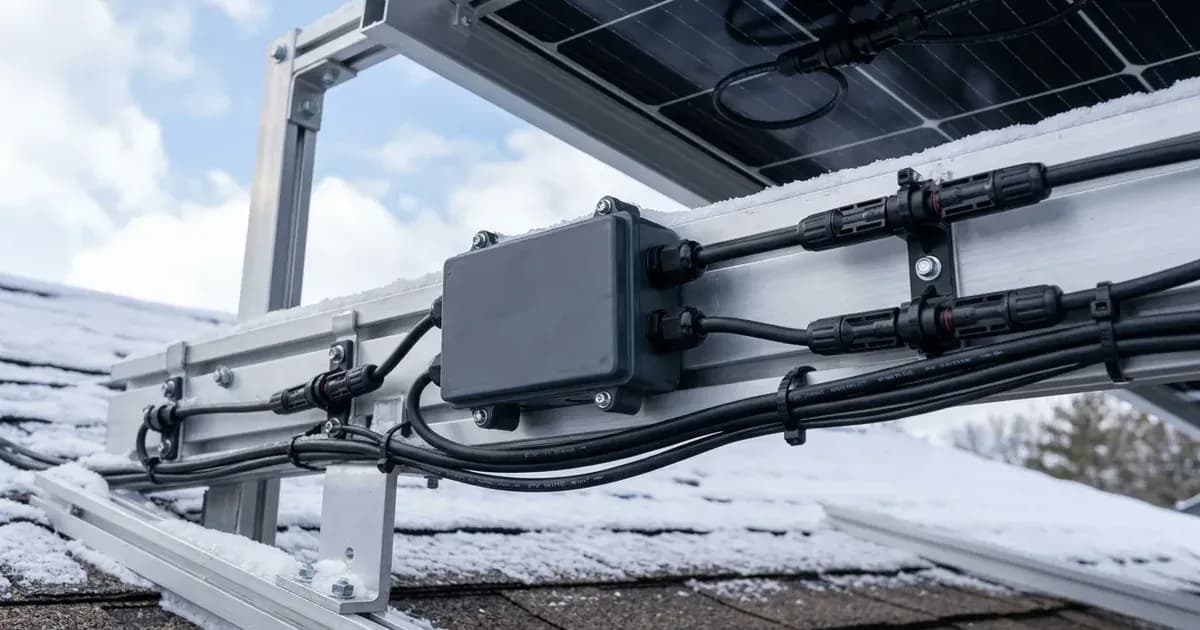
Across Canadian provinces, rooftop photovoltaic systems face harsh winter conditions featuring sub-zero temperatures, heavy snow accumulation, and ice buildup. Following a blizzard or freezing rain event, solar owners frequently notice that their inverter shows zero DC voltage or reports string open-circuit errors despite bright blue skies. In many cases, the rooftop photovoltaic array is completely intact, but the module-level rapid shutdown devices (RSDs) have entered safe de-energization mode and refuse to wake up.
Understanding how rapid shutdown systems operate under the Canadian Electrical Code and diagnosing winter communication failures allows technicians to restore solar generation safely.
Key Takeaways
- Canadian Electrical Code standards mandate rapid shutdown systems on building roofs to protect emergency personnel during fires or maintenance.
- The Tigo TS4-A-F functions as a Dedicated rapid shutdown device for 1 solar module up to 725W with wide electrical operating ranges of 12-80V, up to 22A.
- System architectures require a Required RSS Transmitter that communicates with the TS4-A-F over PLC, enabling plug and play installations.
- In winter, power line communication (PLC) signal attenuation or iced connector seals can lock modules in safety mode, requiring methodical diagnostic checks.
Canadian Electrical Code Requirements for Rapid Shutdown
In Canadian jurisdictions, rooftop photovoltaic safety is governed strictly by the Canadian Electrical Code (CSA C22.1). Specifically, rule 64-218 requires rapid shutdown capability for photovoltaic systems enabling emergency responders to safely de-energize the system.
This mandate applies under the ontario electrical safety code (oesc) installations within the scope of section 64 - such as solar photovoltaic systems. When utility grid power fails or an emergency shutoff switch is opened, the system must reduce the voltage of conductors within the array boundary to safe touch thresholds within thirty seconds.
These critical safety mechanisms exist to safeguard utility workers and emergency responders. without proper anti-islanding protection or rapid de-energization, emergency responders cutting into roof structures face lethal DC shock risks.
In Ontario, administrative streamlining recently impacted installation compliance: through an approved director’s order on ontario electrical safety code rule 2-010 esa has approved a director’s order increasing the plan review threshold for certain renewable energy installations from 10 kw to 12 kw. This update allows many standard residential rooftop solar arrays up to 12 kW to proceed without lengthy engineering plan reviews while maintaining strict rapid shutdown compliance under Rule 64-218.
Hardware Architecture: Tigo TS4-A-F Specifications
Modern rooftop installations achieve compliance using module-level power electronics such as the Tigo TS4-A-F. This hardware serves as a Dedicated rapid shutdown device for 1 solar module up to 725W, matching the high power output of modern bifacial modules.
The hardware operates across an electrical range of 12-80V, up to 22A, ensuring compatibility with high-current commercial and residential modules. Field connection uses industry standard MC4 (standard) connectors, while the physical enclosure Snaps to module frame for easy mounting. Because of its patented grounding clip design, the mechanical assembly Does not require ground wire installation, saving significant labour on freezing rooftops.
To ensure long-term durability in harsh Canadian climates, the unit features PLC communication and is backed by a 25-year warranty. System designers deploy the hardware at a ratio of 1 module per TS4 across the entire array.
Diagnosing Winter Transmitter and PLC Signal Failures
The operational heart of a rapid shutdown array is the transmitter. The architecture mandates a Required RSS Transmitter located either inside the inverter chassis or in an external power enclosure.
The transmitter communicates with the TS4-A-F over PLC, enabling plug and play installations. The transmitter injects a continuous high-frequency "keep-alive" signal directly into the DC string wiring. When the receivers detect this heartbeat signal, they close their internal solid-state switches and allow module power to flow down to the inverter. If the keep-alive signal stops, each receiver instantly disconnects, reducing output voltage to a safe touch potential.
The hardware is UL PV Rapid Shutdown System (PVRSS) certified with hundreds of inverters, ensuring broad interoperability across string inverters and hybrid platforms.
In Canadian winters, RSD failures typically occur due to three root causes:
- Transmitter Power Loss: If auxiliary power supplies feeding the transmitter fail due to cold temperatures, the keep-alive signal terminates, locking the entire array in safety mode.
- PLC Cross-Talk and Attenuation: Long DC wire runs through metal conduit or proximity to high-frequency inverter noise can attenuate the PLC signal, preventing distant roof modules from receiving the heartbeat.
- Ice Ingress in Connectors: Freeze-thaw cycles can force moisture past weathered O-rings in MC4 (standard) connectors, creating minute ground leakage that degrades high-frequency signal transmission.
Step-by-Step Winter Troubleshooting Sequence
When rooftop strings produce near zero volts on clear winter mornings, execute this diagnostic procedure:
- Inspect Transmitter Status LEDs: Check the transmitter circuit board to ensure the power LED is illuminated and the signal pulse indicator is actively flashing.
- Measure Open-Circuit Voltage per Module: Using a DC voltmeter, measure string voltage at the inverter isolator switch. If the string measures approximately 0.6V multiplied by the number of modules, the TS4 units are powered but stuck in safety shutdown mode.
- Test for AC Grid Voltage: Confirm that the main building AC panel is energized; because Rule 64-218 links rapid shutdown to building power, a grid outage automatically keeps the transmitter de-energized.
- Check Inverter PVRSS Pairing: Verify that the inverter firmware recognizes the transmitter signal and has not logged an internal communication fault.
- Examine External Wiring and Connectors: When safe roof access allows, visually check module wiring to ensure snow loads have not pinched DC leads or pulled connectors apart under thermal contraction.
By systematically isolating power supplies, verifying PLC signal continuity, and confirming transmitter operation, technicians can quickly resolve Canadian winter rapid shutdown faults and restore rooftop generation.
References
- Tigo Energy TS4-A-F Rapid Shutdown Datasheet — accessed 28 August 2026
- Electrical Safety Authority ESA Plugged In Industry Bulletin — accessed 28 August 2026
Related guides
More from inverter errors & fixes.