Generator Not Charging Off-Grid Solar Battery: Canadian Winter Fixes
Updated 19 September 2026 · By SolarNevs Research Desk, Dealer surveys + verified sources · 3 sources · Method ↗
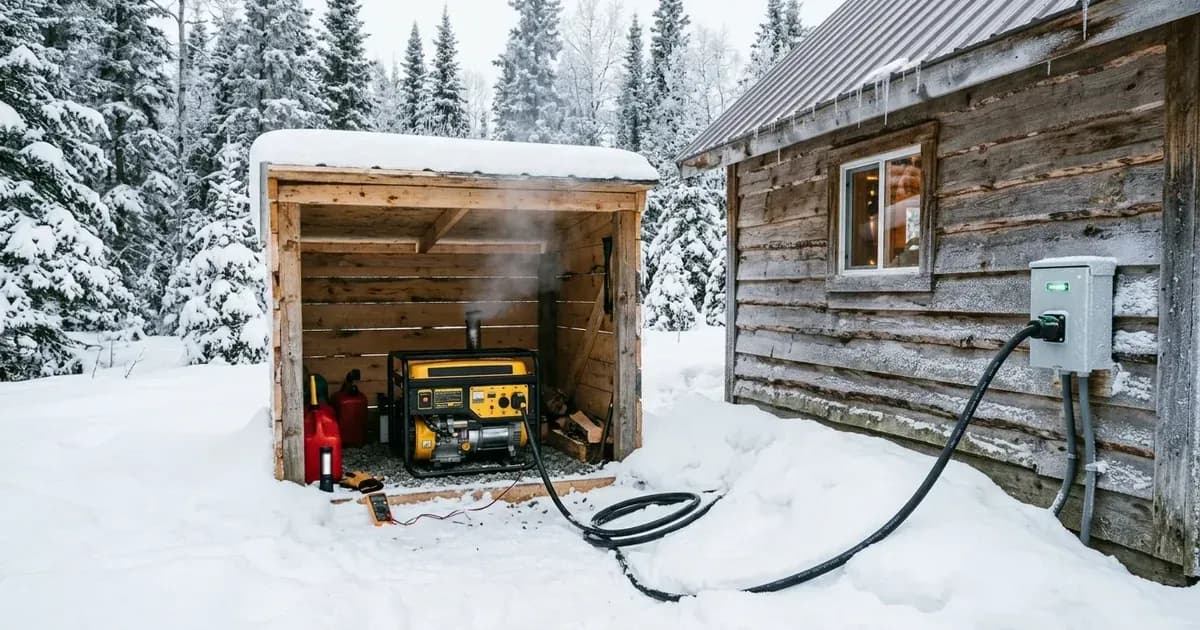
During dark Canadian winters and severe ice storms, off-grid solar arrays often produce minimal energy due to heavy snow accumulation and low sun angles. When battery banks reach depleted levels, homeowners depend on fuel-powered generators to recharge their energy storage. However, one of the most frustrating winter failures occurs when an inverter charger refuses to qualify generator power, repeatedly disconnecting its internal transfer contactor and leaving the home in the dark.
Diagnosing generator synchronization problems requires understanding inverter AC qualification parameters, generator voltage stability, and modern charger control settings.
Key Takeaways
- Inverters reject generator AC power when voltage fluctuates, engine governor speed drifts, or total harmonic distortion exceeds internal qualification tolerances.
- Mobile split-phase hardware like the Victron MultiPlus-II offers the perfect one-box mobile solution for standard North American 50A 120/240VAC split-phase applications.
- Advanced inverter firmware provides PowerControl, PowerAssist, Input Current Limit, two AC outputs to stabilize generator loading.
- Robust hybrid platforms like the Sol-Ark 15K feature a Dedicated GEN Port and AutoStart Capable control to automate winter emergency charging.
Why Inverters Refuse Generator Power in Freezing Conditions
Modern off-grid inverter chargers contain sensitive microprocessors that sample incoming alternating current before closing internal mechanical transfer switches. In freezing winter conditions, several factors cause incoming generator power to fall outside acceptable thresholds:
- Cold Governor Stiffening: Frozen mechanical governors on carbureted generators lead to severe engine hunting, causing alternating current frequency to fluctuate rapidly outside inverter acceptance limits.
- Harmonic Distortion (THD): Budget open-frame contractor generators produce jagged, distorted sine waves. Sensitive inverter synchronization algorithms reject dirty waveforms to protect internal power electronics.
- Voltage Collapse Under Inrush: When the inverter's high-power battery charger engages suddenly, the heavy electrical load causes generator engine rpm to drop, collapsing output voltage and forcing the inverter to disconnect.
Optimizing Victron Split-Phase Inverter Chargers
For mobile systems, off-grid cabins, and rural trailers, Victron Energy provides the perfect one-box mobile solution for standard North American 50A 120/240VAC split-phase applications. This architecture offers the capability to utilize the full 50A for charging and AC loads simultaneously when connected to robust shore power or high-output generators.
When running on smaller single-phase auxiliary generators, the hardware operates by combining the L1 and L2 outputs for single-phase 120V on each line. The MultiPlus switches to inverter operation when no AC source is available, preventing interruption to essential lighting circuits.
To protect high-draw appliances from draining storage batteries when connected to undersized generator sources, 240VAC is only available when the MultiPlus is supplied by a split phase 120/240VAC source. This prevents heavy loads such as water heaters or 240V air conditioners from discharging the battery.
To overcome generator rejection, Victron incorporates advanced power management features: PowerControl, PowerAssist, Input Current Limit, two AC outputs. Enabling these features allows the inverter to cap generator current draw at a safe setpoint and seamlessly supplement peak electrical loads from the battery bank. System builders often utilize the standard Models: 3000VA configuration for dependable cabin performance.
Sol-Ark and Growatt Generator Integration
Whole-home residential systems requiring higher power capacity utilize advanced hybrid platforms designed for seamless generator integration. The Sol-Ark 15K provides a Dedicated GEN Port that isolates generator power from normal grid terminals, allowing tailored voltage and frequency acceptance windows.
The hardware is AutoStart Capable, utilizing two-wire dry relay contacts that automatically crank the generator when battery state of charge falls below programmed winter thresholds. Inside the unit, an integrated 275A Battery Charger delivers rapid energy replenishment during short generator runtimes, minimizing fuel consumption. During utility or generator transitions, the inverter delivers an Automatic 5ms Transfer Time to maintain sensitive computers and electronics without rebooting.
To manage high winter power demands, the system incorporates Single Circuit Smart Load Functionality to automatically shed non-essential loads while charging. The hybrid platform produces 15 kW AC of continuous power and delivers up to 12 kW AC from Batteries during power interruptions.
For off-grid estates utilizing multiple power inputs, modern inverters provide grid and generator two AC inputs with integrated transfer switch. To avoid running loud engines during nighttime hours, users can program timing charging and output control to restrict generator replenishment to daylight hours.
Practical Steps to Force Generator Qualification
When your off-grid inverter refuses to connect to your generator in sub-zero weather, execute this troubleshooting sequence:
- Warm Up the Engine: Allow the generator engine to run without load for several minutes until mechanical governors stabilize and oil reaches operating temperature.
- Enable Dynamic Current Limits: Activate features like PowerControl, PowerAssist, Input Current Limit, two AC outputs in your inverter menu to prevent loading down the generator during charger ramp-up.
- Widen Inverter AC Acceptance Limits: Access inverter settings to expand the allowable AC frequency and voltage qualification ranges if your generator engine speed drifts slightly.
- Verify Neutral-Ground Bonding: Confirm whether your generator has a bonded or floating neutral; conflicting ground bonds between the generator chassis and the main electrical service panel cause inverter ground fault trips.
- Utilize Dedicated Generator Ports: Connect auxiliary generators directly to a Dedicated GEN Port rather than standard AC inputs to take advantage of specialized generator charging profiles.
By configuring appropriate charging current limits and ensuring clean AC input parameters, Canadian off-grid homeowners can maintain dependable winter battery charging even during the harshest storms.
References
- Victron Energy MultiPlus-II 2x 120V Inverter Charger Datasheet — accessed 28 August 2026
- Sol-Ark 15K Whole Home Hybrid Inverter Specifications — accessed 28 August 2026
- Growatt SPF 6000 ES Plus Off-Grid Storage Inverter Datasheet — accessed 28 August 2026
Related guides
More from inverter errors & fixes.