Growatt Off-Grid Inverter Error Codes & Troubleshooting Canada
Updated 19 September 2026 · By SolarNevs Research Desk, Dealer surveys + verified sources · 2 sources · Method ↗
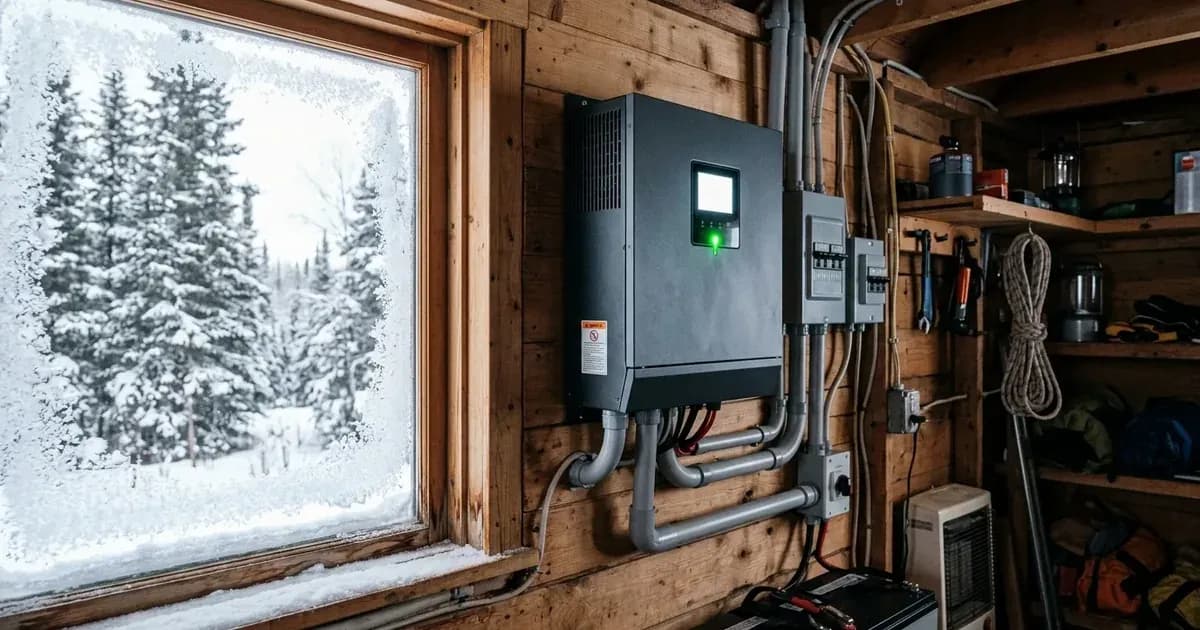
Off-grid cabins, rural homesteads, and remote telecom sites across Canada rely extensively on Growatt SPF series inverter chargers for reliable off-grid electricity. However, extreme Canadian winter conditions—sub-zero freezes, heavy snowfall, and prolonged cloudy spells—place immense electrical stress on power conversion hardware. Installers and property owners frequently encounter flashing warning lights, audible alarm beeps, and diagnostic fault codes on LCD control screens.
Understanding the operational boundaries of popular Growatt platforms like the SPF 3000TL LVM-ES and the heavy-duty SPF 6000 ES Plus is essential for rapid fault diagnosis, cold-weather recovery, and preventing winter power outages.
Key Takeaways
- The Growatt SPF 3000TL provides 120Vac single-phase output with a maximum PV array input voltage of 250Vdc PV for standard cabin circuits.
- Cold winter mornings increase solar panel voltage; keeping string sizing within the DC/AC ratio up to 1.2 prevents overvoltage trip conditions.
- Heavy-duty units like the SPF 6000 ES Plus deliver single-phase 230Vac output and accommodate up to 500Vdc PV input with 8000W solar input capacity.
- Comprehensive multi-customized modes for diverse scenarios allow seamless integration with backup fuel generators and utility connections.
Troubleshooting Growatt SPF 3000TL LVM Faults
The SPF 3000TL LVM-ES is widely deployed across Canadian off-grid cabins requiring standard North American utility voltage. The unit provides 120Vac single-phase output, eliminating the need for external balancing transformers on simple lighting and appliance branch circuits.
When sizing solar arrays for this platform, system designers must observe that the hardware supports a maximum input ceiling of 250Vdc PV. During Canadian winter cold snaps, solar panel open-circuit voltage rises sharply according to module temperature coefficients. If string voltage exceeds this threshold during bright, sub-zero mornings, the internal charge controller halts charging and displays high DC bus voltage error alerts.
To maintain optimal energy capture during short winter days while protecting internal components, the manufacturer specifies an allowable DC/AC ratio up to 1.2. In addition, the inverter delivers robust surge capability with 2 times peak power ability, allowing inductive loads such as well pumps and refrigeration compressors to start without tripping off-line. The unit also operates with an output power factor up to 1.0, ensuring full utilization of active electrical wattage.
For growing cabin power requirements, the architecture supports up to 6 units in parallel for capacity extension. When multiple inverters operate in parallel, communication cables link control boards to synchronize phase angle and load sharing. Communication loss between parallel units immediately triggers synchronizing fault codes, requiring inspection of network terminator switches and data cables.
Managing Operating Modes and Remote Diagnostics
Off-grid Canadian installations require versatile energy management strategies to endure long winter nights and cloudy blizzard cycles. The Growatt platform incorporates multi-customized modes for diverse scenarios, allowing users to prioritize solar self-consumption, battery reserve retention, or generator charging.
A primary strength of the platform is its capability to support multiple power sources, such as PV, battery, diesel generator and utility. During deep sub-zero cold snaps when battery management systems disable charging due to frozen cells, operators can route power directly through the inverter's bypass relay to power essential heating circuits without damaging lithium storage packs.
For remote cabins inaccessible during heavy snowfalls, installers can configure hardware that support WiFi and GPRS remote monitoring. Remote telemetry platforms report real-time operating metrics, warning alarms, and fault logs directly to web browsers and mobile applications. When on-site diagnostics are required, service technicians utilize the PVkeeper platform for local commissioning and firmware calibration through a direct laptop interface.
To maximize fuel efficiency when running auxiliary backup engines, the control interface provides timing charging and output control. System owners can program specific operating windows so that generator charging cycles run during permitted noise hours or when household electrical demand peaks.
Resolving SPF 6000 ES Plus Alarms
For larger rural properties, workshops, and off-grid homesteads requiring higher charging capacity, the Growatt SPF 6000 ES Plus delivers expanded throughput. This high-capacity unit is more powerful with 8000W solar input, enabling substantial winter solar collection even under diffuse cloudy conditions.
The hardware architecture provides single-phase 230Vac output and features an advanced high-voltage MPPT tracker capable of accepting up to 500Vdc PV input. This expanded voltage ceiling permits longer series strings, reducing wire gauge requirements and line transmission losses between roof arrays and indoor power rooms. Solar array wiring connects quickly via plug-and-play quick connection PV terminals, minimizing outdoor electrical assembly time in sub-zero weather.
To streamline hybrid fuel integration, the unit features grid and generator two AC inputs with integrated transfer switch. The internal transfer mechanism automatically switches between utility lines and backup diesel generators without requiring external manual transfer switches.
Because off-grid utility sheds and mechanical rooms often experience wood-stove ash, airborne sawdust, or agricultural debris, the enclosure features a built in dust-proof kit for harsh environment. Maintaining clean air filters ensures internal cooling fans maintain proper airflow, preventing high-temperature warnings and thermal derating during heavy inverter loading.
Step-by-Step Winter Troubleshooting Protocol
When a Growatt off-grid inverter displays flashing fault warnings or halts power delivery in winter, follow this structured diagnostic sequence:
- Record the LCD Fault Code: Document the exact alphanumeric fault or warning code shown on the digital display before attempting any system reset.
- Verify DC Array Voltage: Measure the DC open-circuit voltage at the quick-disconnect switch with a calibrated multimeter to confirm string voltage does not exceed the maximum rating of 250Vdc PV or 500Vdc PV under freezing ambient conditions.
- Inspect Battery Bank State of Charge and Temperature: Confirm that lithium battery cells have not dropped below safe charging thresholds; ensure battery heating elements activate before initiating charging.
- Check AC Input Stability: If running a backup generator, verify that voltage and frequency stay within allowable limits before the integrated transfer switch engages.
- Examine Communication and Filter Hardware: Inspect parallel communication cables, clean the built in dust-proof kit for harsh environment, and connect via the PVkeeper platform for local commissioning if firmware alarms persist.
By following systematic diagnostic procedures and honoring manufacturer voltage limitations, Canadian off-grid operators can maintain uninterrupted power throughout the coldest winter months.
References
- Growatt SPF 3000TL LVM-ES Off-Grid Inverter Datasheet — accessed 28 August 2026
- Growatt SPF 6000 ES Plus Off-Grid Storage Inverter Datasheet — accessed 28 August 2026
Related guides
More from inverter errors & fixes.