Charge Your Car From Your Roof: Complete Solar-EV Guide for Pakistan
Updated 2 August 2026 · By SolarNevs Research Desk, Dealer surveys + verified sources · 4 sources · Method ↗
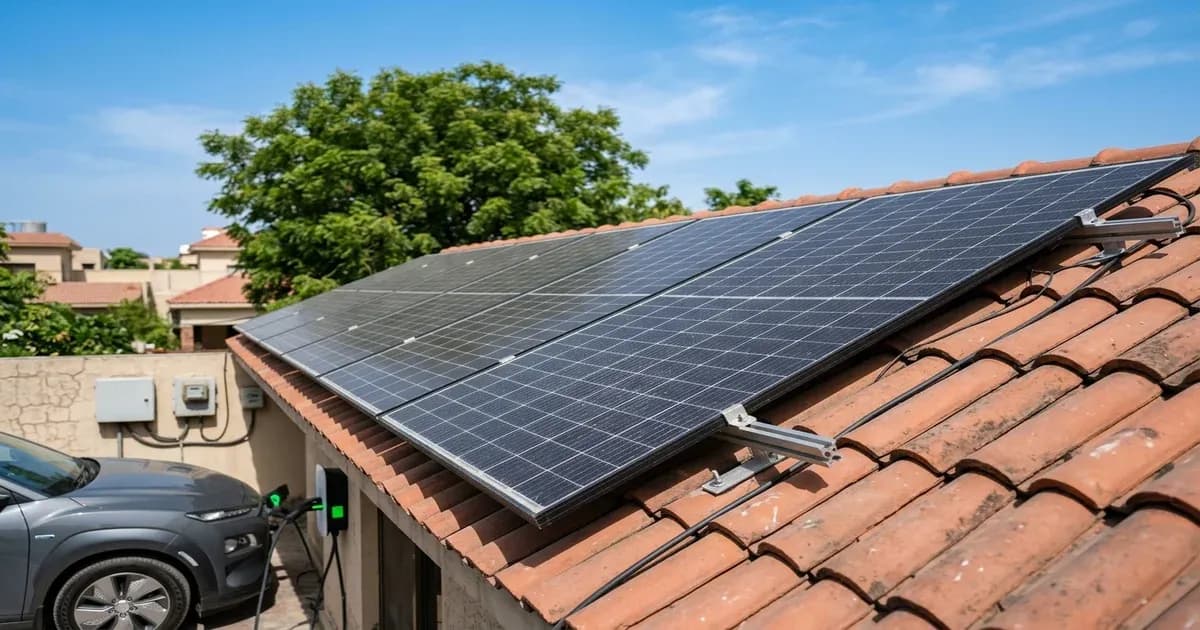
Charge Your Car From Your Roof - Complete Solar-EV Guide for Pakistan
{/* visual_plan: stat_block */}
Key Takeaways
- A standard EV operating 40 km daily requires 6 kWh of energy, supplied by approximately 3 to 4 solar panels of 585W rating.
- Utility grid tariffs in Pakistan reach Rs. 65/kWh (July 2026) during peak evening hours, making daytime solar charging highly cost-effective.
- Hybrid inverters with smart wallbox integration automatically direct excess solar generation to your vehicle while managing household power priority.
- Connecting rooftop solar to an electric vehicle reduces daily commuting costs from Rs. 10/km (July 2026) to effectively Rs. 0/km (July 2026).
Introduction
Rooftop solar EV charging in Pakistan offers a direct method to eliminate gasoline expenses and avoid escalating utility grid electricity tariffs. By pairing high-efficiency solar panels with smart hybrid inverters and dedicated Level 2 wallbox chargers, homeowners generate clean power for daily transportation directly from their roofs.
How does rooftop solar charging work for electric vehicles in Pakistan?
Rooftop solar EV charging converts sunlight into direct current electricity through photovoltaic panels installed on home roofs. A hybrid solar inverter converts this power into alternating current electricity to operate household appliances and power a dedicated electric vehicle charger.
Electricity tariffs across Pakistani DISCOs average Rs. 65/kWh (July 2026) during peak hours. Operating an electric car using grid power costs roughly Rs. 10/km (July 2026). Generating electricity from home rooftop solar panels reduces the energy production cost to under Rs. 5/kWh (July 2026) when amortized over the system lifetime, making daytime vehicle charging virtually free.
System sizing depends directly on your daily travel distance. An electric vehicle with an energy efficiency of 15 kWh per 100 km consumes roughly 6 kWh for a standard 40 km daily commute. A typical 5 kW solar PV system installed in Punjab or Sindh generates between 20 kWh and 25 kWh of electricity per day during clear weather, easily satisfying both residential baseline consumption and vehicle charging requirements.
What solar inverter and wallbox charger setup is required?
Selecting the correct inverter and wallbox charger ensures safe power transfer from panels to the vehicle without tripping circuit breakers. A 6 kW or 8 kW hybrid inverter with dual Maximum Power Point Tracking (MPPT) handles variable solar radiation while preserving home power stability.
The table below outlines common equipment specifications and estimated purchase prices across major Pakistani solar markets:
Component Type | Technical Rating | Estimated Cost | Recommended Operational Use |
|---|---|---|---|
Tier-1 Mono PERC / N-Type Panels | 585W - 600W rating | Rs. 30/W | Primary solar generation array |
Hybrid Smart Inverter | 8 kW Dual MPPT | Rs. 320,000 | Home power control and EV charging priority |
Smart Level 2 Wallbox Charger | 7 kW / 32A single-phase | Rs. 145,000 | Dedicated home vehicle charging port |
LiFePO4 Battery Storage Pack | 10 kWh / 51.2V | Rs. 480,000 | Overnight charging buffer and backup power |
Figures as of July 2026.
Level 2 wallbox chargers operating at 7 kW add approximately 35 km to 45 km of travel range per hour of charging. Connecting the charger to a smart hybrid inverter allows dynamic power management. When domestic household consumption spikes, the inverter automatically reduces EV charging current to prevent electrical overload.
What is the financial return and payback timeframe?
Installing a 7 kW solar system dedicated to household consumption and vehicle charging requires an initial capital outlay of approximately Rs. 890,000 (July 2026) including installation, wiring, mounting structure, and smart wallbox charger.
Comparing operational costs across vehicle fuel types demonstrates clear long-term savings:
Financial Metric | Petrol Sedan (12 km/L) | Electric Car on Grid Power | Electric Car on Rooftop Solar |
|---|---|---|---|
Monthly Energy Cost (1,200 km) | Rs. 28,000 | Rs. 11,700 | Rs. 0 |
Annual Operating Expense | Rs. 336,000 | Rs. 140,400 | Rs. 0 |
5-Year Cumulative Fuel Cost | Rs. 1,680,000 | Rs. 702,000 | Rs. 0 |
Net 5-Year Financial Savings | Baseline | Rs. 978,000 | Rs. 1,680,000 |
Figures as of July 2026.
Transitioning from a conventional petrol vehicle to an electric car charged via rooftop solar recovers the entire solar installation cost within 32 months of regular operation.
How to manage nighttime EV charging without grid reliance?
Vehicle owners who park their cars at home during evening hours cannot charge directly from daytime solar generation. Managing an EV charging setup without grid electricity during nighttime hours requires a dedicated lithium iron phosphate storage battery bank.
A 10 kWh LiFePO4 storage battery priced at Rs. 480,000 (July 2026) stores excess daytime solar generation. During evening hours, the hybrid inverter transfers stored battery energy into the vehicle battery pack. Alternatively, under NEPRA net billing rules, daytime excess solar electricity exported to DISCO grids at Rs. 22/kWh (July 2026) earns billing credits that offset evening grid charging draws.
Call to Action
To design an optimized rooftop solar EV charging system for your home, evaluate your daily travel mileage and consult certified AEDB solar installers for site surveys and net billing approvals.
Frequently Asked Questions
How many solar panels do you need to charge an electric car in Pakistan?
A standard electric car traveling 40 km daily consumes around 6 kWh. Producing 6 kWh requires approximately 3 to 4 solar panels of 585W rating under typical Pakistani sun conditions.
Can a hybrid inverter charge an EV directly from solar power?
Yes, modern hybrid inverters with smart EV charger integration can direct excess solar generation into your electric vehicle charger without drawing power from the utility grid.
Is grid net metering required for rooftop solar EV charging?
Net metering is not strictly required for home charging if you charge during daytime peak sun hours, but net billing helps offset nighttime charging costs using daytime export credits.
References
- nepra.org.pk Source - NEPRA Net Metering Regulations (Verified)
- aedb.org.pk Source - Alternative Energy Development Board (Verified)
- pbs.gov.pk Source - Pakistan Bureau of Statistics Trade Data (Verified)
- edb.gov.pk Source - Engineering Development Board EV Policy (Verified)
Frequently asked questions
How many solar panels do you need to charge an electric car in Pakistan?
A standard electric car traveling 40 km daily consumes around 6 kWh. Producing 6 kWh requires approximately 3 to 4 solar panels of 585W rating under typical Pakistani sun conditions.
Can a hybrid inverter charge an EV directly from solar power?
Yes, modern hybrid inverters with smart EV charger integration can direct excess solar generation into your electric vehicle charger without drawing power from the utility grid.
Is grid net metering required for rooftop solar EV charging?
Net metering is not strictly required for home charging if you charge during daytime peak sun hours, but net billing helps offset nighttime charging costs using daytime export credits.
References
- NEPRA — accessed 25 July 2026
- AEDB — accessed 25 July 2026
- Pakistan Bureau of Statistics — accessed 25 July 2026
- Engineering Development Board — accessed 25 July 2026
Related guides
More from reports & data stories.