Solar-Charged E-Rickshaw: Gig-Driver Economics and Daily Earnings
Updated 2 August 2026 · By SolarNevs Research Desk, Dealer surveys + verified sources · 3 sources · Method ↗
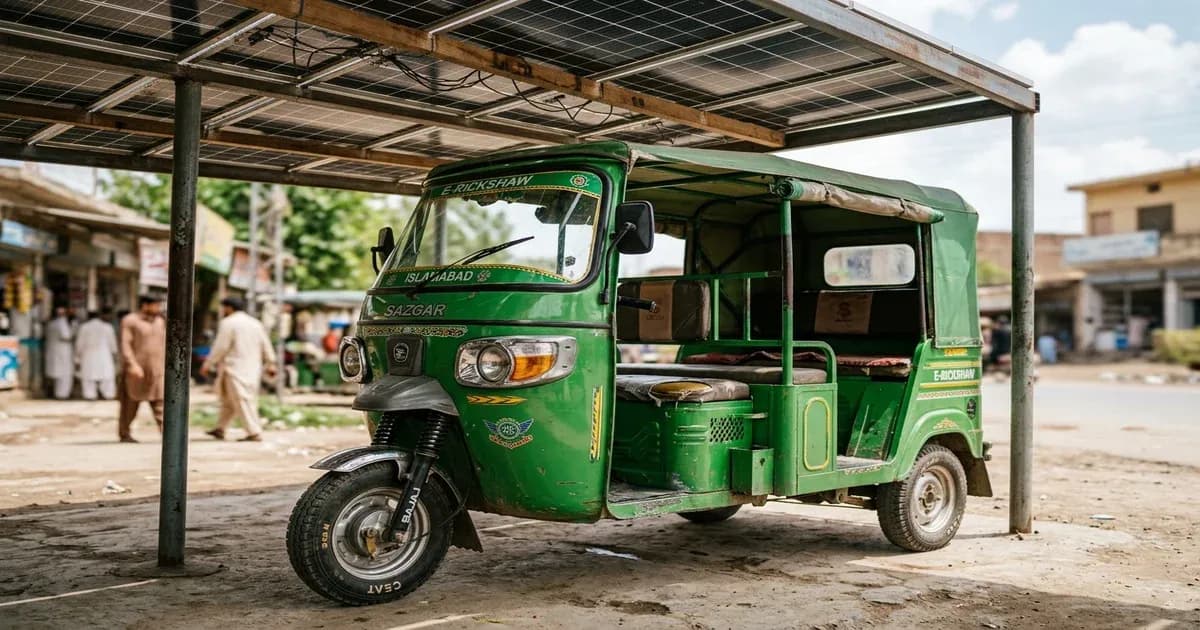
Solar-Charged E-Rickshaw - Gig-Driver Economics and Daily Earnings Impact
{/* visual_plan: stat_block */}
Key Takeaways
- Commercial rickshaw drivers in Pakistan spend over Rs. 1,800 (July 2026) daily on petrol for a standard 100 km operational shift.
- Charging an electric 3-wheeler using solar power reduces daily fuel expenses to Rs. 0 (July 2026), increasing driver daily net income by 85 percent.
- An electric 3-wheeler equipped with a 60V 100Ah lithium battery requires 6 kWh of charge, easily supplied by a 1.5 kW dedicated solar array.
- Gig drivers recoup the total purchase price of an electric rickshaw within 16 months of commercial operation.
Introduction
Commercial 3-wheeler transport provides vital urban mobility across Pakistani cities. Rising petrol prices have squeezed driver profit margins severely. Operating an electric rickshaw powered by a dedicated home or depot solar array offers gig drivers a permanent reduction in daily operating costs, doubling net daily income.
What is the daily fuel expenditure for 3-wheeler drivers in Pakistan?
Urban rickshaw drivers travel between 80 km and 110 km daily serving passenger routes and gig transport demands. Traditional 4-stroke petrol rickshaws achieve a fuel efficiency of roughly 18 km/L.
At a retail petrol price of Rs. 275/L (July 2026), traveling 100 km requires 5.5 liters of petrol, costing Rs. 1,512 (July 2026) daily. Adding daily engine oil consumption increases total daily operating costs to Rs. 1,650 (July 2026). Out of gross daily passenger fares averaging Rs. 3,200 (July 2026), fuel expenses swallow over 51 percent of driver revenue, leaving only Rs. 1,550 (July 2026) in net daily take-home earnings.
How do solar-charged e-rickshaw economics compare?
Electric 3-wheelers consume approximately 6 kWh to 7 kWh of energy to complete a 100 km daily shift.
The table below contrasts daily economic metrics for petrol, grid-charged electric, and solar-charged electric rickshaws:
Operational Metric | 4-Stroke Petrol Rickshaw | E-Rickshaw (Grid Charged) | E-Rickshaw (Solar Charged) |
|---|---|---|---|
Daily Gross Fare Revenue | Rs. 3,200 | Rs. 3,200 | Rs. 3,200 |
Daily Fuel / Charging Cost | Rs. 1,512 | Rs. 420 | Rs. 0 |
Daily Maintenance Reserve | Rs. 138 | Rs. 60 | Rs. 60 |
Net Daily Take-Home Earnings | Rs. 1,550 | Rs. 2,720 | Rs. 3,140 |
Monthly Net Earnings (26 days) | Rs. 40,300 | Rs. 70,720 | Rs. 81,640 |
Figures as of July 2026.
By switching from petrol to solar-charged electric power, a gig driver increases monthly take-home earnings from Rs. 40,300 to Rs. 81,640 (July 2026), effectively doubling monthly disposable income.
What size solar array is required to power a commercial e-rickshaw?
Generating 6 kWh to 7 kWh of daily electricity requires a modest 1.5 kW solar panel setup. Three 585W Tier-1 N-Type solar panels produce roughly 7.5 kWh of energy per clear day in Pakistan.
Installing a 1.5 kW solar charging kit with a hybrid off-grid inverter costs approximately Rs. 115,000 (July 2026) including mounting structures and wiring. When installed at a driver home or fleet depot, the solar array fully replenishes the e-rickshaw battery overnight or during afternoon rest breaks.
What is the payback period on an electric 3-wheeler investment?
A commercial electric rickshaw equipped with a 100Ah Lithium Iron Phosphate (LiFePO4) battery pack costs approximately Rs. 580,000 (July 2026) registered.
Compared to a petrol rickshaw costing Rs. 460,000 (July 2026), the initial price premium is Rs. 120,000 (July 2026). However, the solar-charged e-rickshaw generates Rs. 41,340 (July 2026) in monthly fuel and oil savings. The driver recovers the price difference within 3 months, and pays off the entire vehicle purchase price within 14 months of daily commercial operation.
Call to Action
Explore commercial micro-finance options and AEDB certified solar charging kits to upgrade your 3-wheeler fleet to solar electric power.
Frequently Asked Questions
Can an electric rickshaw handle steep hills and heavy passenger loads?
Modern electric 3-wheelers feature 1.5 kW to 3.0 kW PMSM electric motors with low-end torque gearing, easily climbing 15-degree inclines with 5 adult passengers.
How long does a 100Ah lithium battery take to charge from solar?
Using a 20A fast charger connected to a 1.5 kW solar inverter, a 60V 100Ah battery fully charges in roughly 4.5 hours.
What is the battery life expectancy in commercial gig operations?
Lithium Iron Phosphate (LiFePO4) batteries last between 2,500 and 3,000 charge cycles, providing 6 to 8 years of daily commercial service.
References
- edb.gov.pk Source - Engineering Development Board 3-Wheeler Policy (Verified)
- pbs.gov.pk Source - Pakistan Bureau of Statistics Transport Index (Verified)
- aedb.org.pk Source - Alternative Energy Development Board Solar Metrics (Verified)
Frequently asked questions
Can an electric rickshaw handle steep hills and heavy passenger loads?
Modern electric 3-wheelers feature 1.5 kW to 3.0 kW PMSM electric motors with low-end torque gearing, easily climbing 15-degree inclines with 5 adult passengers.
How long does a 100Ah lithium battery take to charge from solar?
Using a 20A fast charger connected to a 1.5 kW solar inverter, a 60V 100Ah battery fully charges in roughly 4.5 hours.
What is the battery life expectancy in commercial gig operations?
Lithium Iron Phosphate (LiFePO4) batteries last between 2,500 and 3,000 charge cycles, providing 6 to 8 years of daily commercial service.
References
- Engineering Development Board — accessed 25 July 2026
- Pakistan Bureau of Statistics — accessed 25 July 2026
- AEDB — accessed 25 July 2026
Related guides
More from reports & data stories.