Zero-bill household blueprint: solar + battery + EV under net billing
Updated 2 August 2026 · By SolarNevs Research Desk, Dealer surveys + verified sources · 4 sources · Method ↗
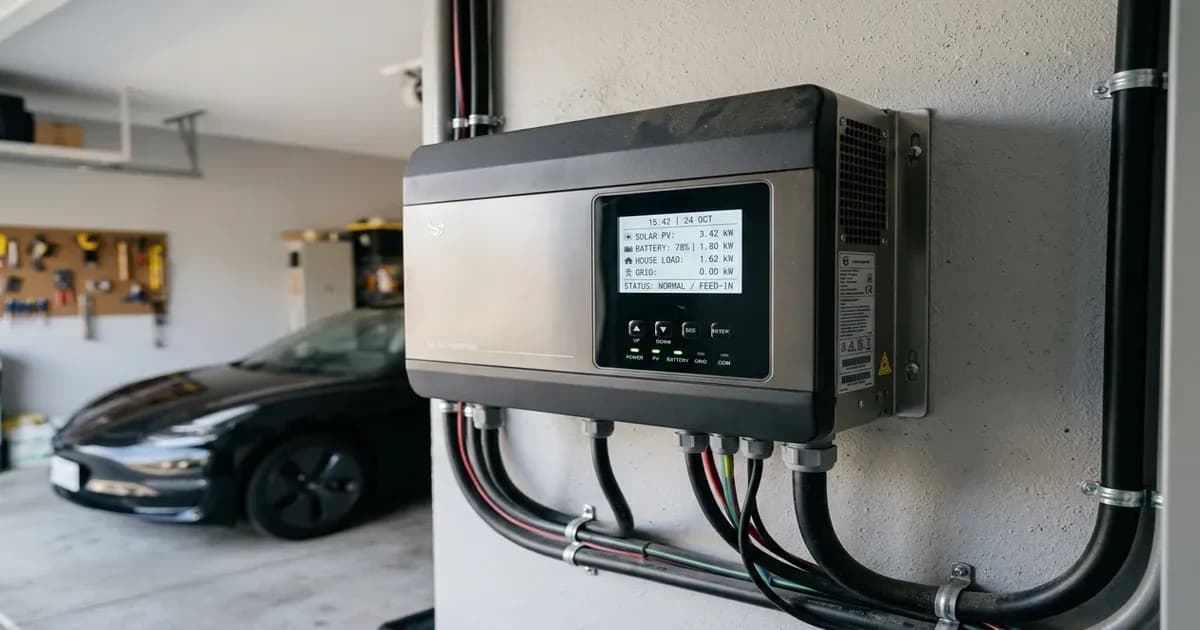
Zero-Bill Household Blueprint
{/* visual_plan: stat_block */}
Key Takeaways
- The zero-bill household blueprint eliminates grid power bills using solar, storage, and EVs.
- The average rate for premium N-type panels is Rs 38 to Rs 43 (July 2026) per watt.
- Battery storage is essential to cover evening peak rates of Rs 50 to Rs 65 (July 2026) per kWh.
- Serial verification via official barcodes is essential to prevent grey market warranty rejection.
How does the zero-bill household blueprint work in Pakistan?
The zero-bill household blueprint offers a practical path to eliminate grid power costs in residential properties. This framework integrates high-efficiency solar generation, lithium battery storage, and electric vehicles into a single home energy network. The average rate for premium N-type panels is Rs 38 to Rs 43 (July 2026) per watt.
Under this setup, daytime solar generation feeds home appliances and charges the battery bank. Any excess power is routed to charge the EV, replacing petrol costs with free solar energy. During the evening peak hours, when grid power is most expensive, the house runs on battery power instead of importing utility electricity.
System Component | Role in Blueprint | Average Cost Segment |
|---|---|---|
Solar Arrays (N-Type) | Day generation | Rs 38 to Rs 43 (July 2026) per watt |
Lithium Batteries | Evening peak coverage | Premium import rates |
EV Charger | Commute fuel replacement | Standard smart chargers |
What battery capacity is required to eliminate evening grid costs?
Eliminating evening grid costs requires a battery storage bank matched to your peak consumption. Standard residential setups in Lahore and Karachi consume between 10kWh and 15kWh during peak night hours. Choosing the correct capacity ensures you do not import power from the grid.
Lithium batteries are preferred over tubular batteries because they support deeper discharge rates and longer lifetimes. They also perform better in high temperatures, maintaining efficiency in warm weather.
Adding smart battery management allows you to control charging times. The system charges batteries during midday solar peaks and holds that power until peak grid rates begin in the evening.
What variables shape solar-EV convergence investment sheets?
Several local and global factors influence the retail cost of panels in Pakistan. The Finance Act 2025 applied a 10% general sales tax to solar imports, raising the final cost for retail consumers. This import tax is fully integrated into current dealer price lists.
China manufacturing supply levels remain the largest driver of wholesale rates. Since standard cells are produced in China, global supply surpluses keep raw import prices low. However, local cargo handling fees and shipping container rates can fluctuate, altering local rates weekly.
Local dollar liquidity also shifts retail prices. Because import letters of credit are settled in US dollars, any change in the exchange rate shifts the local rupee price list. When the local currency stabilizes, panel costs remain predictable.
How does net billing alter your solar investment returns?
The current NEPRA net billing rules have changed the return on investment math for solar systems. Exporting excess power to the national grid pays around Rs 11 (July 2026) per kWh. Meanwhile, purchasing grid electricity costs between Rs 50 and Rs 65 (July 2026) per kWh, depending on consumption brackets.
This rate gap makes storing generated energy highly beneficial. Simply exporting excess power is no longer as profitable as it was under the old net metering rules. Homeowners install battery storage to hold daytime generation for use at night, reducing utility purchases.
Tubular battery setups offer a cheaper entry cost but require replacement within a few years. Lithium batteries demand higher upfront investments but supply better cycle lifetimes and efficiency in warm weather. Choosing the correct battery capacity helps maximize the value of your solar plate system.
How can you verify original components in local retail shops?
Verifying the authenticity of panels is necessary to secure official warranty coverage. The grey market contains many copycat or B-grade panels that do not carry manufacturer warranties. Distributors have established online portals for barcode verification.
Every original panel has a unique barcode sealed under the front glass and printed on the frame label. Buyers must scan this barcode using the official mobile tool before accepting delivery. The portal will confirm if the module is a genuine Tier-1 product registered for the Pakistani region.
Purchasing from authorized dealers is the best way to avoid fake modules. Authorized distributors supply original packaging and warranty certificates that are accepted by local service centers.
Where can you buy authentic panels in major cities?
Lahore hosts the largest retail market for solar equipment in Punjab. Hall Road features numerous specialized retailers and distributors who compete directly on price. This competition keeps profit margins low, helping retail customers find competitive deals.
Karachi houses major import storage depots near the port, making it a key distribution center for Sindh and Balochistan. Dealers in Karachi purchase inventory directly from shipping containers, ensuring fresh manufacturing batches.
Before shopping, buyers should research current retail price guides online. Understanding baseline per-watt costs helps consumers avoid counterfeit deals or inflated retail markups.
What is the zero-bill household blueprint?
The blueprint combines N-type solar panels, lithium battery storage, and an EV to reduce grid electricity bills to zero (July 2026).
What is the average price of N-type solar panels?
N-type solar panels range from Rs 38 to Rs 43 per watt (July 2026) in the retail market.
What is the net billing export rate for solar systems in Pakistan?
Under the NEPRA prosumer rules, the export rate is around Rs 11 per kWh (July 2026).
References
Frequently asked questions
What is the zero-bill household blueprint?
The blueprint combines N-type solar panels, lithium battery storage, and an EV to reduce grid electricity bills to zero (July 2026).
What is the average price of N-type solar panels?
N-type solar panels range from Rs 38 to Rs 43 per watt (July 2026) in the retail market.
What is the net billing export rate for solar systems in Pakistan?
Under the NEPRA prosumer rules, the export rate is around Rs 11 per kWh (July 2026).
References
- Solar Citizen — accessed 25 July 2026
- W11Stop — accessed 25 July 2026
- NEPRA — accessed 25 July 2026
- FBR — accessed 25 July 2026
Related guides
More from reports & data stories.