The Zero-Cost Per Km Commute: Solar + E-Bike Total Math
Updated 2 August 2026 · By SolarNevs Research Desk, Dealer surveys + verified sources · 3 sources · Method ↗
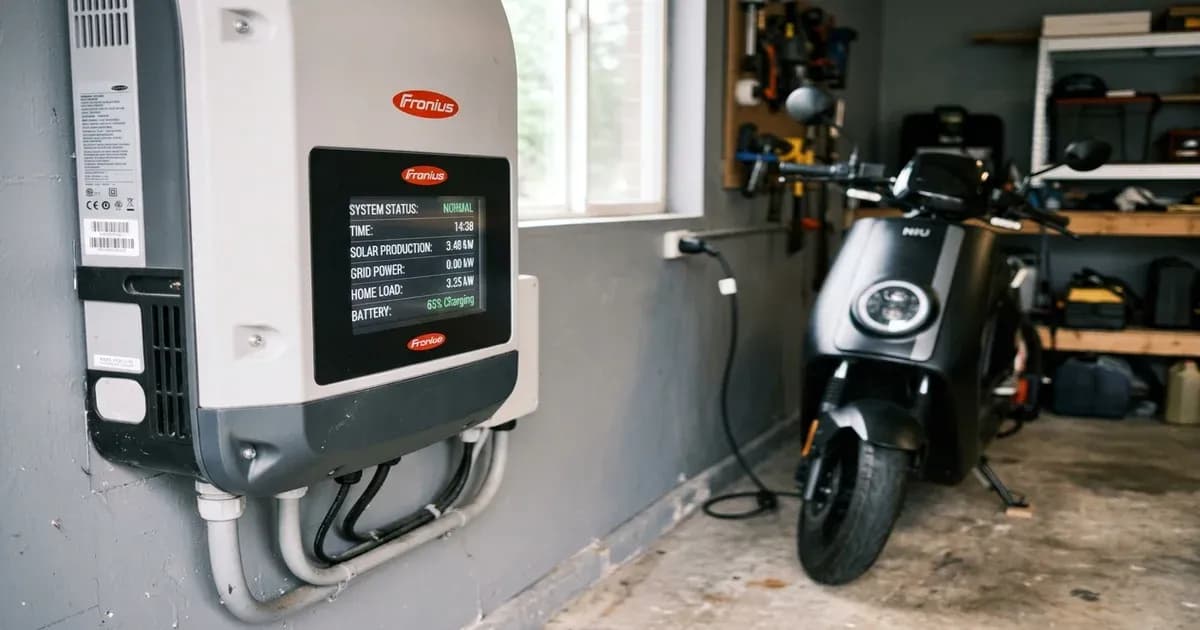
The Zero-Cost Per Km Commute - Solar + E-Bike Total Math
{/* visual_plan: stat_block */}
Key Takeaways
- Combining an electric bike with rooftop solar charging reduces commuting fuel expenditure from Rs. 275/L (July 2026) petrol costs to effectively Rs. 0/km (July 2026).
- An electric bike traveling 40 km daily consumes roughly 1.3 kWh of electricity, costing Rs. 0 (July 2026) when supplied by daytime solar panels.
- Total 3-year ownership expenditure for a solar-charged e-bike equals Rs. 245,000 (July 2026) including purchase price, compared to Rs. 490,000 (July 2026) for a petrol bike.
- The initial capital investment in an e-bike and solar charging setup is fully recouped within 14 months of daily usage.
Introduction
Rising fuel prices and elevated inflation in Pakistan have turned daily motorcycle commuting into a major household financial strain. Combining an electric motorcycle with rooftop solar power offers Pakistani urban commuters a proven financial path to achieve a true zero-cost daily commute costing Rs. 0/km (July 2026) in marginal fuel outlay.
What is the total math behind the zero-cost solar e-bike commute?
The financial concept of a zero-cost commute resting on Rs. 0/km (July 2026) fuel expense involves replacing recurring liquid fuel purchases with a one-time capital investment in electric mobility and solar generation.
A typical 70cc petrol motorcycle consumes 1 liter of fuel every 40 km. At current retail petrol prices of Rs. 275/L (July 2026), a daily 40 km commute costs Rs. 275 (July 2026) in fuel alone, amounting to Rs. 8,250 (July 2026) monthly or Rs. 99,000 (July 2026) per year.
By contrast, an electric motorcycle with a 60V 30Ah lithium battery requires 1.3 kWh of electrical energy for the same 40 km distance. When charged during daylight hours using rooftop solar energy, the marginal fuel cost drops to Rs. 0/km (July 2026).
How do operating costs compare across 50,000 kilometers of travel?
To evaluate true economic performance, we compare total operating costs across a 50,000 km service lifespan (roughly 3.5 years of heavy daily commuting).
The table below details total expenditure across all vehicle maintenance and fuel categories:
Cost Parameter | 70cc Petrol Motorcycle | E-Bike (Grid Charged) | E-Bike (Rooftop Solar Charged) |
|---|---|---|---|
Vehicle Purchase Price | Rs. 165,000 | Rs. 210,000 | Rs. 210,000 |
Dedicated Solar Panel Addition | N/A | N/A | Rs. 35,000 |
50,000 km Fuel / Energy Cost | Rs. 343,750 | Rs. 97,500 | Rs. 0 |
Engine Oil & Filter Changes | Rs. 42,000 | Rs. 0 | Rs. 0 |
Brake Pads, Tires, & Chains | Rs. 28,000 | Rs. 22,000 | Rs. 22,000 |
Battery Replacement at 35,000 km | N/A | Rs. 65,000 | Rs. 65,000 |
Total 50,000 km Lifetime Cost | Rs. 578,750 | Rs. 394,500 | Rs. 332,000 |
Figures as of July 2026.
Over 50,000 km, the solar-charged e-bike saves the commuter Rs. 246,750 (July 2026) compared to maintaining a standard petrol motorcycle.
What is the exact financial payback period for the investment?
Investing in an electric motorcycle priced at Rs. 210,000 (July 2026) plus two dedicated solar panels priced at Rs. 35,000 (July 2026) requires total upfront capital of Rs. 245,000 (July 2026).
By eliminating daily petrol costs of Rs. 275 (July 2026) and monthly engine oil changes of Rs. 1,200 (July 2026), monthly savings equal Rs. 9,450 (July 2026). Dividing the total initial investment by monthly savings yields a payback period of 25.9 months. After month 26, every kilometer traveled represents pure profit and operational savings.
How to organize daily charging habits for optimal performance?
Maximizing solar charging efficiency requires matching your vehicle plugin schedule with peak solar production hours.
Plugging in your electric bike between 10:00 AM and 3:00 PM ensures the charger draws energy directly from solar panels rather than backup batteries or the grid. For office commuters who park away from home during the day, using a secondary battery pack or deploying daytime net billing exports allows evening charging at zero effective grid cost.
Call to Action
Calculate your daily commute distance and compare your monthly petrol bill against a zero-cost solar e-bike setup to start saving today.
Frequently Asked Questions
How many years does an electric bike lithium battery last?
High-quality Lithium Iron Phosphate (LiFePO4) battery packs endure 2,000 full charge cycles, providing 5 to 7 years of reliable daily service before capacity degrades to 80 percent.
Can I charge an e-bike from a small 1 kW off-grid solar inverter?
Yes, standard portable e-bike chargers consume between 250W and 450W of power, which easily operates on a 1 kW off-grid inverter setup.
Is registration mandatory for electric bikes in Pakistan?
Yes, provincial excise departments require registration for electric motorcycles, though registration fees are lower than petrol bikes in most provinces.
References
- pbs.gov.pk Source - Pakistan Bureau of Statistics Energy Tariffs (Verified)
- aedb.org.pk Source - Alternative Energy Development Board Solar Data (Verified)
- edb.gov.pk Source - Engineering Development Board E-Bike Standards (Verified)
Frequently asked questions
How many years does an electric bike lithium battery last?
High-quality Lithium Iron Phosphate (LiFePO4) battery packs endure 2,000 full charge cycles, providing 5 to 7 years of reliable daily service before capacity degrades to 80 percent.
Can I charge an e-bike from a small 1 kW off-grid solar inverter?
Yes, standard portable e-bike chargers consume between 250W and 450W of power, which easily operates on a 1 kW off-grid inverter setup.
Is registration mandatory for electric bikes in Pakistan?
Yes, provincial excise departments require registration for electric motorcycles, though registration fees are lower than petrol bikes in most provinces.
References
- Pakistan Bureau of Statistics — accessed 25 July 2026
- AEDB — accessed 25 July 2026
- Engineering Development Board — accessed 25 July 2026
Related guides
More from reports & data stories.