V2G Explained: When Your Car Powers Your House (2027-28 Pilot Roadmap)
Updated 2 August 2026 · By SolarNevs Research Desk, Dealer surveys + verified sources · 3 sources · Method ↗
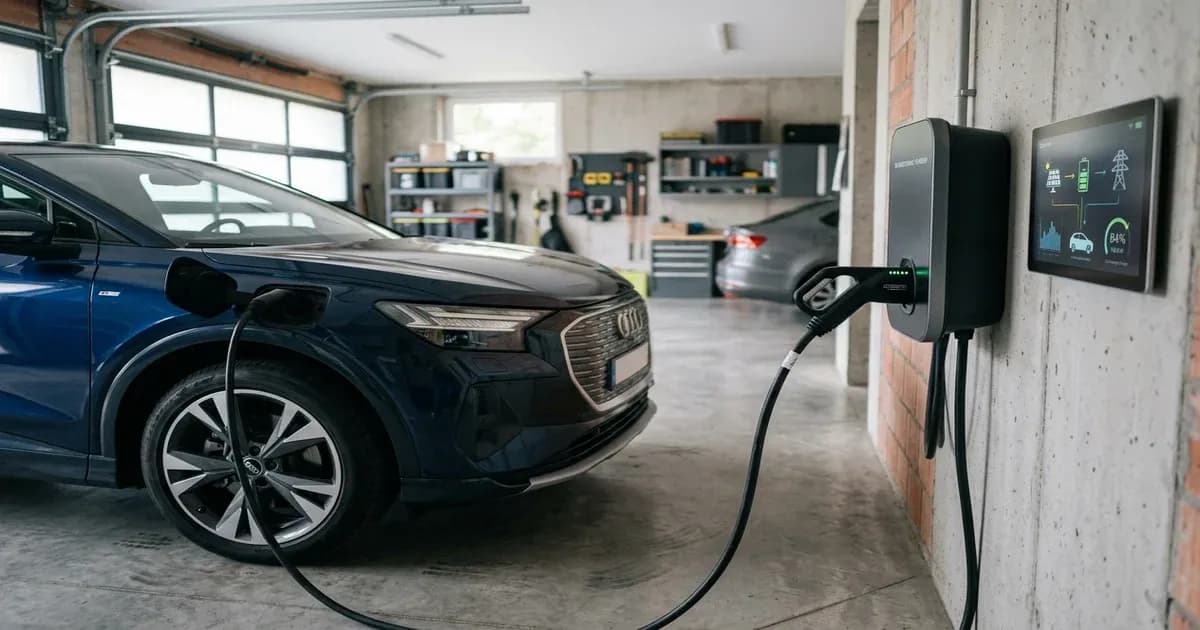
V2G Explained - When Your Car Powers Your House (2027-28 Pilot Roadmap)
{/* visual_plan: stat_block */}
Key Takeaways
- Vehicle-to-Grid (V2G) technology allows electric vehicles to export stored battery power back to home circuits or utility grids during power outages.
- An electric car with a 50 kWh battery pack can power a standard Pakistani household baseline load for up to 4 consecutive days.
- NEPRA and the Engineering Development Board have drafted a pilot roadmap for V2G grid integration testing across major cities by 2027-2028.
- Bidirectional Level 2 chargers supporting ISO 15118 protocols currently cost approximately Rs. 380,000 (July 2026) in local markets.
Introduction
Vehicle-to-Grid (V2G) and Vehicle-to-Home (V2H) technology transforms electric vehicles from simple transportation machines into mobile energy storage banks. In Pakistan, where grid load shedding and peak electricity tariffs pose constant challenges, V2G allows EV owners to power their homes directly from their car batteries during evening grid outages.
What is V2G and V2H technology and how does it work?
Vehicle-to-Grid (V2G) enables bidirectional electrical energy flow between an electric vehicle battery pack and the power grid. Vehicle-to-Home (V2H) is a localized subset that directs car battery energy specifically into domestic home electrical wiring during grid interruptions.
Standard EV chargers operate in one direction, drawing AC power from the home and pushing DC power into the vehicle battery. Bidirectional V2H chargers feature dual-inverter circuitry capable of converting EV battery DC power back into regulated 220V AC electricity for household consumption.
Because a typical electric passenger car carries a battery capacity between 40 kWh and 70 kWh, it holds far more energy than standard residential wall batteries (which usually store 5 kWh to 10 kWh). A single fully charged EV can operate household lights, fans, refrigeration, and electronics for several days during prolonged grid blackouts.
What are the technical hardware specifications for bidirectional charging?
Operating V2H or V2G requires compatible vehicle protocols, a bidirectional wallbox charger, and a grid isolation transfer switch.
The hardware parameter table below lists necessary equipment standards for V2G operation in Pakistan:
Equipment Element | Technical Protocol | Estimated Cost | Operational Role |
|---|---|---|---|
Bidirectional DC Charger | ISO 15118-20 / CCS2 / GB/T | Rs. 380,000 (July 2026) | Manages 2-way power transfer |
Automatic Transfer Switch (ATS) | 63A 4-Pole Grid Isolation | Rs. 45,000 (July 2026) | Prevents dangerous grid backfeeding |
Vehicle Communications Gateway | PLC (Power Line Comm) | Integrated in EV | Coordinates battery BMS safety protocols |
Smart Energy Management System | RS-485 / Wi-Fi Smart Hub | Rs. 35,000 (July 2026) | Prioritizes home loads over vehicle discharge |
Vehicles equipped with GB/T or CCS2 bidirectional charging protocols (such as BYD, MG, and select Asian EVs) communicate continuously with the charger to control discharge rates and protect internal battery health.
What is NEPRA's 2027-2028 pilot roadmap for grid integration?
NEPRA, in coordination with distribution companies and the Engineering Development Board, is establishing technical regulatory frameworks to accommodate bidirectional EV energy exports.
The implementation roadmap proceeds through distinct testing phases below.
Phase 1 (2025-2026) - V2H Residential Validation. Testing localized V2H backup power in private residences to verify islanding protection safety.
Phase 2 (2027) - Urban DISCO Pilot Programs. Launching trial V2G programs in K-Electric and LESCO territories to evaluate evening peak shaving benefits.
Phase 3 (2028) - Commercial V2G Net Billing. Establishing standardized feed-in tariffs allowing EV owners to sell evening battery power back to DISCO grids at premium peak rates.
How does bidirectional discharging impact EV battery lifespan?
A common concern regarding V2G adoption is premature battery capacity loss. Modern Lithium Iron Phosphate (LiFePO4) EV batteries offer extreme thermal and chemical stability, handling over 3,000 full charge cycles.
Discharging 5 kWh daily for home baseline lighting consumes less than 10 percent of a 50 kWh car battery pack. Over an entire year, V2H home power discharge adds only 35 equivalent full battery cycles, resulting in negligible battery degradation under 0.5 percent per year.
Call to Action
When purchasing a new electric vehicle in Pakistan, verify that its onboard charging system supports ISO 15118 bidirectional protocols for future V2H home energy backup.
Frequently Asked Questions
Is V2G currently legal for grid export in Pakistan?
Isolating V2H for emergency home backup is permitted behind the meter, while formal V2G grid export trials are scheduled under NEPRA's 2027-2028 regulatory roadmap.
What is the difference between V2L, V2H, and V2G?
V2L (Vehicle-to-Load) powers single appliances through a socket; V2H (Vehicle-to-Home) powers an entire house panel; V2G (Vehicle-to-Grid) exports power to the utility grid.
Can V2H replace a traditional diesel generator during power outages?
Yes, V2H operates completely silently with zero exhaust emissions, delivering clean 220V power faster and more reliably than fossil fuel backup generators.
References
- nepra.org.pk Source - NEPRA Regulatory Framework for Smart Grids (Verified)
- edb.gov.pk Source - Engineering Development Board EV Safety Guidelines (Verified)
- aedb.org.pk Source - Alternative Energy Development Board Storage Standards (Verified)
Frequently asked questions
Is V2G currently legal for grid export in Pakistan?
Isolating V2H for emergency home backup is permitted behind the meter, while formal V2G grid export trials are scheduled under NEPRA's 2027-2028 regulatory roadmap.
What is the difference between V2L, V2H, and V2G?
V2L (Vehicle-to-Load) powers single appliances through a socket; V2H (Vehicle-to-Home) powers an entire house panel; V2G (Vehicle-to-Grid) exports power to the utility grid.
Can V2H replace a traditional diesel generator during power outages?
Yes, V2H operates completely silently with zero exhaust emissions, delivering clean 220V power faster and more reliably than fossil fuel backup generators.
References
- NEPRA — accessed 25 July 2026
- Engineering Development Board — accessed 25 July 2026
- AEDB — accessed 25 July 2026
Related guides
More from reports & data stories.