Generator and Solar Hybrid Inverter Wiring Problems in Pakistan
Updated 15 September 2026 · By SolarNevs Research Desk, Dealer surveys + verified sources · 23 sources · Method ↗
Key Takeaways
- On Deye-family hybrids, which includes Inverex Nitrox, Generator Input, Smart Load Output and Micro Inverter Input are three exclusive identities of one physical port, so choosing one disables the other two.
- Deye's own configuration guidance is to keep battery charging plus house consumption together at roughly 70 to 80 percent of the generator's nominal power so the set does not stall (checked 26 July 2026).
- Voltronic-firmware inverters, including Growatt SPF, have a selectable AC input window of 170-280V AC in UPS mode and 90-280V AC in appliance mode, and a generator normally needs the wider setting.
- Only one neutral-earth bond may exist in a live system at any moment. With a floating neutral, an RCD cannot trip on a single earth fault, so the protection you paid for does nothing.
- A manual 2-pole 63A changeover sells for Rs 2,200 and a 4-pole 63A for Rs 4,500 (July 2026), which is a trivial cost against back-feeding a dead WAPDA line.
Why does a hybrid inverter refuse to accept generator power?
The complaint is always the same. Grid comes, the inverter charges. Generator runs, the inverter shows the AC input as absent, flickers in and out, or charges for thirty seconds and drops the source. The set is running fine and the inverter is behaving as designed.
Hybrid inverters do not simply take whatever AC arrives. They inspect it. If the voltage sits outside the configured window, or the frequency wanders, or the waveform is distorted enough, the inverter releases the source rather than risk its own hardware. Field reports describe this directly. Current surges appear inside the inverter when its own sinewave shape does not match the incoming AC shape, and severe input distortion produces current peaks beyond internal limits, at which point the inverter releases from the generator.
Three settings cause most rejections in Pakistani houses.
The AC input window is the first. Voltronic-firmware inverters, which covers Growatt SPF and the Axpert-derived local badges, expose an AC input voltage range under program 03. UPS mode accepts 170-280V AC. Appliance mode accepts 90-280V AC. A grid connection can live in UPS mode. A small petrol or diesel set with a wandering output usually cannot, so the wider appliance window is what allows it to be seen at all.
The charge current is the second, and it is the one nobody checks. If the charger is set to pull more than the set can deliver, the generator bogs down, its voltage and frequency sag, the inverter sees bad power and disconnects, the load drops off, the set recovers, the inverter reconnects, and the cycle repeats. Practitioners describe this as the genset stumbling under too high a charging current combined with too much pass-through load. The fix is to drop the input current limit low, often to somewhere around 10 to 14A on a small set, confirm the inverter holds the source, then raise it in steps.
Frequency is the third, and it is the one you cannot adjust away. An AVR regulates voltage and has no effect on frequency at all. On a fixed-rpm set, governor hunting produces a wobble in output frequency, and cheap sets wander more under changing load. If the inverter keeps releasing the source after voltage and current settings are correct, you are looking at a mechanical governor problem, not a menu problem.
Should the generator feed the inverter AC input or a changeover switch?
Both layouts are used in Pakistan and they solve different problems.
Feeding the inverter's generator input lets the set charge the battery bank and support the load at the same time, with the inverter arbitrating between sources. That is the layout worth having if the battery is the point of the system. It is also the layout that produces every settings problem described above.
Feeding a changeover switch upstream of everything keeps the set completely separate. The house runs on generator or it runs on the solar system, never both. It is cruder, it does not charge the batteries from the set, and it is close to unbreakable.
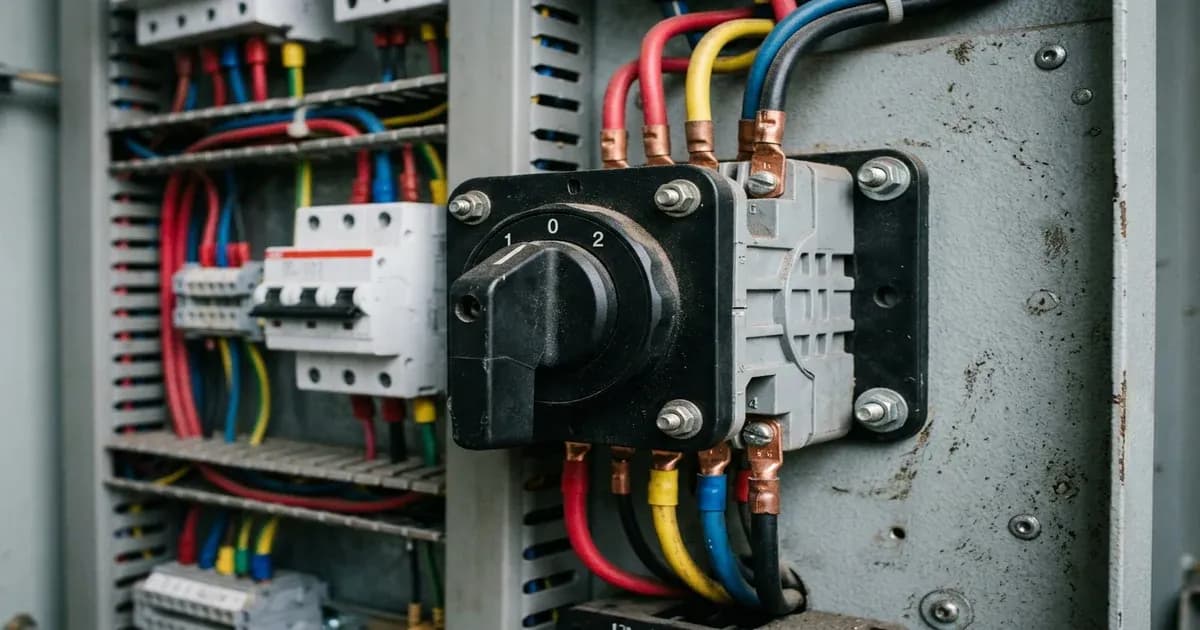
What must never happen is two sources connected to the same wiring at once. A changeover switch or an automatic transfer switch exists precisely so that only one source can be live. Without a mechanical interlock you can back-feed a dead WAPDA line, and back-feeding a dead line can kill a lineman working to restore your supply. Using ordinary breakers as a homemade transfer arrangement is dangerous for the same reason.
The parts are cheap enough that there is no excuse. A manual 2-pole 63A changeover lists at Rs 2,200 and a manual 4-pole 63A at Rs 4,500. An automatic transfer switch runs from Rs 5,500 for a 2-pole 100A YCQ4 unit to Rs 8,250 for a 2-pole 63A YCQR and Rs 15,500 for the 4-pole version (July 2026).
Why does the GEN port lock out other inverter features?
On Deye-family hybrids, and therefore on Inverex Nitrox units built under that OEM arrangement, there is a design detail that catches installers out. Generator Input, Smart Load Output and Micro Inverter Input are three exclusive identities of the same physical port. Only one function may be selected.
That has consequences people discover late. If your installer wired an existing on-grid inverter or a set of micro-inverters into the GEN port for AC coupling, the generator input is gone. If a smart load such as a water pump was assigned to that port, again, the generator has nowhere to land. Before buying a set, check what the port is already doing.
The same guidance warns that where a contactor is used to temporarily connect neutral and earth on the emergency side to recreate a TN-S arrangement, the contactor, its type, its wiring and the neutral regime must correspond to the exact installation diagram. That is not boilerplate. It is the introduction to the next problem.
What goes wrong with neutral and earth bonding?
This is the failure that hurts people rather than equipment, and it is close to invisible until something goes wrong.
Portable generators ship in two forms. Some have the neutral bonded to the frame and earth internally. Others float, with no bond at all, and converting a bonded set to floating is a matter of removing the neutral-to-earth jumper. Meanwhile the house has its own bond at the main distribution board, and the hybrid inverter creates a new separately derived supply when it runs off battery.
Two rules follow. One neutral-earth bond, and only one, must exist in the live system at any moment. Two bonds create a parallel path for neutral current through your earth conductor. Deye's configuration guidance puts the danger plainly, noting that a neutral-earth error can cause a short circuit on the grid return.
Zero bonds are worse in a quieter way. With a floating neutral, an RCD cannot trip on a single earth fault, because without a connection to earth there is nowhere for the imbalance current to go. Your earth leakage breaker sits there looking installed and protects nobody. Households running an inverter in island mode with a floating output have short-circuit and overload protection only, which is the configuration that turns a live-to-frame fault into a fatality.
This is not a job to work out on the roof with a test lamp. It is the clearest example of a fault that belongs to somebody with an insulation tester, which is covered in when to call a solar technician.
How big should the generator be and what should you set?
Sizing has a published rule from more than one manufacturer. SolaX states that the generator's rated output power shall be greater than the sum of load power and battery charge power. Deye's guidance adds the practical margin, recommending that charging and household consumption together stay around 70 to 80 percent of the generator's nominal power so the set does not stall.
Work it in that order. Take the household load you intend to run on generator. Add the charge power you want. On SolaX hybrids the maximum charging power from a generator is configurable from 0 to 30,000W, with defaults of 5,000W on three-phase and 3,000W on single-phase, so the default alone can exceed a small domestic set. Divide the total by 0.75 and that is your minimum generator rating. Then set the charge current on the inverter to match reality rather than ambition.
One more protection detail is worth insisting on. SolaX specifies that a standalone CT is required for anti-backflow to protect the generator, because the analogue signal responds faster than the digital signal from a meter. Without it, surplus energy can be pushed back toward a set that cannot absorb it.
Which error codes point at the generator rather than the inverter?
Code | Family | What it means | Generator-side reading |
|---|---|---|---|
F13 | Deye | Working or grid mode changed | Normal when a source appears or drops. Constant F13 means the set is cycling in and out. |
F35 | Deye | No AC grid detected | The inverter cannot see the set at all. Check the input window and the wiring to the port. |
F42 | Deye | AC line low voltage | The set is sagging under load. Reduce charge current before blaming the inverter. |
F47 / F48 | Deye | AC over frequency / under frequency | Governor hunting. A settings change will not fix this. |
F23 | Deye | AC leakage current, transient overcurrent | Look hard at the neutral-earth arrangement. |
F34 | Deye | AC overcurrent | Charge current plus pass-through load exceeds what the source can hold. |
03 | Voltronic | Battery voltage too high while AC charging, above 63V | Charger settings wrong for the bank, often after a generator charge session. |
07 | Voltronic | Overload time out at 110 percent for 10s or 150 percent for 5s | The set and the inverter are both being asked for more than they have. |
There is one last question worth asking before any of this. Petrol was raised by Rs 4.40 to Rs 331.52 per litre effective 24 July 2026, and under the daily pricing mechanism one tracker already showed Rs 335.18 per litre for 25 July 2026, so treat any fuel figure you read as a snapshot. Against that, grid import runs up to Rs 50 to Rs 65 per unit and solar export earns roughly Rs 11 per unit under the net billing rules issued on 9 February 2026 (July 2026). A generator is the most expensive source in the house by a wide margin. Wiring it correctly matters, and so does arranging the system so that it almost never has to run. If a code in the table above is unfamiliar, the inverter error code glossary has the full map.
Frequently asked questions
Why does my hybrid inverter not accept generator power?
Usually the AC input window is set to UPS mode, or the charge current is set higher than the generator can hold. Widen the input range and cut the charge current first.
How big should a generator be for a hybrid inverter?
Its rated output must exceed the house load plus the battery charge power. Keep charging and consumption together at roughly 70 to 80 percent of the generator's nominal rating so it does not stall.
Should the generator neutral be bonded to earth?
One neutral-earth bond must exist in the live system, and never two at once. A floating neutral leaves your earth leakage breaker unable to trip on a single fault.
References
- WattUneed — accessed 26 July 2026
- Solartech France — accessed 26 July 2026
- SolaX Power Support — accessed 26 July 2026
- Inclusive Inc — accessed 26 July 2026
- Watts247 — accessed 26 July 2026
- Solar-Electric Forum — accessed 26 July 2026
- DIY Solar Power Forum on inverters that recognise but reject generator charge — accessed 26 July 2026
- Mike Holt forum on portable generator floating neutral — accessed 26 July 2026
- DIY Solar Power Forum on ground and neutral bonding for hybrid inverters — accessed 26 July 2026
- JustAnswer — accessed 26 July 2026
- CNC Electric Pakistan — accessed 26 July 2026
- Indiana Electric Cooperatives — accessed 26 July 2026
- CNC Electric Pakistan — accessed 26 July 2026
- Inverter Error Codes — accessed 26 July 2026
- Scribd — accessed 26 July 2026
- ManualsLib — accessed 26 July 2026
- Profit by Pakistan Today on the 24 July 2026 fuel price notification — accessed 26 July 2026
- Daily Pakistan — accessed 26 July 2026
- Business Recorder on the Rs 4.40 petrol increase — accessed 26 July 2026
- Petrol Price PK — accessed 26 July 2026
- Mashriq TV — accessed 26 July 2026
- Dawn — accessed 26 July 2026
- The Express Tribune — accessed 26 July 2026
Related guides
More from inverter errors & fixes.