Ireland Commercial Industrial Solar Planning Exemption Class 56 Guide: S.I. No. 493 of 2022
Updated 18 September 2026 · By SolarNevs Research Desk, Dealer surveys + verified sources · 1 source · Method ↗
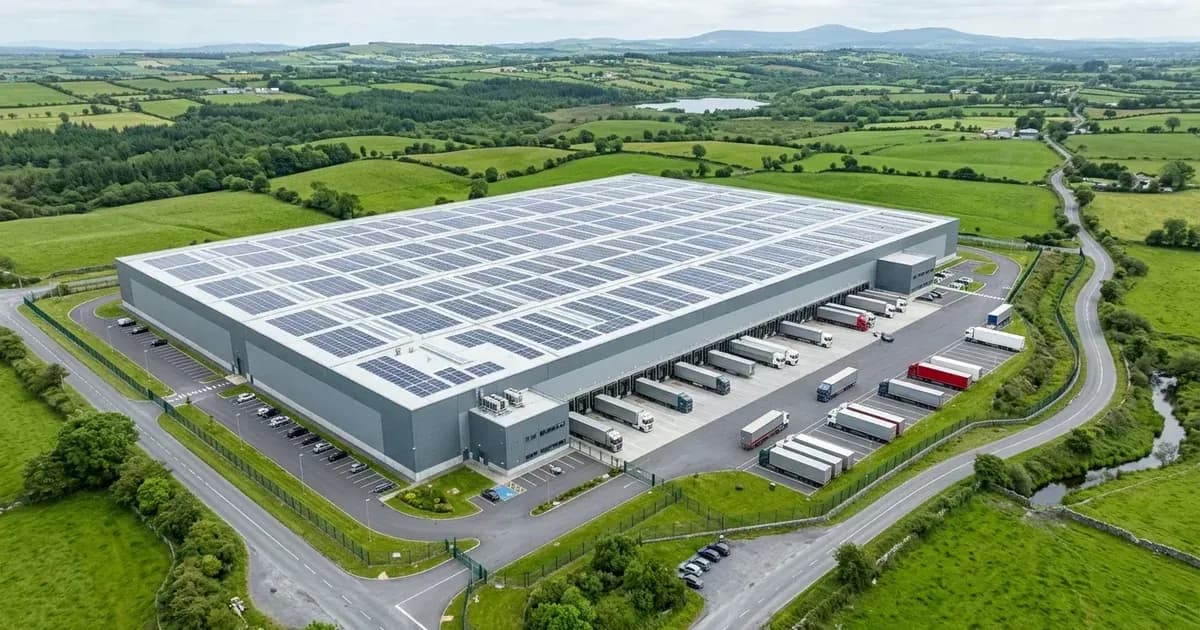
Key Takeaways
- S.I. No. 493/2022 introduced new planning exemptions for solar installations on various building types.
- Rooftop solar on industrial, commercial, apartment, educational, and healthcare buildings can be exempt under Class 56, 60, or 61.
- Agricultural buildings can benefit from exemptions under Class 18.
- Exempted installations must be primarily used for on-site electricity or heating, meaning greater than 50% consumption within the curtilage.
What are the planning exemptions for commercial and industrial solar in Ireland?
In Ireland, the Planning and Development Act 2000 (Exempted Development) (No. 3) Regulations 2022 (S.I. No. 493 of 2022) introduced significant changes to planning requirements for solar photo-voltaic and solar thermal installations. These regulations, effective as of August 2026, aim to streamline the deployment of solar energy across various sectors by granting exempted development status to certain installations. This means that if your project meets the specified criteria, you may not need to apply for planning permission.
The regulations cover several classes of buildings, expanding the scope of what qualifies as exempted development. You should review these provisions carefully to determine if your planned installation falls within their scope.
Key Statutory Provisions for Solar Exemptions (August 2026)
Provision Parameter | Statutory Limitation / Requirement |
|---|---|
Class 56 Industrial Rooftop Scope | "The placing or erection on a roof of an industrial building or a light industrial building, or on a roof of any ancillary buildings within the curtilage of an industrial building or a light industrial building, of a solar photo-voltaic and/or solar thermal collector installation." |
Class 56 Commercial Business Scope | "The placing or erection on a roof of a business premises, or on a roof of any ancillary buildings within the curtilage of a business premises, of a solar photo-voltaic and/or solar thermal collector installation." |
Class 60 Apartment Rooftop Scope | "The placing or erection on a roof of a building comprising apartments, or on a roof of any ancillary buildings within the curtilage of a building comprising apartments, of a solar photo-voltaic and/or solar thermal collector installation." |
Class 61 Educational & Healthcare Scope | "The placing or erection on a roof, or within the curtilage, or on a roof of any ancillary building of a school, college, university, hospital, nursing home, place of worship, religious building" |
Class 18 Agricultural Building Scope | "The placing or erection on a roof of an agricultural structure, or on a roof of any ancillary buildings within the curtilage of an agricultural holding, of a solar photo-voltaic and/or solar thermal collector installation." |
On-Site Primarily Usage Threshold | "primarily for the purpose of classes 56(d), 56(e), 60 or 61 of Part 1 of Schedule 2 and class 18(c) of Part 3 of Schedule 2 means greater than 50%;" |
Industrial Self-Consumption Condition | "shall only be exempted development where the solar photo-voltaic or solar thermal collector installation is primarily used for the provision of electricity or heating for use within the curtilage of the industrial building or light industrial building" |
Business Self-Consumption Condition | "shall only be exempted development where the solar photo-voltaic or solar thermal collector installation is primarily used for the provision of electricity or heating for use within the curtilage of the business premises" |
Free-Standing Maximum Height Cap | "the height of the free-standing solar photo-voltaic and/or solar thermal collector installation shall not exceed 2.5 metres at its highest point above ground level;" |
| Ancillary Wall Equipment Exclusion | "ancillary equipment for the purpose of rooftop solar photo-voltaic or solar thermal collector panels in classes 56(d), 56(e), 60 or 61 of Part 1 of Schedule 2 and class 18(c) of Part 3 of Schedule 2 does not include any equipment which must be placed or erected on a wall" | Provisions as of August 2026, from S.I. No. 493/2022.
What are the conditions for these solar planning exemptions?
The exemptions provided by S.I. No. 493/2022 are not unconditional. You must meet specific criteria for your solar installation to qualify as exempted development. The primary condition across most exempted classes is related to the consumption of the generated energy.
For installations under classes 56(d), 56(e), 60, 61, and 18(c), the solar photo-voltaic or solar thermal collector installation must be "primarily used for the provision of electricity or heating for use within the curtilage." The regulations define "primarily" in this context as "greater than 50%." This means that more than half of the energy generated by your solar system must be consumed on-site within the property boundary. This condition applies to industrial buildings, light industrial buildings, business premises, apartment buildings, and educational/healthcare facilities.
For free-standing solar installations, there is a specific height limitation. The regulations state that "the height of the free-standing solar photo-voltaic and/or solar thermal collector installation shall not exceed 2.5 metres at its highest point above ground level." If your free-standing system exceeds this height, it will not qualify for the exemption and will require planning permission.
What equipment is excluded from these exemptions?
While the regulations broaden the scope of exempted solar installations, they also specify certain exclusions, particularly regarding ancillary equipment. The statutory text clarifies that "ancillary equipment for the purpose of rooftop solar photo-voltaic or solar thermal collector panels in classes 56(d), 56(e), 60 or 61 of Part 1 of Schedule 2 and class 18(c) of Part 3 of Schedule 2 does not include any equipment which must be placed or erected on a wall."
This means that while the solar panels and their immediate mounting structures on the roof are covered, any associated equipment that needs to be installed on a wall, such as inverters or distribution boards, may not be exempt. You should carefully consider the placement of all components of your solar system to ensure compliance with these provisions.
How do we verify these regulations?
We verify the information presented in this guide by directly consulting the official statutory instruments published by the Irish government. For this article, we specifically referenced the "Planning and Development Act 2000 (Exempted Development) (No. 3) Regulations 2022," which is S.I. No. 493/2022. We accessed the official text from the Irish Statute Book on August 23, 2026, to ensure accuracy and currency of the legal provisions. Our aim is to provide you with precise, evidence-based information directly from the primary source.
Where can you find more information or related guidance?
Understanding planning regulations for solar installations can be complex, and these exemptions are part of a broader regulatory landscape. If you are planning a solar project in Ireland, especially for commercial or agricultural purposes, you may find additional guidance in our other resources.
For information on specific zones that may impact solar development, you can consult our guide on Ireland Solar Safeguarding Zones (SSZ) Planning Regulations.
If your project involves agricultural solar, you might also be interested in compliance requirements for schemes like TAMS 3. Our guide on TAMS 3 Solar PV Farm Compliance and S198 Certification provides relevant details. Additionally, for financial considerations, you can review information on the Ireland Farm Solar PV VAT58 Refund Scheme.
These resources can help you navigate the various aspects of solar project development in Ireland beyond just planning permission.
Frequently asked questions
What is Class 56 planning exemption for solar in Ireland?
Class 56 exempts the placing or erection of solar photo-voltaic and/or solar thermal collector installations on the roof of an industrial building, light industrial building, or a business premises, including ancillary buildings within their curtilage. This exemption applies only when the installation is primarily used for electricity or heating within the curtilage (August 2026).
Does S.I. No. 493/2022 remove the 50m² or 50% roof limits for commercial solar?
Yes, S.I. No. 493/2022, specifically Class 56, Class 60, and Class 61, removes previous area-based limits for commercial, industrial, educational, and healthcare buildings. The key condition for exemption is that the solar installation must be primarily used for on-site electricity or heating, meaning greater than 50% of its output is consumed within the curtilage (August 2026).
Are free-standing solar installations exempted under S.I. No. 493/2022?
Yes, free-standing solar photo-voltaic and/or solar thermal collector installations can be exempted development under S.I. No. 493/2022. However, they must not exceed 2.5 metres at their highest point above ground level (August 2026).
What does 'primarily used' mean for solar planning exemptions?
For the purpose of classes 56(d), 56(e), 60, 61, and 18(c) of S.I. No. 493/2022, 'primarily used' means that greater than 50% of the electricity or heating generated by the solar installation must be consumed within the curtilage of the building or premises where it is installed (August 2026).
Are solar panels on apartment buildings exempt from planning permission in Ireland?
Yes, under Class 60 of S.I. No. 493/2022, the placing or erection of solar photo-voltaic and/or solar thermal collector installations on the roof of a building comprising apartments, or on any ancillary buildings within its curtilage, is exempted development. This is conditional on the system being primarily used for on-site consumption (August 2026).
References
- S.I. No. 493/2022 - Planning and Development Act 2000 (Exempted Development) (No. 3) Regulations 2022 — accessed 23 August 2026
Related guides
More from schemes, subsidies & financing.