Ireland Solar Safeguarding Zones (SSZ) Planning Regulations Guide: 300 sq. metre Cap & Notification
Updated 18 September 2026 · By SolarNevs Research Desk, Dealer surveys + verified sources · 1 source · Method ↗
Key Takeaways
- Rooftop solar installations within an Irish Solar Safeguarding Zone (SSZ) are limited to a total aperture area of 300 square metres (S.I. No. 493 of 2022).
- Planning authorities must receive written notification within 4 weeks of commencing solar development in an SSZ (S.I. No. 493 of 2022).
- The maximum height for free-standing solar installations is 2.5 metres at its highest point above ground level, with a total aperture area capped at 25 square metres (S.I. No. 493 of 2022).
What are Ireland's Solar Safeguarding Zones (SSZ) regulations?
Ireland's Solar Safeguarding Zones (SSZ) regulations, established by S.I. No. 493 of 2022, introduce specific planning requirements for solar photovoltaic (PV) and solar thermal collector panels, particularly concerning installations near aviation assets. These regulations define limitations on the size of rooftop installations and mandate notification procedures for developments within designated SSZs. The primary aim is to manage potential glint and glare impacts on aviation.
What is the maximum rooftop solar aperture area allowed in an SSZ?
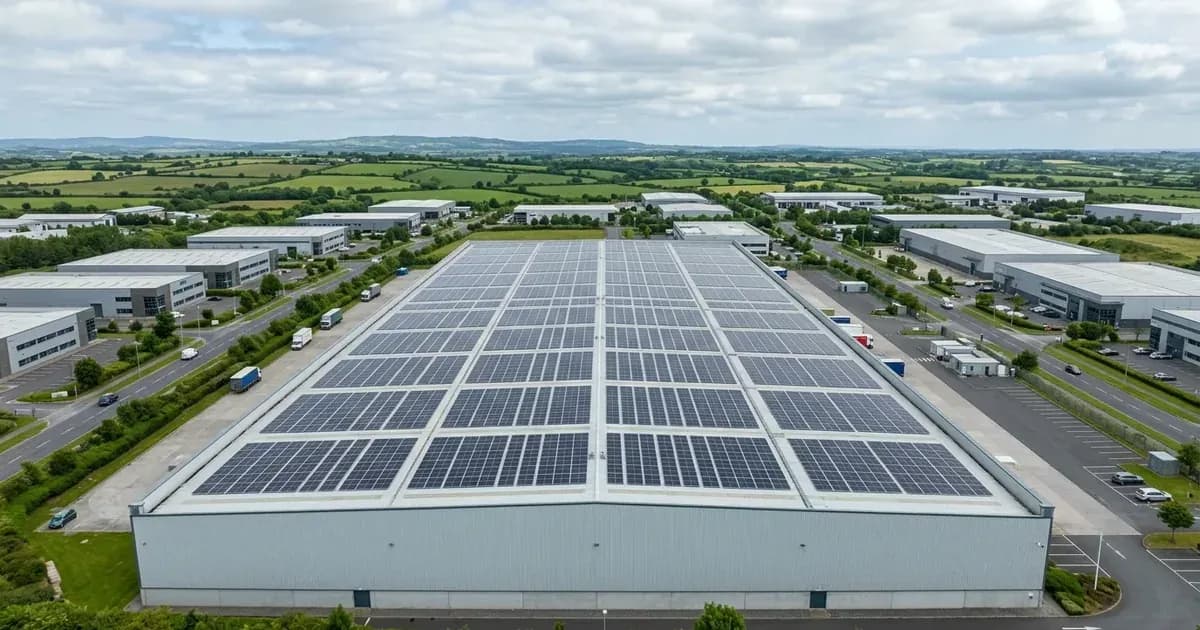
For rooftop solar installations located within a Solar Safeguarding Zone, the total aperture area of all solar photo-voltaic and/or solar thermal collector panels on a roof, including any previously installed panels, "shall not exceed 300 square metres" (S.I. No. 493 of 2022). If an installation exceeds this 300 square metre cap, it will require full planning permission rather than benefiting from exempted development status.
What notification is required for solar installations within an SSZ?
If you are undertaking solar development within a Solar Safeguarding Zone, "the planning authority for the area shall be notified in writing no later than 4 weeks after the commencement of such development" (S.I. No. 493 of 2022). This notification must provide specific details, including the location, scale, and aperture area of the solar installation.
How are Solar Safeguarding Zones (SSZ) defined?
A "solar safeguarding zone has the same meaning as in the Planning and Development (Solar Safeguarding Zone) Regulations 2022" (S.I. No. 493 of 2022). These zones are typically established to protect aviation operations from potential glint and glare effects caused by solar installations. Understanding whether your property falls within an SSZ is a critical first step in planning a solar project.
What are the rules for free-standing solar installations?
Beyond rooftop installations, S.I. No. 493 of 2022 also sets out specific requirements for domestic free-standing solar panels. These include:
- Height Limit: The height of the free-standing installation "shall not exceed 2.5 metres at its highest point above ground level" (S.I. No. 493 of 2022).
- Area Cap: The total aperture area of any free-standing solar panels, combined with any other panels previously placed within the curtilage, "shall not exceed 25 square metres" (S.I. No. 493 of 2022).
- Front Wall: Free-standing panels "shall not be placed or erected forward of the front wall of the house" (S.I. No. 493 of 2022).
These rules ensure that free-standing solar installations are integrated appropriately within residential properties and do not unduly impact neighbouring areas.
How we verified these regulations
We verified the information presented in this guide by directly consulting the official statutory instrument, S.I. No. 493 of 2022. This document, officially titled "Planning and Development Act 2000 (Exempted Development) (No. 3) Regulations 2022," is published on the Irish Statute Book website. Our review on 2026-08-23 confirmed the specific provisions regarding Solar Safeguarding Zones, including aperture area limits, notification timelines, and definitions.
Navigating planning for your solar project
Understanding these regulations is crucial for any solar project in Ireland. If your installation is located within an SSZ or involves free-standing panels, you must adhere to the specified limits and notification requirements. For larger commercial or industrial projects, or if your installation exceeds the exempted development thresholds, you may need to apply for full planning permission.
You can find more information on related planning and grant schemes through our other guides:
- Ireland Commercial & Industrial Solar Planning Exemption Class 56 Guide
- TAMS 3 Solar Capital Investment Scheme Farm Grant Guide
- Ireland Farm Solar PV VAT58 Refund Scheme Guide
For assistance with sizing your solar system to meet these requirements, you can use our solar sizing tool. Always consult with your local planning authority or a qualified solar installer to ensure full compliance with all relevant regulations for your specific project.
Frequently asked questions
What is the maximum rooftop solar aperture area allowed in an Irish Solar Safeguarding Zone (SSZ)?
In an SSZ, the total aperture area of rooftop solar panels, including any existing panels, must not exceed 300 square metres (S.I. No. 493 of 2022). Installations exceeding this limit require full planning permission.
What notification is required for solar installations within an SSZ in Ireland?
For solar installations within an SSZ, the planning authority must be notified in writing no later than 4 weeks after the commencement of the development (S.I. No. 493 of 2022). This notification must include details on location, scale, and aperture area.
How is a Solar Safeguarding Zone (SSZ) defined in Ireland?
A Solar Safeguarding Zone (SSZ) has the same meaning as defined in the Planning and Development (Solar Safeguarding Zone) Regulations 2022 (S.I. No. 493 of 2022). These zones are typically established around aviation assets.
What is the maximum height for free-standing solar installations in Ireland?
The height of a free-standing solar installation "shall not exceed 2.5 metres at its highest point above ground level" (S.I. No. 493 of 2022).
References
- S.I. No. 493/2022 - Irish Statute Book — accessed 23 August 2026
Related guides
More from schemes, subsidies & financing.