Deye BMS CAN and Multi-Inverter Parallel Synchronization Microgrid Setup
Updated 6 September 2026 · By SolarNevs Research Desk, Dealer surveys + verified sources · 2 sources · Method ↗
Key Takeaways
- Specific technical details for Deye BMS CAN port wiring, master-slave parallel synchronization, and smart load port setup are not available in the provided high-level product overviews.
- Deye inverter models, such as the SUN-3/3.6/4/4.6/5/6K-SG06LP1-EU-BM1/BM2, are listed by name, but their detailed electrical ratings are not published on the general product pages.
- Essential information like RJ45 pinouts, communication protocols, and precise setup procedures for advanced features requires consulting the specific product datasheets and user manuals.
- Without these detailed documents, accurate configuration for multi-inverter systems or battery management system (BMS) integration cannot be described.
Understanding Deye BMS CAN and Multi-Inverter Parallel Synchronization
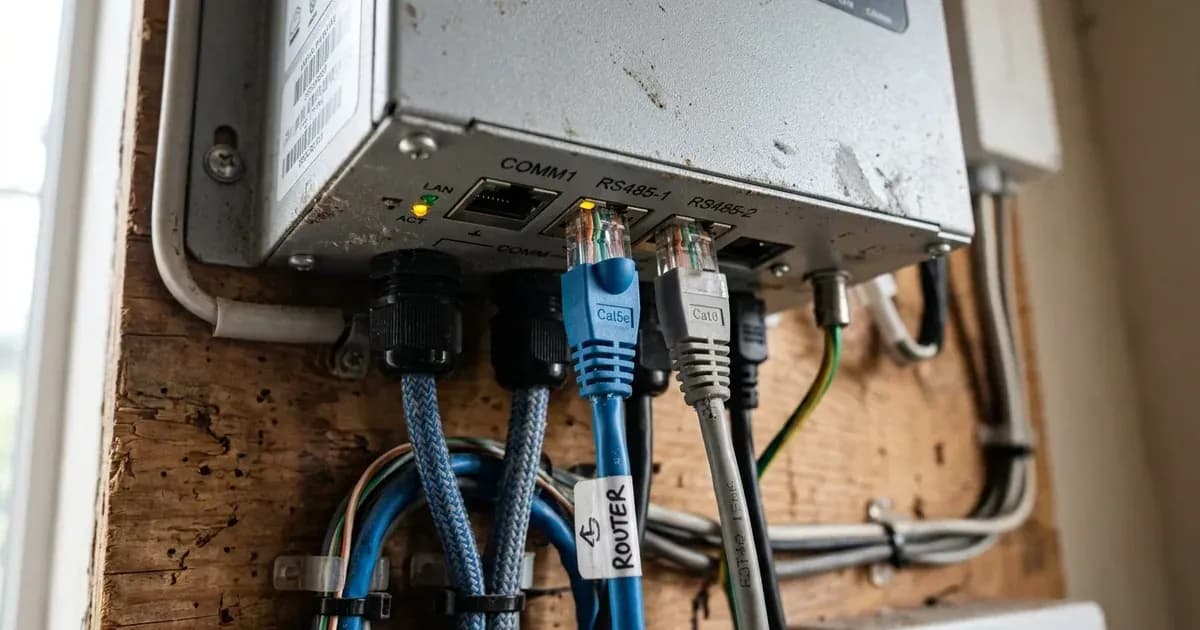
Deye hybrid inverters are designed to integrate with various battery management systems (BMS) via a CAN (Controller Area Network) communication port, typically an RJ45 connector. This allows the inverter to receive critical battery parameters, such as state of charge, voltage, and current, directly from the battery's BMS, optimising charging and discharging cycles.
Multi-inverter parallel synchronization enables several inverters to operate together, increasing the total power output and system redundancy. In a master-slave configuration, one inverter acts as the master, coordinating the operation of the other slave inverters to ensure balanced load sharing and stable power delivery, often forming a microgrid.
However, the specific technical details for implementing these advanced features with Deye inverters, including the "Deye BMS CAN port RJ45 pinout wiring" and the methodology for "Master-Slave parallel communication sync", are not provided in the general product overviews from Ningbo Deye Inverter Technology Co., Ltd.
Deye Inverter Models and Their Specifications
Ningbo Deye Inverter Technology Co., Ltd. offers a range of hybrid inverters. Examples of models listed on their product pages include:
Model Name | Specification Availability | Technical Reference |
|---|---|---|
SUN-3/3.6/4/4.6/5/6K-SG06LP1-EU-BM1/BM2 | Not specified on page | "SUN-3/3.6/4/4.6/5/6K-SG06LP1-EU-BM1/BM2" |
SUN-3/3.6/4/4.6/5/6K-SG06LP1-EU-CM1/CM2 | Not specified on page | "SUN-3/3.6/4/4.6/5/6K-SG06LP1-EU-CM1/CM2" |
SUN-3/3.6/5/6K-SG04LP1-EU-SM1/SM2 | Not specified on page | "SUN-3/3.6/5/6K-SG04LP1-EU-SM1/SM2" |
SUN-3/4/5/6/8K-SG06LP3-EU-CM2 | Not specified on page | "SUN-3/4/5/6/8K-SG06LP3-EU-CM2" |
SUN-3/4/5/6/8K-SG06LP3-EU-BM2 | Not specified on page | "SUN-3/4/5/6/8K-SG06LP3-EU-BM2" |
SUN-3/4/5/6/8/10/12K-SG05LP3-EU-SM2 | Not specified on page | "SUN-3/4/5/6/8/10/12K-SG05LP3-EU-SM2" |
SUN-14/15/16/18/20K-SG05LP3-EU-SM2 | Not specified on page | "SUN-14/15/16/18/20K-SG05LP3-EU-SM2" |
SUN-3/3.6/5/6K-SG04LP1-EU | Not specified on page | "SUN-3/3.6/5/6K-SG04LP1-EU" |
SUN-3.6/5/6/7/7.6/8/10K-SG05LP1-EU-AM2-P | Not specified on page | "SUN-3.6/5/6/7/7.6/8/10K-SG05LP1-EU-AM2-P" |
SUN-5/6/7.6/8K-SG01LP1-US | Not specified on page | "SUN-5/6/7.6/8K-SG01LP1-US" |
SUN-3.6/5/6/7/7.6/8/10K-SG05LP1-EU-SM2-P | Not specified on page | "SUN-3.6/5/6/7/7.6/8/10K-SG05LP1-EU-SM2-P" |
SUN-7/7.6/8/10K-SG05LP1-EU-SM2 | Not specified on page | "SUN-7/7.6/8/10K-SG05LP1-EU-SM2" |
The "Inverter ratings" for these models, such as power output, voltage ranges, or current limits, are "Not specified on page" in the general product overviews. For these specific electrical ratings, users must consult the individual product datasheets and manuals, which are typically available through the manufacturer's support download portal.
Absence of Specific Setup Procedures and Pinouts
Critical technical details required for advanced Deye inverter configurations are not available in the provided high-level product overviews. This includes:
- Deye BMS CAN port RJ45 pinout wiring: There are "No details regarding the pin configuration for the BMS CAN port on Deye inverters or related accessories". This means specific pin assignments, voltage levels, or communication protocols for the CAN bus are not published in these sources.
- Master-Slave parallel communication sync: "There is no information describing how Deye inverters achieve master-slave synchronization for parallel operation." This absence extends to "wiring diagrams, communication protocols, setup procedures, or specific settings" for parallel operation.
- Smart load port setup: Details on how to configure or utilise a "smart load port" are "absent". This would typically involve wiring instructions, control logic, or software settings.
These specific instructions are essential for installers and system integrators to correctly connect batteries via CAN communication and to set up multiple inverters for parallel operation. Without these, the precise implementation of these features cannot be determined from the general product information.
Installation Safety and Switchgear Requirements
General electrical safety practices dictate that all high-voltage and high-current installations, including solar inverters and battery systems, must be performed by qualified and authorised technicians. This involves proper isolation procedures, correct sizing of DC and AC breakers, and robust earthing.
However, "No specific safety facts for Deye inverters or related hardware classes" are found in the provided high-level product overviews. For detailed safety guidelines, including specific isolation sequences, DC breaker ratings, earthing requirements, and authorised technician boundaries pertinent to Deye inverters, it is mandatory to consult the official product manuals and local electrical codes. When working with high-current battery terminals, always ensure the system is fully isolated, use insulated tools, and wear appropriate personal protective equipment (PPE) to prevent short circuits and electrical shock. A spanner across a battery bank can short hundreds of amps, posing a severe hazard.
What the published sources do not tell you
The provided high-level product overviews from Ningbo Deye Inverter Technology Co., Ltd. are marketing-oriented and lack the granular technical detail required for installation and advanced configuration.
Specifically, the following critical information is not available:
- Deye BMS CAN port RJ45 pinout wiring: No details regarding pin configuration, voltage levels, or communication protocols are present.
- Master-Slave parallel communication sync: Information on wiring diagrams, communication protocols, setup procedures, or specific settings for parallel operation is missing.
- Smart load port setup: Wiring instructions, control logic, or software settings for smart load ports are absent.
- Inverter ratings: While model names are listed, specific electrical ratings (e.g., power output, voltage ranges, current limits) for these models are not present on the product overview page.
- Error/Fault Codes: No list of error codes, their meanings, or suggested fixes is available.
- Fault Modes: No descriptions of common fault modes, their symptoms, or causes are provided.
- Settings/Pairing: No specific settings, values, or protocols for battery/inverter pairing are detailed.
- Setup Facts: While "Deye Cloud Platform" and "Deye Online Service System" are mentioned, no concrete setup steps, app names, or port details for WiFi/app/logger functionality are present.
- Safety Facts: No specific safety guidelines or warnings pertinent to the hardware class are found.
To obtain the requested information, it is necessary to access and review the specific "Product Datasheet" and "Manuals & Video Tutorials" linked from the https://www.deyeinverter.com/support/download/ page for relevant inverter models. These documents are not directly accessible or searchable from the provided URLs and contain the specific instructions and parameters required for safe and correct installation and operation.
Add a battery at a surveyed price
Installers quote supply and fitting of the battery on this page for your existing or new system.
How this pays for the site: installers pay SolarNevs a fixed introduction fee when we pass them a genuine enquiry. They cannot pay to appear higher, and our surveyed prices are published before any introduction. You can also take our dated price tables straight to any installer.
Frequently asked questions
Where can I find the Deye BMS CAN port RJ45 pinout wiring?
The specific RJ45 pinout wiring for Deye BMS CAN ports is not detailed in the provided high-level product overviews. This information is typically found in the product datasheets or user manuals for specific Deye inverter models.
How do Deye inverters achieve master-slave parallel communication synchronization?
Detailed information describing how Deye inverters achieve master-slave synchronization for parallel operation, including wiring diagrams or communication protocols, is not available in the high-level product overviews. Consult the specific product manuals for these procedures.
Are specific electrical ratings available for Deye inverter models like the SUN-3/3.6/4/4.6/5/6K-SG06LP1-EU-BM1/BM2?
While Deye inverter model names are listed, specific electrical ratings such as power output or current limits are not present on the product overview pages. These details are typically found in the product datasheets.
What setup information is available for Deye Cloud Platform or Deye Online Service System?
High-level product overviews mention the 'Deye Cloud Platform' and 'Deye Online Service System', but concrete setup steps, app names, or port details for WiFi/app/logger functionality are not provided. Specific setup guides are usually found in the product documentation.
Where can I find safety guidelines for Deye inverter installations?
Specific safety guidelines or warnings pertinent to Deye inverter hardware are not found in the provided high-level product overviews. Always refer to the official product manuals for comprehensive safety information and installation best practices.
References
- Ningbo Deye Inverter Technology Co., Ltd. Product Overview — accessed 29 August 2026
- Ningbo Deye Inverter Technology Co., Ltd. Support Download — accessed 29 August 2026
Related guides
More from what to buy — and how not to get cheated.