UK Commercial Solar Permitted Development 2023: Key Changes
Updated 6 September 2026 · By SolarNevs Research Desk, Dealer surveys + verified sources · 1 source · Method ↗
Key Takeaways
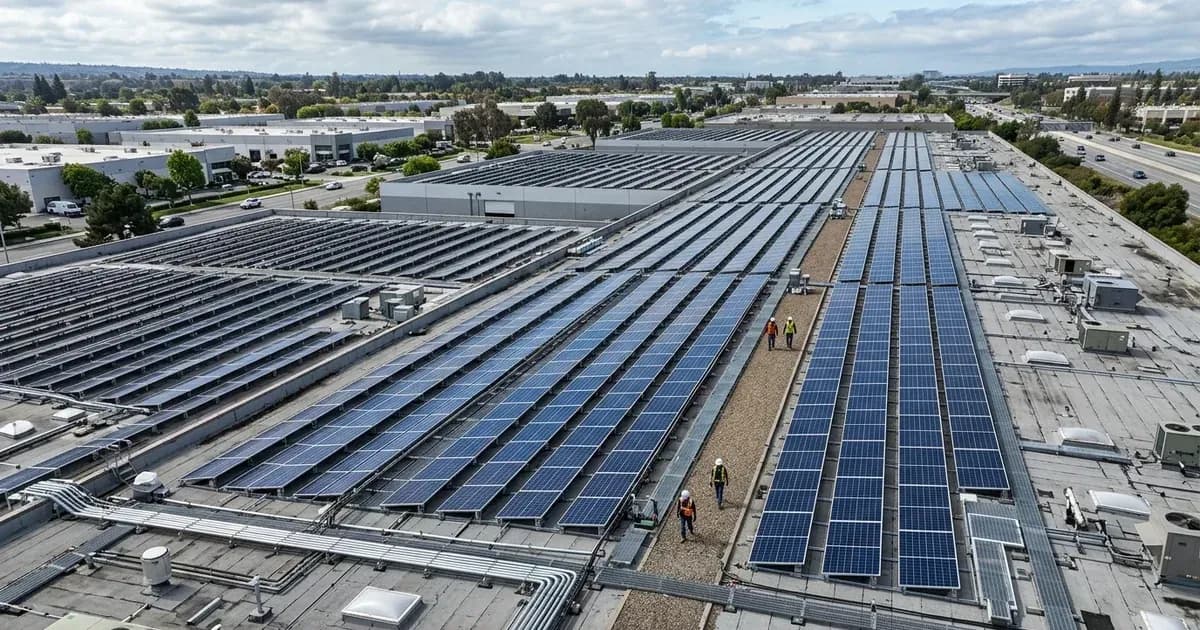
- The 1-megawatt capacity cap for commercial rooftop solar has been removed in England.
- Prior approval is no longer required for many commercial rooftop solar installations up to 1MW.
- New permitted development rights (Class OA) allow for solar canopies in commercial car parks.
- These changes apply only to England; other UK nations have separate planning laws.
What are the new permitted development rights for commercial solar in the UK?
The Town and Country Planning (General Permitted Development etc.) (England) (Amendment) (No. 2) Order 2023, which came into force on 21st December 2023, significantly updated the planning landscape for commercial solar installations in England. This statutory instrument amended Schedule 2 Part 14 of the GPDO 2015, primarily by removing capacity limits and streamlining approval processes for rooftop solar, and introducing new rights for solar canopies. These changes aim to accelerate the deployment of commercial solar energy projects.
How to determine if your commercial solar project qualifies for permitted development
Determining if your commercial solar project falls under permitted development rights involves checking several key criteria against the updated regulations. This process helps you understand if you can proceed without a full planning application.
- Confirm Location: These permitted development rights apply exclusively to England. If your project is in Scotland, Wales, or Northern Ireland, you must consult their respective devolved planning frameworks.
- Identify Project Type:
- Rooftop Solar (Class J): This applies to the installation or alteration of solar equipment on non-domestic premises.
- Solar Canopies (Class OA): This applies to solar canopies within off-street parking areas, excluding those for dwellinghouses or blocks of flats.
- Check for Specific Restrictions (Class J - Rooftop Solar):
- The 2023 Order abolished the 1-megawatt capacity cap on commercial rooftop solar by omitting paragraph J.1(d) of Class J.
- It also removed the prior approval requirement for non-domestic rooftop solar installations up to 1MW by omitting paragraph J.3. This means many rooftop projects no longer need prior approval.
- Check for Specific Restrictions (Class OA - Solar Canopies):
- Height Limit: The development is not permitted if any part of the solar canopy exceeds 4 metres in height above ground level.
- Boundary Setback: It is not permitted if any part of the solar canopy is within 10 metres of the curtilage of a dwellinghouse or a block of flats.
- Residential Restriction: It is not permitted within the curtilage of a dwellinghouse or a block of flats.
- Protected Sites: Development is not permitted on a site designated as a scheduled monument, within the curtilage of a scheduled monument, or within the curtilage of a listed building.
- Drainage: If the development is above a permeable surface, provision must be made to direct run-off water from the solar canopy to a permeable or porous area or surface within the off-street parking area.
- Prior Approval Triggers: You must apply for prior approval regarding the solar canopy's siting, design, and external appearance, particularly the impact of glare on neighbouring premises. For specific article 2(3) land, the impact of appearance on that land is also a trigger.
- Completion Timeframe: Development must be completed within a period of 3 years starting from the date prior approval is given or a determination that such approval is not required is given.
- Decommissioning: Where the solar canopy is no longer needed, it must be removed as soon as reasonably practicable, and the land restored to its condition before the development took place, so far as reasonably practicable.
Key Permitted Development Conditions for Commercial Solar
The 2023 amendments introduce specific conditions and limitations that determine whether a commercial solar project can proceed under permitted development rights. Understanding these is crucial for compliance.
Project Type / Condition | Statutory Provision | Impact / Requirement |
|---|---|---|
Rooftop Solar (Class J) |
|
|
1MW Capacity Cap | "Omit paragraph J.1(d)." | Abolishes the 1-megawatt capacity cap on commercial rooftop solar. |
Prior Approval (up to 1MW) | "Omit paragraph J.3." | Removes prior approval requirement for non-domestic rooftop solar installations up to 1MW. |
Solar Canopies (Class OA) |
|
|
General Scope | "The installation, alteration or replacement of a solar canopy within an area lawfully used as off-street parking other than for a dwellinghouse or a block of flats." | Permits solar canopies in commercial parking areas. |
Height Limit | Development not permitted if any part of the solar canopy "exceeds 4 metres in height above ground level". | Maximum height of 4 metres above ground level. |
Boundary Setback | Development not permitted if any part of the solar canopy "is within 10 metres of the curtilage of a dwellinghouse or a block of flats". | Must be at least 10 metres from residential property boundaries. |
Residential Curtilage | Development is not permitted "within the curtilage of a dwellinghouse or a block of flats". | Excludes installation within residential property boundaries. |
Scheduled Monuments | Development is not permitted "on a site designated as a scheduled monument or on land within the curtilage of a scheduled monument". | Prohibited on or near scheduled monuments. |
Listed Buildings | Development is not permitted "within the curtilage of a listed building". | Prohibited within the curtilage of listed buildings. |
Drainage | "In the case of development above a permeable surface, provision is made to direct run-off water from the solar canopy to a permeable or porous area or surface within the off-street parking area." | Requires appropriate water run-off management for permeable surfaces. |
Prior Approval Triggers | Developer must apply to LPA for prior approval determination regarding "(a) the solar canopy’s siting, design and external appearance, in particular the impact of glare on the occupiers of neighbouring premises; and (b) in the case of a solar canopy on article 2(3) land, the impact of the appearance of the solar canopy on that land." | Prior approval may be required for visual impact and glare. |
Completion Timeframe | "Development must be completed within a period of 3 years starting with the date on which (a) prior approval is given; or (b) a determination that such approval is not required is given". | Project must be completed within three years of approval or determination. |
Decommissioning | "Where the solar canopy is no longer needed, it is removed as soon as reasonably practicable and the land is restored to its condition before the development took place so far as reasonably practicable." | Mandates removal and site restoration when no longer in use. |
Understanding the Scope of the 2023 Permitted Development Order
The Town and Country Planning (General Permitted Development etc.) (England) (Amendment) (No. 2) Order 2023 primarily focuses on two key areas for commercial solar: rooftop installations and solar canopies.
For commercial rooftop solar installations (Class J), the most significant change is the removal of the 1-megawatt (MW) capacity cap that previously limited projects under permitted development. This means larger rooftop systems can now potentially proceed without a full planning application. Additionally, the requirement for prior approval for non-domestic rooftop solar installations up to 1MW has been omitted, further streamlining the process for many projects.
The Order also introduces a new Class OA for solar canopies. This allows for the installation, alteration, or replacement of solar canopies within off-street parking areas, provided these areas are not associated with dwellinghouses or blocks of flats. This opens up new opportunities for businesses to generate solar power while providing shaded parking. However, Class OA comes with specific conditions, including a height limit of 4 metres above ground level and a setback requirement of 10 metres from residential properties. Projects on or near scheduled monuments or listed buildings are excluded. For canopies, prior approval may still be required to assess the siting, design, external appearance, and potential glare impact on neighbouring premises.
It is important to note that these amendments apply specifically to England's planning law. Scotland, Wales, and Northern Ireland operate under their own distinct devolved planning frameworks.
Safety: Planning Law vs. Hardware Safety
This article addresses statutory planning instruments, not physical hardware. Therefore, safety considerations typically associated with electrical systems, such as acid handling, thermal runaway, or high voltage, are not applicable here. The safety of solar hardware installation and operation is covered by separate regulations and best practices.
When to consult a planning professional or other experts
While permitted development rights can simplify the process for commercial solar installations, there are situations where professional advice is essential.
- Complex Site Conditions: If your site has unique characteristics, such as being near a protected area, or if there are ambiguities in the regulations regarding your specific project, a planning consultant can provide clarity.
- Structural Integrity: Permitted development rights do not waive the need for structural load calculations. You should consult a structural engineer to ensure the building or canopy structure can safely support the solar installation. For more information, refer to our guide on /commercial-rooftop-solar-structural-load-calculations.
- Grid Connection Requirements: These planning changes do not affect DNO (Distribution Network Operator) G99 grid connection requirements. You will still need to liaise with your DNO for grid connection approval.
- Devolved Administrations: If your project is located outside England (i.e., in Scotland, Wales, or Northern Ireland), you must consult the specific planning legislation for that region, as these amendments do not apply.
- Fire Safety and Electrical Inspections: Regardless of planning status, all commercial solar installations must comply with relevant electrical safety standards and fire safety regulations. Consult our guides on /commercial-solar-eicr-inspection-testing and /commercial-solar-pess-battery-fire-safety for details on these requirements.
- Prior Approval Triggers: Even for projects under Class OA, prior approval may be required for aspects like siting, design, external appearance, and glare. A planning professional can help navigate this process effectively.
Frequently asked questions
When did the new permitted development rules for commercial solar come into effect?
The Town and Country Planning (General Permitted Development etc.) (England) (Amendment) (No. 2) Order 2023 came into force on 21st December 2023, updating planning regulations for commercial solar installations in England.
What is the main change for commercial rooftop solar under the new rules?
The primary change is the removal of the 1-megawatt capacity cap for commercial rooftop solar installations under Class J of Part 14 of Schedule 2. This also streamlines deployment by omitting the prior approval requirement for these systems up to 1MW.
Can I install a solar canopy under permitted development rights?
Yes, the 2023 Order introduced Class OA, which permits the installation, alteration, or replacement of solar canopies within off-street parking areas not associated with dwellinghouses or blocks of flats, subject to specific conditions.
Are there height restrictions for solar canopies under permitted development?
Yes, a solar canopy is not permitted if any part of it exceeds 4 metres in height above ground level. This is a key condition for Class OA permitted development.
Do these new permitted development rights apply across the entire UK?
No, these amendments apply specifically to England's planning law. Scotland, Wales, and Northern Ireland maintain their own separate devolved planning frameworks, and projects in those regions are subject to different regulations.
References
Related guides
More from what to buy — and how not to get cheated.