UK ESQCR 2002 Regulation 27 Voltage and Frequency Declaration Guide
Updated 6 September 2026 · By SolarNevs Research Desk, Dealer surveys + verified sources · 1 source · Method ↗
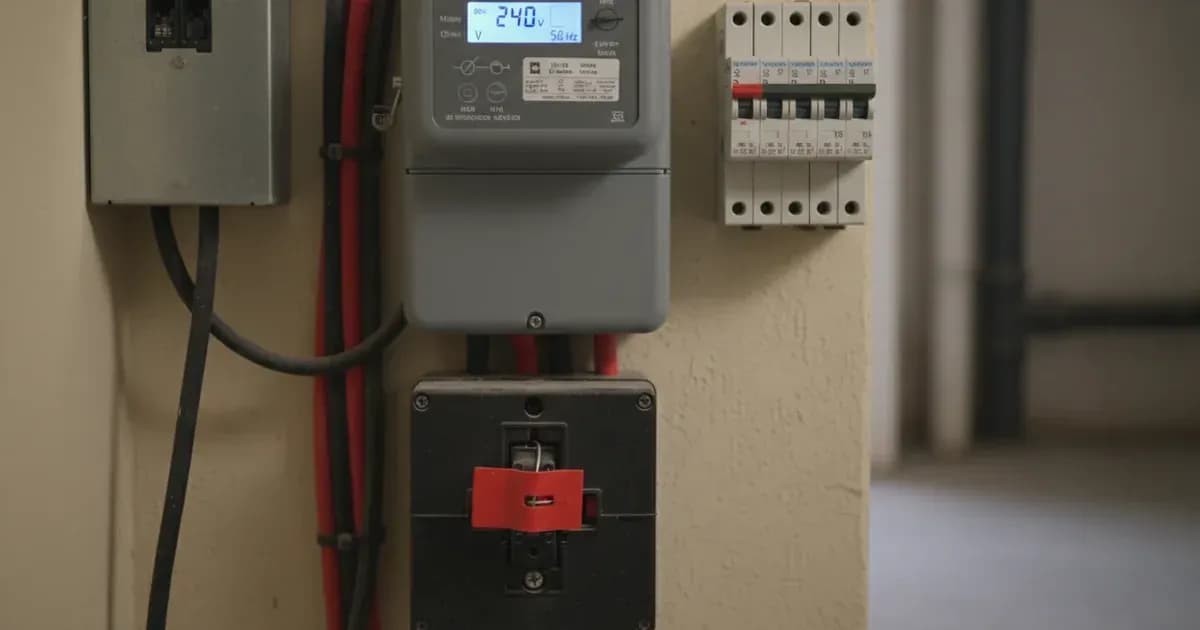
Key Takeaways
- Regulation 27 mandates specific grid voltage and frequency limits for UK electricity supplies.
- Low voltage supplies are declared at 230 volts with a tolerance of +10% / -6%, and frequency at 50 hertz with ±1%.
- Exceeding these limits can cause solar inverters to trip, requiring careful system design and Distribution Network Operator (DNO) coordination.
- Never attempt to adjust DNO equipment; formal requests are required for any supply characteristic changes.
What is UK ESQCR 2002 Regulation 27 and why is it important for solar?
Regulation 27 of the Electricity Safety, Quality and Continuity Regulations 2002 (S.I. 2002/2665) governs the statutory declaration of phases, frequency, and voltage at supply terminals to consumers' installations in the UK. This regulation is critical for solar PV and battery storage systems because it defines the grid parameters within which your inverter must operate to ensure safety and grid stability. Compliance with these declared values prevents issues like nuisance solar inverter tripping and ensures your system adheres to grid connection standards such as G98/G99.
Understanding Compliance: Key Parameters
To ensure your solar PV system complies with Regulation 27, you need to understand the declared grid characteristics and how your system interacts with them. This section outlines the steps to verify compliance and identify potential issues.
- Check Declared Supply Characteristics: Before commencing a supply to a consumer, the supplier shall ascertain from the distributor and then declare to the consumer the number of phases, the frequency, and the voltage. This information should be part of your grid connection agreement or available from your DNO.
- Measure Actual Supply Voltage and Frequency: Use a calibrated multimeter or power quality analyzer to measure the voltage and frequency at your consumer cut-out. Compare these readings against the statutory limits. The declared frequency is 50 hertz, with a permitted variation not exceeding 1 per cent above or below (49.5 Hz to 50.5 Hz). For low voltage supplies, the declared voltage is 230 volts between phase and neutral conductors, with permitted variations not exceeding 10 per cent above or 6 per cent below (216.2 V to 253.0 V).
- Review Solar Inverter Logs for Trips: Solar inverters record events such as overvoltage or overfrequency trips. If your inverter frequently trips, especially during peak generation, it may indicate that the grid voltage or frequency is exceeding the statutory limits. An "Solar Inverter Overvoltage Trip" alarm typically means the grid voltage has exceeded the upper statutory threshold of 253.0V, triggering a mandatory inverter shutdown under BS EN 50549 / G98 / G99.
- Calculate AC Voltage Rise: For solar PV systems, especially those with long AC cable runs, the resistance of the cable can cause a voltage rise between the inverter and the supply terminals. This local voltage rise, when added to the DNO's supply voltage, must not breach the 253.0V limit under full rated export. You should calculate this voltage rise during system design and commissioning.
Regulatory Parameters and Their Impact
Regulation 27 sets out specific parameters for electricity supply in the UK. Understanding these is crucial for the correct operation and compliance of your solar PV system.
Symptom detail | Likely cause | Fix |
|---|---|---|
Solar Inverter Overvoltage Trip | Grid voltage exceeding upper statutory threshold of 253.0V (230V + 10%), triggering mandatory inverter shutdown under BS EN 50549 / G98 / G99. | Verify DNO supply characteristics. Calculate AC voltage rise from inverter to supply terminals. Consider optimizing AC cable sizing or reducing export. If the DNO supply itself is consistently high, formally request a review from your distributor. |
Frequency Excursion Warning | Grid frequency drifting beyond the statutory 49.5 Hz to 50.5 Hz envelope (50 Hz ± 1%), requiring automatic solar power curtailment or loss-of-mains trip. | Inverter automatically curtails power or trips. Persistent frequency issues are typically grid-level and should be reported to your DNO. |
Nuisance tripping during peak generation | Excessive AC cable resistance between solar inverter and supply terminals causing local voltage rise to breach 253.0V during peak generation. | Calculate AC voltage rise. Optimize AC cable sizing. Implement power-factor and Volt-VAr droop control where permitted by DNO to prevent localized overvoltage tripping. |
Connecting solar to non-standard grid supply | DNO declared supply characteristics differ from standard parameters without written agreement. | Obtain written agreement from the DNO for any non-standard connection. Ensure inverter settings are configured to match the agreed parameters. |
Statutory Declarations for UK Electricity Supply
Regulation 27 specifies the exact values and permitted variations for electricity supply characteristics in the UK. These are the benchmarks against which all grid-connected systems, including solar PV, must operate.
- Statutory Instrument: Electricity Safety, Quality and Continuity Regulations 2002 (S.I. 2002/2665).
- Regulation Reference: Regulation 27 (Declaration of phases, frequency and voltage at supply terminals).
- Declared Grid Frequency: The standard declared frequency across England, Wales, and Scotland is 50 hertz.
- Frequency Permitted Variation: The permitted variation is not exceeding 1 per cent above or below the declared frequency, meaning the frequency must stay within 49.5 Hz to 50.5 Hz.
- Declared Low Voltage Supply: The declared low voltage supply is 230 volts between the phase and neutral conductors at supply terminals.
- Low Voltage Permitted Variation: For a low voltage supply, the permitted variation is not exceeding 10 per cent above or 6 per cent below the declared voltage at the declared frequency. This means the voltage should be between 216.2 V and 253.0 V.
- High Voltage Permitted Variation (<132kV): For a high voltage supply operating at a voltage below 132,000 volts, the permitted variation is not exceeding 6 per cent above or below the declared voltage at the declared frequency.
- High Voltage Permitted Variation (>=132kV): For a high voltage supply operating at a voltage of 132,000 volts or above, the permitted variation is not exceeding 10 per cent above or below the declared voltage at the declared frequency.
- DNO Compliance Obligation: Every distributor shall ensure that, save in exceptional circumstances, the characteristics of the supplies to consumers comply with these declarations.
- Statutory Variation Authority: The Secretary of State may, following an application by any distributor affected by a declaration, authorise the variation of any of the values.
These regulations are fundamental for understanding grid interactions and ensuring your solar PV system is designed and operated correctly. For more details on grid connection requirements, you can refer to our guides on UK ESQCR 2002 Regulation 22 Parallel Generation and Safety and UK ESQCR 2002 Regulation 25 Network Connection Consent. Understanding the Smart Export Guarantee also provides context on how your system's export impacts grid conditions.
Safety: Working with Grid Connections
Working with grid-connected systems involves significant electrical hazards. Always prioritize safety.
- Never attempt to adjust DNO equipment: Never attempt to adjust DNO cut-out equipment or upstream transformer taps. Adjustments must be formally requested from the distributor. Unauthorized tampering is dangerous and illegal.
- Inverter Protective Settings: Ensure all solar inverters are configured with compliant G98/G99 protective settings matching UK statutory frequency and voltage limits. These settings are crucial for automatic disconnection in case of grid excursions, protecting both your system and grid personnel.
- Voltage Rise Management: Be aware that excessive AC cable resistance can cause local voltage rise. Implement power-factor and Volt-VAr droop control where permitted by DNO to prevent localized overvoltage tripping, especially on long rural feeders.
When to call a technician instead
While understanding Regulation 27 is important for system owners, direct intervention in grid infrastructure or complex electrical diagnostics should be left to qualified professionals. If you experience persistent inverter tripping, receive warnings about grid instability, or suspect your supply characteristics are outside the statutory limits, contact your solar installer or DNO. Never attempt to modify DNO equipment or bypass inverter safety settings. Your installer can help measure baseline supply voltage, calculate AC voltage rise, and liaise with the DNO if necessary.
Frequently asked questions
What is Regulation 27 of the ESQCR 2002?
Regulation 27 of the Electricity Safety, Quality and Continuity Regulations 2002 governs the statutory declaration of phases, frequency, and voltage at supply terminals to consumers' installations in the UK.
What is the standard declared frequency in the UK?
The standard declared frequency in the UK is 50 hertz, with a permitted variation not exceeding 1 per cent above or below, meaning the frequency must remain between 49.5 Hz and 50.5 Hz.
What is the declared low voltage supply in the UK?
The declared low voltage supply is 230 volts between phase and neutral conductors. Permitted variations are not exceeding 10 per cent above or 6 per cent below, allowing for a range of 216.2 V to 253.0 V.
How do these regulations affect solar PV systems?
These regulations are critical for solar PV inverter grid over-voltage protection, dynamic Volt-VAr regulation, G98/G99 compliance, and preventing nuisance solar tripping.
Who is responsible for ensuring compliance with these declarations?
Every distributor must ensure that, save in exceptional circumstances, the characteristics of the supplies to consumers comply with these declarations.
References
- Electricity Safety, Quality and Continuity Regulations 2002 — accessed 23 August 2026
Related guides
More from what to buy — and how not to get cheated.