UK Farm Solar Crop Shading and Microclimate Optimization Guide
Updated 6 September 2026 · By SolarNevs Research Desk, Dealer surveys + verified sources · 4 sources · Method ↗
Key Takeaways
- Agrivoltaic (Agri-PV) systems provide microclimate protection for specialty crops by moderating solar radiation, soil temperature, and wind exposure.
- Under the Environment Act 2021, planning developments must meet the statutory Biodiversity Gain Objective, achieving at least a 10% net gain.
- Habitat value is formally measured using the statutory biodiversity metric published by the Secretary of State.
- Defra's Improving Farm Productivity scheme offers 25% grant funding for on-farm solar equipment to strengthen energy resilience.
- Grants range between £15,000 and £100,000 per farm business, requiring battery storage pairing.
- Agricultural permitted development under Class A governs agricultural units of 5 hectares or more.
Microclimate Dynamics under Agri-PV Arrays
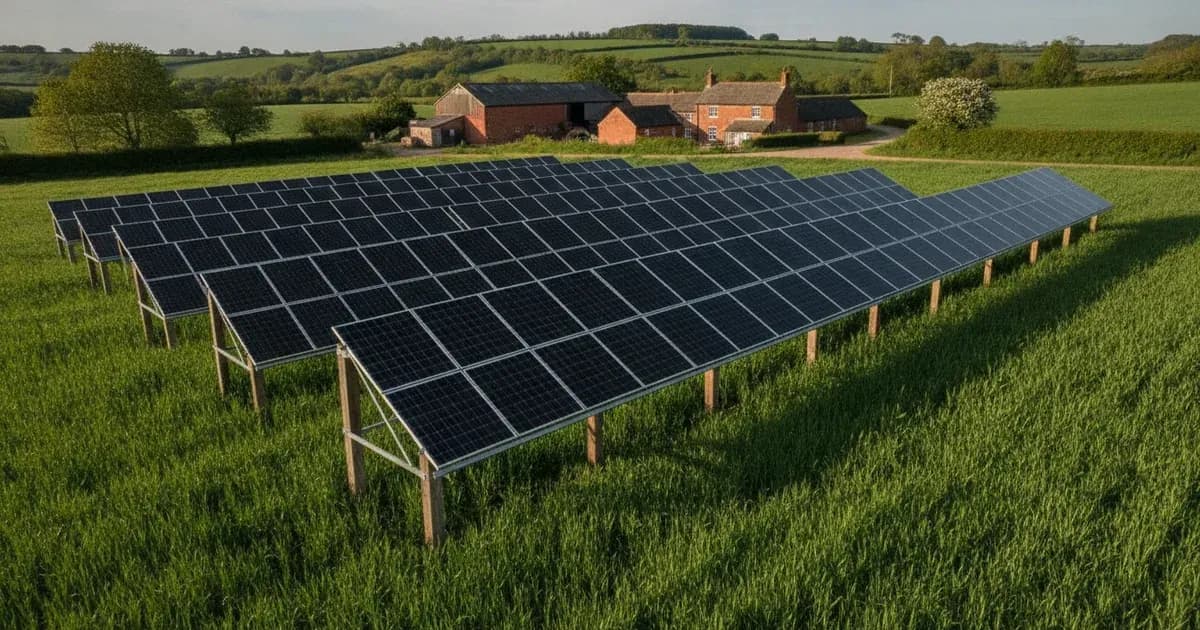
Elevated photovoltaic panels suspended over berry crops, leafy vegetables, or orchard rows alter the agricultural microclimate:
- Evapotranspiration Reduction: Partial shading lowers soil surface temperatures, conserving soil moisture during intense summer heatwaves.
- Hail and Sunscald Protection: Panel canopies shield sensitive fruit from solar scorching and physical hail damage.
- Frost Moderation: Night-time thermal radiation from panel undersides slows soil heat loss, reducing early spring frost injury.
Farms integrate solar technology through the installation of solar equipment to increase both energy resilience and the take-up of renewable energy generation on farms.
Statutory Biodiversity Net Gain (BNG) Mandate
Where ground-level solar mounting or agricultural engineering requires planning permission, proposals must satisfy strict environmental legislation:
- Statutory Objective: The biodiversity gain objective is met in relation to development for which planning permission is granted if the biodiversity value attributable to the development exceeds the pre-development biodiversity value of the onsite habitat by at least the relevant percentage.
- Mandatory Percentage: The relevant percentage is 10%.
- Statutory Metric: The biodiversity metric is a document for measuring, for the purposes of this Schedule, the biodiversity value or relative biodiversity value of habitat or habitat enhancement.
- Accounting Components: The biodiversity value attributable to the development is the total of post-development onsite habitat value, registered offsite biodiversity gains allocated to the project, and any purchased statutory biodiversity credits.
Defra Farm Productivity Funding Support
Farms modernising agricultural infrastructure can access financial grants:
- Grant Support Level: The offer for solar equipment will remain the same at 25%.
- Funding Range: For solar equipment, the minimum grant available is £15,000 and the maximum grant available is £100,000.
- Operational Power Purpose: An eligible solar PV system should be mainly for farm power and installed on farm buildings, not on a residential property.
- Battery Pairing: The solar energy is stored in a battery or batteries. The systems can be connected to export surplus power back to the National grid.
- Thermal Diverters: Eligible items include solar PV panels, solar batteries, inverters, utility meter, electrical grid connection, and power diverters that redirect excess solar energy to power storage (for example heat stores).
Planning Framework: Agricultural Units
Physical installations across rural land holdings are evaluated under Part 6 of Schedule 2 to the General Permitted Development Order:
- Unit Threshold: Class A covers agricultural development on units of 5 hectares or more.
- Permitted Operations: Authorises the carrying out on agricultural land comprised in an agricultural unit of 5 hectares or more in area of works for the erection, extension or alteration of a building, or any excavation or engineering operations, which are reasonably necessary for the purposes of agriculture within that unit.
Frequently asked questions
What is the statutory Biodiversity Gain Objective in England?
Development must exceed the pre-development biodiversity value of the onsite habitat by at least the relevant percentage of 10%.
What tool measures biodiversity value under statutory planning rules?
The biodiversity metric is the statutory document produced by the Secretary of State for measuring habitat biodiversity value.
How does elevated solar shading benefit crop microclimates?
Partial shading reduces soil moisture evaporation, protects sensitive horticultural crops from heat stress, and mitigates frost risks.
What grant funding supports agricultural solar and energy storage?
Defra's Improving Farm Productivity grant provides 25% funding for solar equipment, offering between £15,000 and £100,000 per business.
What planning threshold applies to agricultural permitted development?
Class A permitted development applies to agricultural land comprised in an agricultural unit of 5 hectares or more.
References
- Environment Act 2021 Schedule 14 Biodiversity Gain as Condition of Planning Permission — accessed 28 August 2026
- Defra Farming Blog Improving Farm Productivity Grant Round 2 — accessed 28 August 2026
- Defra Improving Farm Productivity Grant Equipment Definitions — accessed 28 August 2026
- Town and Country Planning General Permitted Development Order 2015 Schedule 2 Part 6 — accessed 28 August 2026
Related guides
More from what to buy — and how not to get cheated.