EV Public Charging Networks in 2026: The Plug War Is Over
Updated 6 September 2026 · By SolarNevs Research Desk, Dealer surveys + verified sources · 2 sources · Method ↗
Key Takeaways
- NACS won. Formalized as SAE J3400, it's the connector on most new 2026-model EVs, and essentially every major automaker has committed to it.
- Tesla's Supercharger network opened to other brands — via adapters first, native ports since — which roughly doubled the practical fast-charging map for non-Tesla drivers.
- CCS isn't dead: existing stations keep operating and adapters bridge both directions. Carrying one is normal, not a stopgap.
- The buying implication: ask which stalls your specific car and account can use, not just which port it has — access is still model-and-brand specific.
How the standards war ended
For a decade North America ran two incompatible fast-charging plugs: CCS, the industry-consortium standard adopted by nearly everyone, and Tesla's proprietary connector, attached to by far the most reliable and widespread network. Drivers got the worst of both — an open standard with patchy, poorly maintained hardware, and excellent hardware behind a closed door.
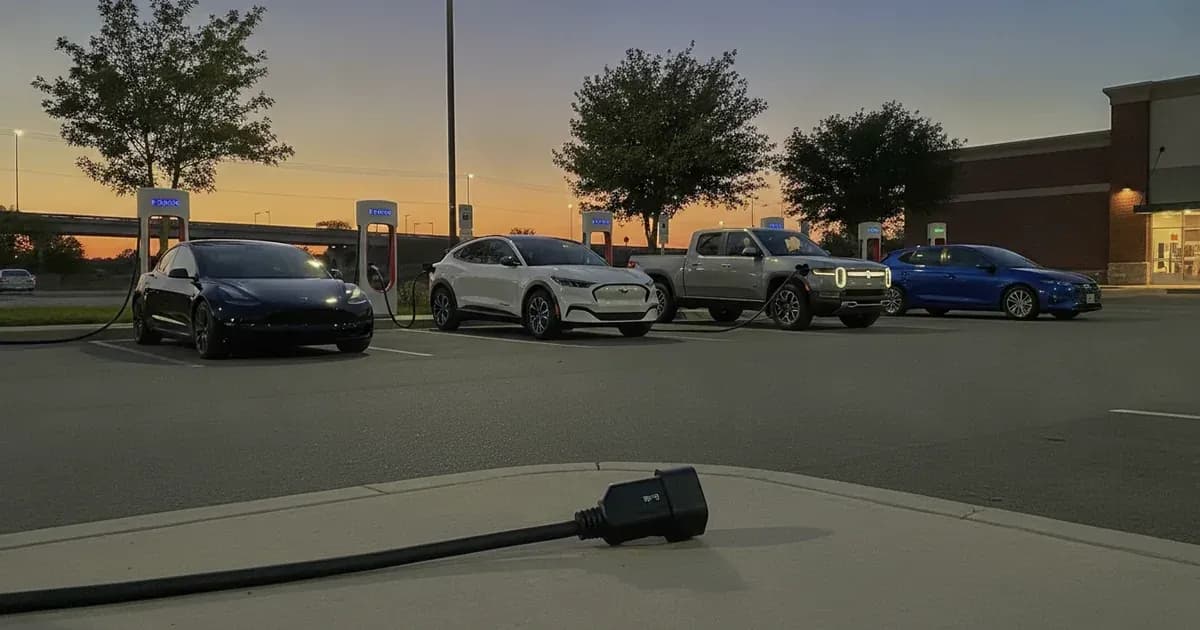
That resolved in the most pragmatic way available: Tesla opened the connector, it was standardized as SAE J3400, and the industry moved across. Ford and GM committed first for 2026-model-year cars; Stellantis, the Volkswagen Group brands, BMW, Rivian and others followed. The result is that a 2026 EV buyer is choosing among cars that mostly share a plug — a sentence that would have been science fiction in 2022.
The infrastructure caught up quickly too: by early 2026, non-Tesla NACS deployment had grown to roughly match CCS1 deployment among newly installed connectors. The network effect that made Superchargers dominant is now working for everyone.
If you have | Fast charging looks like |
|---|---|
A 2026-ish EV with a native NACS port | Superchargers plus NACS-equipped third-party networks, no adapter |
A CCS car, adapter-eligible brand | CCS stations plus much of the Supercharger network via adapter |
An older CCS car, no program | CCS networks — still functional and still expanding |
A Tesla | Everything, largely unchanged |
Access programs are brand- and model-specific and continue to expand; confirm your exact vehicle before assuming network access.
What actually matters when you're standing at a stall
Connectors are settled. The remaining variables are the ones that decide whether public charging is pleasant or miserable.
Reliability, not headline speed. A 350 kW stall that fails to authenticate is slower than a working 150 kW one. Network reputation for uptime is worth more than a peak-power number your car may not accept anyway.
Your car's charging curve, not the charger's rating. Cars taper as they fill — which is why 10–80% is the road-trip window and why charging time depends more on the vehicle than the pedestal.
Price structure. Per-kWh, per-minute, idle fees, and subscription tiers all exist. Public fast charging costs multiples of home charging under any of them — which is the whole argument for solving overnight charging first.
Preconditioning. Warming the pack before arrival — usually automatic when you navigate to a charger — dramatically improves how fast the car accepts power, especially in cold weather.
The strategic point
Here's what the settled plug war doesn't change: public charging is the expensive, inconvenient way to fuel an EV, and it always will be. It exists for road trips and for drivers without a home outlet. The economics that make an EV compelling — the per-mile cost gap against gasoline — come almost entirely from charging at home, and are amplified further when that electricity comes off your own roof.
So read the network news the right way. NACS winning is genuinely good news: it makes the road-trip case work and removes the last structural reason to buy one brand over another. But the household that installs a Level 2 charger and wakes up full every morning uses public charging a handful of times a year — and for them, the plug war ended in a place that barely matters.
Frequently asked questions
What charging connector do new EVs use in 2026?
NACS — the North American Charging Standard, formalized as SAE J3400. Nearly every major automaker has committed to it, and most new 2026-model-year EVs ship with a native NACS port rather than CCS.
Can non-Tesla EVs use Superchargers?
Yes, increasingly. Tesla has opened much of its Supercharger network to other brands, initially through adapters for CCS-equipped cars and natively for vehicles with built-in NACS ports. Which stalls a given brand can use is still model-and-account specific.
What happens to my CCS car?
It keeps working. CCS stations aren't disappearing, and NACS-to-CCS adapters bridge the gap in the other direction. Expect adapter-carrying to be normal for the rest of the decade rather than a temporary inconvenience.
Which charging network is best?
Reliability and route coverage beat brand loyalty. The practical answer is whichever network is dense along the routes you actually drive — and the network you use least is the cheapest one, because home charging costs a fraction of any public rate.
References
- SAE International – J3400 (NACS) connector standard — accessed 5 August 2026
- US DOE AFDC – Alternative fueling station locator and network data — accessed 5 August 2026
Related guides
More from going electric in pakistan.