Are Solar Panels Worth It in Colorado? Great Sun, Cheap Power
Updated 17 September 2026 · By SolarNevs Research Desk, Dealer surveys + verified sources · 3 sources · Method ↗
Key Takeaways
- Colorado inverts the Northeast: excellent high-altitude sun against 16.16¢/kWh (May 2026) — more kilowatt-hours, each worth less.
- Net metering through Xcel remains among the country's strongest — full crediting where states like California and Illinois have moved on.
- The Solar*Rewards residential rebate has sunset — not available in 2026. Two tax exemptions survive: 2.9% sales tax and property tax on added value.
- Community solar is a genuine option, not a consolation prize — with subscriber-credit rules changing for arrangements on or after October 1, 2026.
Two states in one answer
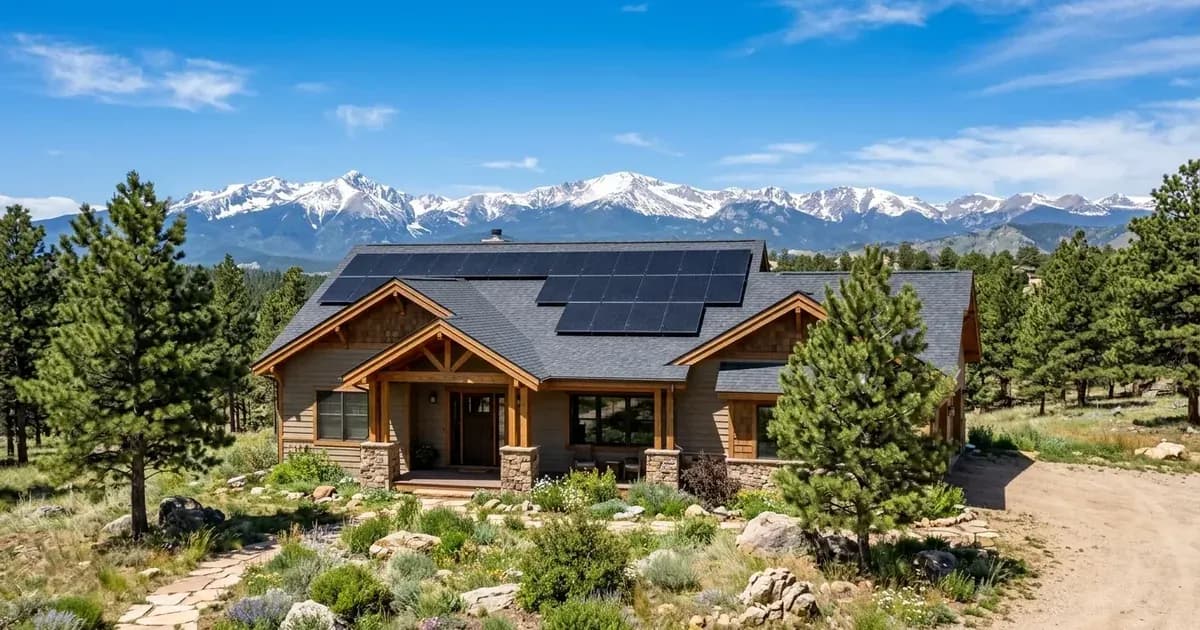
Every guide in this series turns on the same ratio: how much you generate times what a kilowatt-hour costs you. Massachusetts wins the second term and loses the first. Colorado does the reverse — thin high-altitude atmosphere and long clear stretches deliver a genuinely strong solar resource, while 16.16¢/kWh sits below the national midpoint.
Net-net, Colorado lands in the solid-yes column, but the arithmetic feels different: the savings formula here is driven by volume, not by escaping a punishing rate. That has one practical consequence worth internalizing — payback in Colorado is more sensitive to install price than it is in high-rate states. When each kilowatt-hour saves you less, what you pay per watt matters more, and quote discipline does more work than any incentive.
Altitude adds two quiet bonuses. Cool ambient temperatures at elevation keep panels nearer their rated efficiency — heat is the enemy of output, not cold — and dry winters mean snow tends to slide and sublimate off a pitched array rather than sit. The offsetting hazard is real, though: Front Range hail is among the most destructive in the country, which makes the hail question less academic here than anywhere else in this series. Check your homeowner's policy treatment before you sign, not after.
What the state gives you in 2026
Mechanism | Status 2026 | Notes |
|---|---|---|
Xcel net metering | Active, strong | Exports earn bill credits; standardized interconnection |
Solar*Rewards residential rebate | Sunset | No longer available for new residential systems |
State sales tax | Exempt | 2.9% not charged on qualifying equipment |
Property tax | Excluded | Assessor omits system value automatically — no filing |
Federal credit | Reshapes every payback in this series | |
Community solar | Active | Subscriber-credit rules change on/after Oct 1, 2026 |
Municipal and co-op utilities outside Xcel territory set their own crediting — the tariff check comes first, always.
The rebate's disappearance is the honest bad news, and it lands the same year the federal credit went away. What remains is durable rather than generous: crediting that hasn't been cut, and two exemptions that quietly protect the home-value gain from becoming a tax bill.
Designing for Colorado — and the roofs that can't
With full net-metering-style crediting intact, the classic design still applies: size to annual consumption, aim for maximum annual yield rather than evening peak, and let banking absorb the seasonal swing. Batteries earn their place on resilience — wildfire-season public safety shutoffs and mountain-corridor outages are the argument, not arbitrage. And the EV pairing is a Colorado natural: strong sun, a state EV tax credit that still exists, and mountain driving that burns real kilowatt-hours make solar-fueled charging the highest-value habit a Front Range household can adopt.
For the roofs that can't — north-facing, tree-shaded, rented, or under an HOA fight you don't want — community solar is unusually mature here. You subscribe to a share of an off-site array and receive credits on your bill without owning hardware. The rules are moving: bill-credit arrangements for subscriber organizations change for agreements on or after October 1, 2026, so read current terms rather than a 2024 explainer, and treat the subscription agreement's exit provisions as the clause that matters.
Verdict: yes — a solid, unspectacular yes carried by sunshine and stable crediting rather than by incentives, in a state that just lost two of them. Colorado is where this series' central point is easiest to see: the tariff, not the hardware, decides the decade — and Colorado's tariff is still one of the good ones.
Frequently asked questions
Are solar panels worth it in Colorado?
Yes for most roofs, on production rather than price: excellent high-altitude sun against 16.16¢/kWh (May 2026) — below-average rates that make each kilowatt-hour worth less, offset by generating more of them under some of the country's strongest net metering.
Does Xcel Energy still offer a solar rebate in Colorado?
The residential Solar*Rewards upfront rebate has sunset and is not available in 2026. Xcel continues to support residential solar through net metering and standardized interconnection, with exports earning bill credits.
Does Colorado tax solar panels?
No, twice over: solar equipment is exempt from the 2.9% state sales tax at purchase, and the added value of the system is excluded from property tax assessment automatically by the county assessor — no application needed.
What if my Colorado roof is shaded or I rent?
Community solar is unusually well developed in Colorado — you subscribe to a share of an off-site array and receive bill credits. Program rules for subscriber-organization credits change for arrangements on or after October 1, 2026, so check current terms before signing.
References
- Choose Energy – Electricity rates by state (EIA data, May 2026) — accessed 5 August 2026
- EnergySage – Colorado solar incentives, tax credits & rebates — accessed 5 August 2026
- Colorado Energy Office – Solar and renewable energy programs — accessed 5 August 2026
Related guides
More from schemes, subsidies & financing.