Can Hail Damage Solar Panels? Ratings vs Reality
Updated 8 September 2026 · By SolarNevs Research Desk, Dealer surveys + verified sources · 1 source · Method ↗
Key Takeaways
- Certification fires ~inch-diameter ice at highway-class speeds at every mainstream panel — tempered glass is engineered impact armor.
- In real storms, arrays routinely survive hail that dents the cars and shreds the shingles around them; the panel is often the toughest surface on the roof.
- Catastrophic hail exists — the Texas-belt stones — and that's an insurance story: dwelling coverage generally includes rooftop solar, worth confirming now.
- Post-storm protocol: app first, photos second, inspector third — micro-cracks hide behind intact glass and show up as output steps.
What the ratings actually test
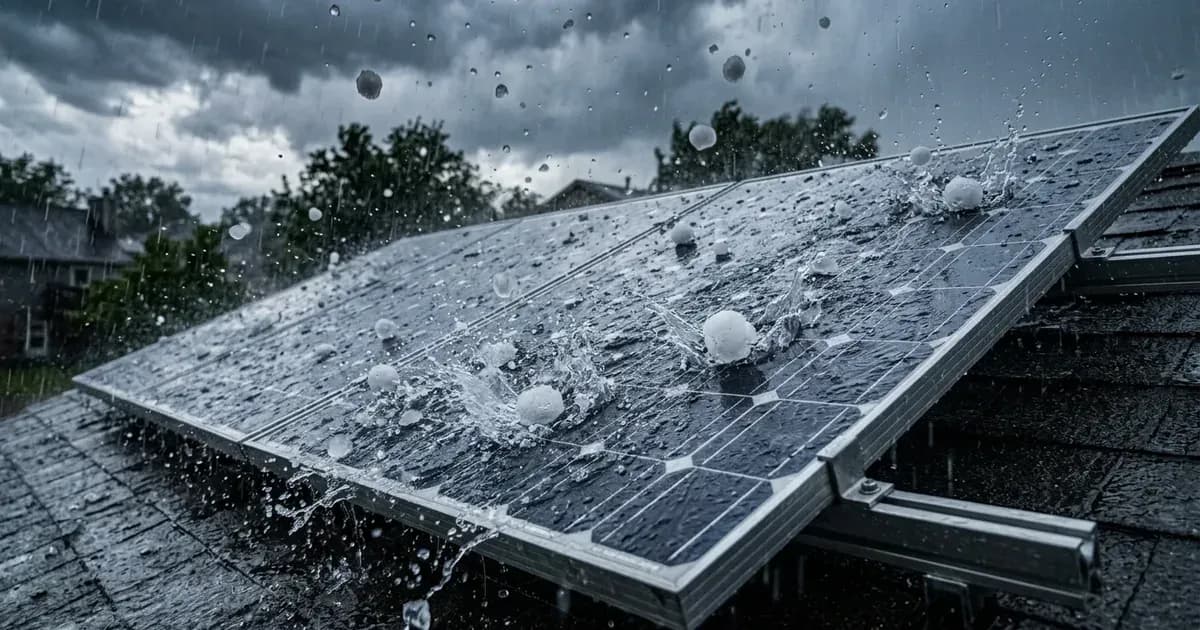
Every certified panel endures a standardized barrage: ice spheres — commonly around 25 mm, an inch — fired at multiple points at speeds in the highway class. The front sheet is tempered glass engineered for exactly this job (the armor layer from our manufacturing tour), and hail-belt buyers can seek models tested against larger stones. The test's message isn't invincibility; it's that ordinary hail — the pea-to-marble stuff comprising the vast majority of events — is a design input, not a threat.
Reality has repeatedly endorsed the ratings: post-storm surveys routinely find arrays intact above hail-dented vehicles and holed shingles, and insurers' own loss patterns treat panel claims as uncommon relative to roofing claims from the same storms. Panels being rated impact surfaces while shingles merely accumulate weather is the quiet reason.
Where hail wins anyway
Severity has a tail. Baseball-and-larger stones — the supercell specials of the hail belt from Texas through the plains — exceed any residential rating, and a direct-angle strike from one can crack glass or, sneakier, fracture cells behind glass that still looks whole. Those micro-cracks are the diagnostic reason a post-storm array deserves the app-check ritual: fractured strings show as the step-change signature even when the roof view looks fine. Age matters at the margins too — glass and encapsulants late in the panel's long fade take impacts slightly less gracefully than year-one armor.
Hail class | Typical outcome | Your move |
|---|---|---|
Pea to marble (most events) | Bounces; free panel rinse | Nothing — enjoy the cleaning |
Golf-ball | Usually fine; occasional edge strikes | App check that evening |
Baseball+ (rare supercells) | Real damage possible, visible or micro | Photos, inspection, claim |
Directional; angle, age, and luck all vote.
The insurance half of the answer
Rooftop residential solar generally rides under homeowners dwelling coverage — the array is part of the house, like the roof it sits on — which makes the preparation boring and vital: confirm your insurer knows the system exists, that coverage reflects replacement value (the number from your install contract, a figure the home-value conversation already gave you), and whether your hail deductible is percentage-based (common in the belt, and a real number on a big roof). Ground mounts and detached structures sometimes need scheduling as separate items — a one-call check.
After a genuine hit: monitoring screenshot, ground photos, professional inspection, claim — in that order, with the inspector's report doing the heavy lifting on micro-damage the adjuster can't see. What you don't do is accept a roofing crew's drive-by verdict on electrical equipment; panels are an electrician's inspection, not a shingle count.
Hail anxiety outsells hail damage by an order of magnitude. Buy the rated glass everyone already sells, tell your insurer it's up there, and let the storms provide the occasional free wash.
Frequently asked questions
Can hail damage solar panels?
Severe hail can, but panels are certified against roughly inch-diameter ice at impact speeds, and real-world storms that damage cars and shingles routinely leave arrays intact. Damage is the exception that insurance exists for.
What hail rating do solar panels have?
Standard certification tests fire ice balls around an inch in diameter at panels at highway-class speeds; premium and hail-market panels test larger. The tempered front glass is engineered impact armor.
Does insurance cover hail damage to solar panels?
Rooftop residential systems are generally covered under homeowners policies as part of the dwelling — confirm your policy names the system and its full replacement value before storm season, not after.
What should I do after a hailstorm?
Check the monitoring app for output steps, photograph any visible strikes from the ground, and book a professional inspection if either shows trouble — micro-cracks can hide behind intact-looking glass.
References
- US DOE – Solar Photovoltaic Technology Basics — accessed 5 August 2026
Related guides
More from inverter errors & fixes.