Commercial Solar PV Insurance And Hail Protection Guide South Africa
Updated 16 September 2026 · By SolarNevs Research Desk, Dealer surveys + verified sources · 1 source · Method ↗
Key Takeaways
- Commercial solar PV modules in South Africa require certified IEC 61215 hail resistance ratings.
- A registered professional installation electrician must issue a SANS 10142-1-2 Certificate of Compliance (CoC).
- All mounting systems and roof trusses need professional structural engineering sign-off under SANS 10400-L.
- Maintaining an audited equipment inventory and maintenance log is essential for insurance validity.
Understanding Commercial Solar PV Insurance in South Africa
Securing appropriate insurance for a commercial solar PV installation in South Africa requires adherence to specific technical and compliance standards. These requirements are designed to mitigate risks associated with grid integration, electrical safety, and environmental factors like severe hail storms. Your insurance provider will assess your installation against these benchmarks to determine coverage and validity.
This guide outlines the critical standards and practices for commercial solar PV systems in South Africa, focusing on the requirements for insurance and protection against hail damage. Compliance ensures your investment is protected and your system operates safely and legally within the South African energy framework.
The Role of Standards in Risk Mitigation
In South Africa, the integrity and safety of commercial solar PV installations are governed by a framework of national and international standards. These standards ensure that systems are designed, installed, and operated in a manner that minimises risks to property, personnel, and the electrical grid. For insurance purposes, demonstrating compliance with these standards is fundamental.
For instance, the structural integrity of your installation, particularly against wind and hail loads, is paramount. Similarly, the electrical safety of the system, from surge protection to earthing, is critical to prevent faults and ensure operational reliability. Adherence to these standards is not merely a regulatory formality; it is a proactive measure to protect your commercial solar asset.
Key Technical and Compliance Requirements
Commercial solar PV installations in South Africa must meet several specific technical and compliance requirements to ensure safety, grid compatibility, and insurance validity. These are often stipulated by authorities like Eskom and form the basis of risk assessment by insurers.
The following table summarises key requirements and their implications for your commercial solar PV project:
Parameter | What it means for your installation | What to do |
|---|---|---|
IEC 61215 Hail Resistance Impact Testing | Solar PV modules must achieve certified IEC 61215 hail resistance ratings resisting high-velocity ice ball impacts. | Select PV modules explicitly certified to IEC 61215 with appropriate hail resistance for your region. |
SANS 10142-1-2 Certificate of Compliance (CoC) | A registered professional installation electrician must issue a comprehensive Certificate of Compliance. | Ensure your installation is performed by a registered professional electrician who can issue a valid CoC. |
Safe DC Array Isolation Switch | Install heavy-duty lockable DC isolators on all photovoltaic string inputs adjacent to the inverter. | Incorporate lockable DC isolators as a critical safety feature for maintenance and emergency shutdown. |
Main Earthing Terminal Protective Bonding | Bond all metallic solar mounting structures and battery enclosures directly to the main earthing terminal. | Ensure all metallic components of your solar system are correctly bonded to the main earthing system. |
Structural Roof Wind and Hail Load Sign-Off | Mounting systems and roof trusses must receive professional structural engineering sign-off under SANS 10400-L. | Obtain a structural engineer's report and sign-off confirming the roof's capacity to support the solar array. |
NRS 097-2-1 Inverter Grid Protection | The embedded generator must automatically isolate within specified protection clearing times during grid loss. | Verify that your inverter is compliant with NRS 097-2-1 for automatic grid disconnection. |
Four-Quadrant Smart Metering | The municipality installs a certified four-quadrant bidirectional meter to record imported and exported active energy. | Coordinate with your municipality for the installation of the required bidirectional metering. |
Written Final Permission to Connect | Generators may only synchronize with the municipal network following receipt of written permission to connect. | Do not energise or connect your system to the grid until you have received formal written permission. |
Comprehensive Underwriting Asset Registry | Commercial installations must maintain an audited equipment inventory and maintenance log for insurance validity. | Keep detailed records of all equipment, serial numbers, and a log of all maintenance activities. |
What You Can Do to Protect Your Investment
Protecting your commercial solar PV investment involves both initial compliance and ongoing vigilance. While many technical aspects require certified professionals, there are steps you can take to ensure your system remains insurable and resilient.
First, always verify the credentials of your installation electrician. They must be a registered professional capable of issuing a SANS 10142-1-2 Certificate of Compliance. For structural aspects, engage a qualified structural engineer to assess your roof's capacity and sign off on the mounting system design under SANS 10400-L.
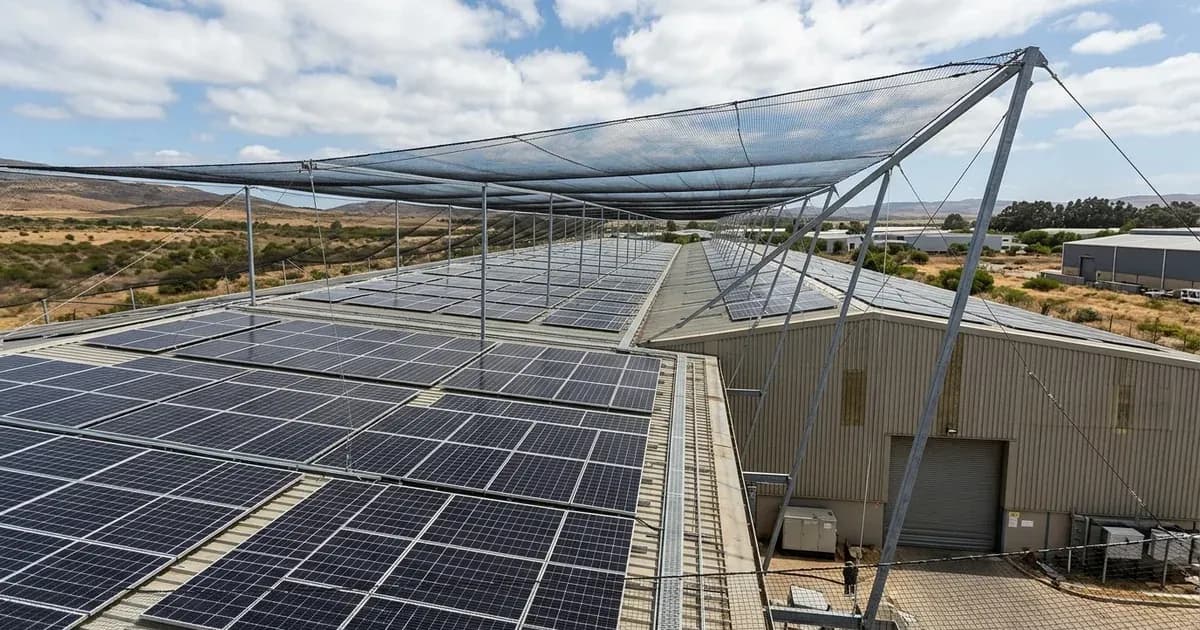
For hail protection, especially in regions like the South African Highveld, select PV modules that meet or exceed Class 4 hail impact resistance. Regularly inspect your modules for any signs of damage, particularly after severe weather events. Maintain a comprehensive asset registry, including all equipment details and a meticulous maintenance log. This audited equipment inventory and maintenance log is crucial for insurance validity and claims processing.
You cannot, however, perform grid connection or electrical work yourself. Only a registered professional installation electrician is authorised to issue the Certificate of Compliance. Similarly, structural assessments and sign-offs must come from a professional structural engineer. Do not attempt to modify inverter grid protection settings, as these are set by accredited installers to comply with NRS 097-2-1 and can breach your connection agreement if altered.
Regional Hail Risk and Module Selection
The geographical location of your commercial solar PV installation in South Africa significantly influences the required level of hail protection. Certain regions, particularly the South African Highveld (Gauteng and Mpumalanga), are known for severe summer hail storms.
In these high-risk areas, standard PV modules may not offer sufficient resilience. official technical guidance indicates that in the South African Highveld, severe summer hail storms require Class 4 or higher hail impact resistant PV modules. This means that when sourcing modules for installations in these provinces, you should specifically look for products certified to withstand larger and higher-velocity ice ball impacts than might be necessary in other, less hail-prone parts of the country. Always ensure your chosen modules achieve certified IEC 61215 hail resistance ratings that align with the local climate risks.
What the Published Sources Do Not Tell You
While the provided official documentation outlines critical standards and requirements, it does not detail the specific financial implications or the varying premium structures offered by different insurance providers. The South African Insurance Association (SAIA) Commercial Solar Underwriting Rules exist, but their specific content, including detailed risk assessment methodologies or preferred mitigation strategies, is not publicly available in this source.
Furthermore, while official technical guidance mentions the need for professional structural engineering sign-off under SANS 10400-L, it does not specify the exact calculations or methodologies structural engineers use to determine roof load capacity for solar arrays. The precise protection clearing times for inverters during grid loss under NRS 097-2-1 are also not detailed, as these can vary by inverter model and specific grid code interpretation. official documentation also does not provide a list of registered professional installation electricians or approved structural engineers. ---
Frequently asked questions
What are the primary technical requirements for commercial solar pv insurance and hail protection guide south africa?
Key requirements include compliance with local grid codes, correct equipment certification, and proper electrical isolation.
Who is authorized to install and inspect commercial solar pv insurance and hail protection guide south africa?
All high-voltage DC, AC grid tie-in, and switchboard modifications must be performed by a qualified, accredited electrical professional.
How is export power limited in commercial solar pv insurance and hail protection guide south africa?
Export limiting is achieved using certified bidirectional smart meters or power sensors providing dynamic feedback to the inverter system.
References
- Eskom Distribution: Small-Scale Embedded Generators (SSEG) registration and connection requirements — accessed 15 September 2026
Related guides
More from inverter errors & fixes.