How to Clean Solar Panels Safely (And When Not to Bother)
Updated 8 September 2026 · By SolarNevs Research Desk, Dealer surveys + verified sources · 1 source · Method ↗
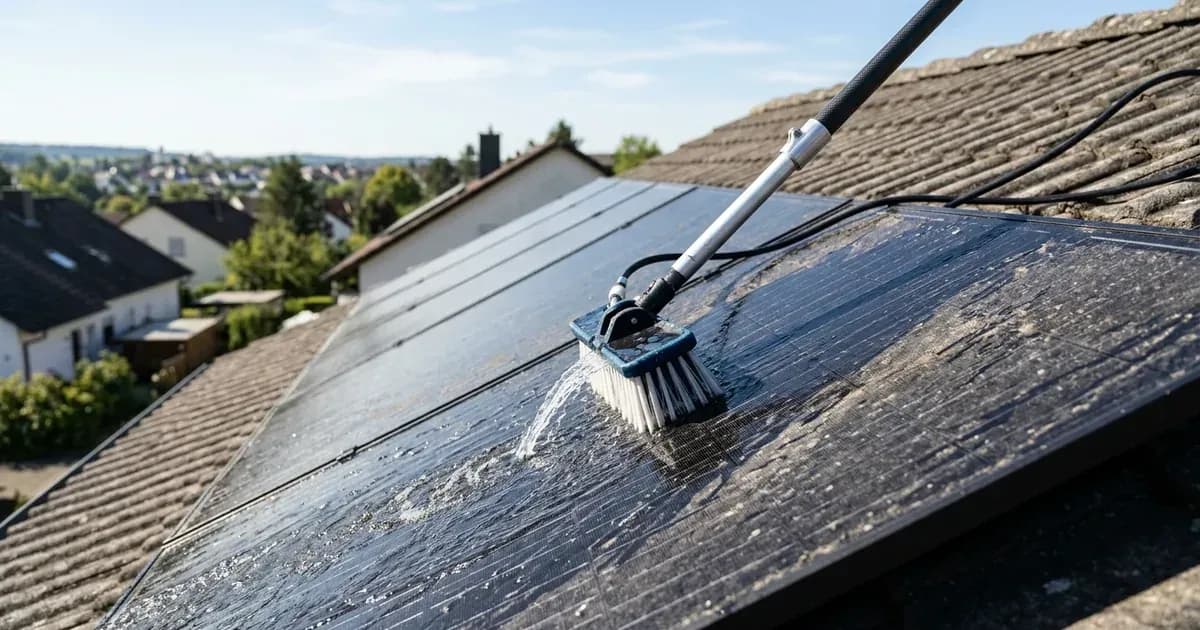
Key Takeaways
- The method is deliberately boring: plain water, soft brush, telescoping pole, cool morning, feet on the ground.
- The don'ts matter more: no soap films, no abrasives, no pressure washers, no roof-walking for a few kilowatt-hours.
- Rain is the default cleaner — our cloudy-day guide covers the free service — so clean on evidence, not calendar: monitoring sag plus visible cause.
- Heat and cold both argue for dawn: cool glass, no thermal-shock risk, and better working light than dusk.
When cleaning actually pays
Panels shed most soiling with weather; the question is the residue. Evidence-based cleaning beats scheduled cleaning: your monitoring app (the habit our savings guide installs) shows production against expectation, and a sag with a visible cause — spring pollen film, a bird-favored corner, post-dust-storm haze, agricultural dust seasons — is the trigger. No sag, no bother: the loss from typical light soiling is small enough that many households never clean at all, especially in rainy climates.
The exceptions that do accumulate: pollen (sticky, rain-resistant), bird droppings (concentrated shade spots — the partial-shade disproportionality applies), and dry-climate dust that rain never rinses. Desert and farm-adjacent arrays are the legitimate cleaning-routine cases.
The safe method, step by step
- Work at dawn — cool glass (hot panels + cold water = thermal stress), low sun, and the panels aren't producing at full tilt while you spray them.
- Stay grounded — a telescoping pole with a soft brush or squeegee head reaches most residential arrays from a ladder-free stance. The entire value of a year's cleaning doesn't cover one fall; professional crews exist for steep roofs.
- Rinse first — hose off loose grit before any brush touches glass; dragging dust is how coatings scratch.
- Wash with water alone — soft brush, gentle passes. Stubborn spots: diluted vinegar at most. Detergents leave films that scatter light — the enemy you came to remove.
- Squeegee or air-dry — hard-water regions benefit from a squeegee pass to dodge mineral spotting.
- Check the day's curve after — a restored midday peak is your receipt.
Tool | Verdict |
|---|---|
Hose + soft brush pole | ✅ The whole kit |
Squeegee head | ✅ Hard-water finisher |
Diluted vinegar | ✅ Stubborn spots only |
Dish soap / detergents | ❌ Light-scattering films |
Pressure washer | ❌ Seal and coating risk |
Abrasives, metal tools | ❌ Permanent scratch loss |
Your feet on a wet roof | ❌ Nothing up there is worth it |
Method per prevailing manufacturer guidance; snow has its own rules.
What cleaning can't fix
If output sags without visible soiling, cleaning is the wrong diagnosis: shading growth (that maturing oak), an inverter fault, or a failed panel string wants the repair conversation instead. And degradation's gentle half-percent yearly slope is chemistry, not dirt — no brush recovers it. The monitoring app separates all three stories: dirt sags broadly and recovers with rain or washing; shade sags in daily patterns; hardware fails in steps.
Clean when the evidence asks, with water and patience, from the ground — and let rain, the original service contractor, keep the routine account.
Frequently asked questions
How do you clean solar panels?
Plain water and a soft brush or squeegee on a telescoping pole, worked from the ground in cool morning hours. No soap residue, no abrasives, no pressure washer — the glass and its coating are the product.
Should I clean my solar panels at all?
Often no — rain does the routine work free, as our cloudy-day guide notes. Clean when monitoring shows output sagging versus expectation, or visible buildup (pollen films, bird traffic, dust storms) says why.
Can I use soap or a pressure washer on solar panels?
Avoid both: detergents leave light-scattering films and pressure washers can breach seals or scratch coatings. Stubborn grime wants diluted vinegar or a purpose-made solution at most.
When is professional cleaning worth it?
Steep or high roofs (never work a roof for kilowatt-hours), heavy soiling climates, and large arrays where measured losses exceed the service price. Otherwise ground-based DIY covers it.
References
- US DOE – Solar Photovoltaic Technology Basics — accessed 5 August 2026
Related guides
More from inverter errors & fixes.