Solar Panel Repair: What's Fixable, What's Replaceable
Updated 8 September 2026 · By SolarNevs Research Desk, Dealer surveys + verified sources · 1 source · Method ↗
Key Takeaways
- "Panel repair" is usually a misnomer: panels are sealed laminates — they get warranty-replaced, while the system around them gets repaired.
- The triage reads from your app: zero output → inverter/breaker; step down → string/connector; slow sag → dirt or shade.
- Warranties stack in your favor — panel product + performance, inverter term, installer labor — and paperwork is half the repair.
- DIY ends at the breaker panel and the garden hose: rooftop electrical is licensed-hands territory.
Why panels don't get "repaired"
A panel is glass, encapsulant, cells, and backsheet fused into one weatherproof laminate — the sandwich from our manufacturing tour. Nothing inside is serviceable: a cracked pane or dead cell string can't be opened and soldered on a roof, so panel-level failure means replacement, almost always under the product or performance warranty that our lifespan guide decodes. The good news hiding in that fact: true panel failure is rare, and the components that do fail — electronics and connections — are exactly the repairable ones.
The triage tree, from your couch
The monitoring app diagnoses before anyone climbs (the same three patterns the maintenance schedule watches):
Symptom in the app | Likely culprit | The fix class |
|---|---|---|
Zero production, sunny day | Inverter fault or tripped breaker | Reset once; then service call |
Sudden step down, stays down | String fault, connector, failed optimizer, or one dead panel | Electrician with a tester |
Gradual broad sag, rain-recoverable | Soiling | |
Time-of-day dent, growing seasonally | New shading | |
Slightly less each year | Normal degradation | Nothing — that's the warranty curve |
Diagnose by pattern, then dispatch accordingly.
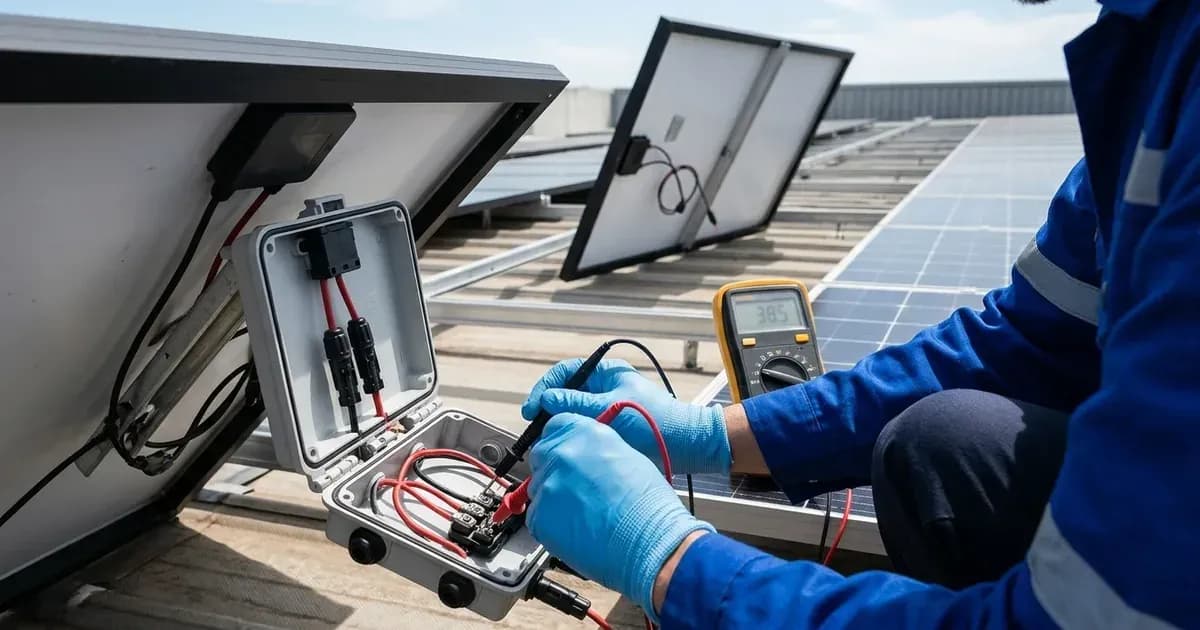
The owner's entire hands-on repertoire: one inverter restart (breaker off, wait, on — per your manual), the visual walk-around, and cleaning. Everything beyond that involves rooftop DC at real voltages — the orange-cable rule generalizes: not yours to touch.
The warranty paperwork that pays for it
Repairs are half diagnosis, half documentation. Panel warranties split product (defects) from performance (the degradation floor); inverters carry their own term — and since the inverter is the system's expected mid-life event anyway, a failure late in warranty often converts to a planned upgrade. Installer labor warranties cover workmanship for their own term, which is why the original installer is call number one while they exist. Bring data to every call: the app's before/after screenshots turn a vague complaint into an approvable claim, exactly as they do for hail events.
Orphaned system — installer defunct? Any licensed solar electrician can service it, and component warranties survive the installer's death; you'll pay labor, the manufacturer ships parts.
Repair, replace, or repower
Single-component math is easy: one inverter or one panel against decades of remaining production almost always says repair. The interesting decision arrives with age: a 20-plus-year array facing a big repair invites the repowering question — modern panels at twice the wattage per square foot on the same roof, restarting the warranty clock. Run it like the original purchase: remaining-life production versus the current worth-it math, minus the salvage simplicity of racking that's already there. Until that third decade, though, the boring verdict holds: fix the part, keep the system, and let the glass keep doing the one job it never needed repairing to do.
Frequently asked questions
Can solar panels be repaired?
The panel itself rarely — it's a sealed laminate; cracked glass or failed cells mean warranty replacement. What gets genuinely repaired is everything around it: inverters, optimizers, connectors, wiring, and racking.
Why is my solar system producing less or nothing?
Triage by pattern: zero output is usually the inverter or a tripped breaker; a step down is a string or connector fault; a gradual sag is soiling or shade. The monitoring app is the diagnostic tool.
Who repairs solar systems?
Your original installer first (labor warranty), any licensed solar electrician second. Component warranties — panel product/performance, inverter term — often cover parts even when labor is yours.
Is it worth repairing an old solar system?
Usually yes for single components — one inverter or a few panels against decades of remaining production. Whole-system repowering only enters the math near the array's third decade.
References
- US DOE – Solar Photovoltaic Technology Basics — accessed 5 August 2026
Related guides
More from inverter errors & fixes.