Agricultural Solar Borehole Pumping And VFD Guide South Africa
Updated 16 September 2026 · By SolarNevs Research Desk, Dealer surveys + verified sources · 1 source · Method ↗
Key Takeaways
- All agricultural solar pumping installations in South Africa require a Certificate of Compliance (CoC) under SANS 10142-1-2.
- Commercial and agricultural solar investments qualify for accelerated 100% tax depreciation.
- Grid-tied and hybrid systems need registration and approval, with inverters certified to NRS 097-2-1.
- Safety measures like surge protection and AC isolation switches are mandatory.
Understanding Solar Borehole Pumping in South Africa
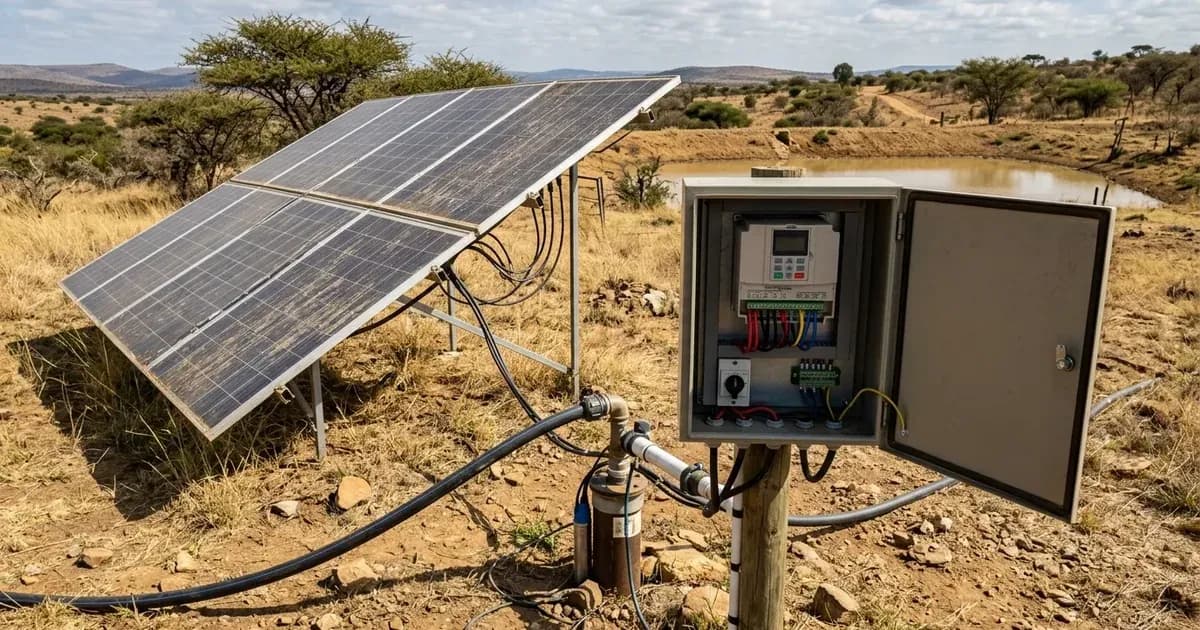
Agricultural solar borehole pumping systems in South Africa offer a sustainable solution for water access in rural areas. These systems typically use solar panels to power a pump, often incorporating a Variable Frequency Drive (VFD) controller to optimize performance. The VFD adjusts the pump's speed based on the available solar power, ensuring efficient operation throughout the day.
Direct-drive solar pumping is a common approach, operating without batteries. In this setup, energy is stored directly as pressurized water in reservoirs. This eliminates the need for battery maintenance and replacement, simplifying the system and reducing long-term costs.
Regulatory Framework for Agricultural Solar in South Africa
Installing an agricultural solar pumping system in South Africa involves adherence to specific national standards and regulations. The primary standard governing these installations is SANS 10142-1-2, which covers embedded generation.
Key Regulatory Requirements:
- Certificate of Compliance (CoC): All agricultural solar pumping installations require a valid Certificate of Compliance signed by an electrician. For hybrid generating installations, this must be a formal SANS 10142-1-2 CoC.
- Grid-Tied and Hybrid Systems: If your system is grid-tied or hybrid, it must be officially registered and approved by City Power. A registered Master Installation Electrician must issue a supplemental SANS 10142-1-2 CoC for these installations.
- Inverter Certification: Embedded generation inverters must be certified to NRS 097-2-1 and listed on the approved equipment register. This ensures compatibility and safety for grid connection.
- Zero-Export Installations: If your system is designed for zero-export, it must incorporate a certified reverse power relay that blocks unauthorized feed-in to the grid.
System Type / Component | Standard / Component Requirement | Compliance Mandate |
|---|---|---|
Hybrid / Embedded Generation | SANS 10142-1-2 | Valid Certificate of Compliance (CoC) issued by an accredited electrician |
Grid-Tied & Hybrid Systems | City Power Registration & SANS 10142-1-2 | Official registration and supplemental CoC from Master Installation Electrician |
Embedded Generation Inverters | NRS 097-2-1 | Certified hardware listed on the official approved equipment register |
Zero-Export Systems | Reverse Power Relay | Certified relay hardware blocking unauthorized feed-in to the grid |
The farm microgrid, if applicable, must also be inspected and certified under SANS 10142-1-2 by an accredited electrician.
Essential Safety and Protection Measures
Safety is paramount in any electrical installation, especially in agricultural settings where conditions can be challenging. South African regulations mandate several safety features for solar pumping systems:
Mandatory Safety Components:
- AC Isolation Switch: A lockable double-pole AC isolation switch must be positioned near the consumer distribution board. This allows for safe disconnection of the system from the main power supply.
- Surge Protection: Class I and Class II surge arresters must protect all DC string inputs and main AC distribution panels. This safeguards the system from lightning strikes and other voltage surges.
- Neutral-Earth Bonding: The installation must include automatic neutral-earth bonding relays during off-grid islanding operation. This ensures proper earthing when the system is operating independently from the grid.
Beyond these electrical safety measures, it is crucial to ensure the physical integrity of the installation. For borehole systems, ensure water pH and salinity tests are conducted to select compatible stainless steel pump wet ends, preventing premature corrosion and failure.
Financial Incentives: Accelerated Tax Depreciation
South Africa offers a significant financial incentive for agricultural businesses investing in solar energy. Commercial and agricultural solar energy investments qualify for accelerated 100% tax depreciation. This means that the full cost of the solar pumping system can be written off against taxable income in the first year, providing a substantial reduction in tax liability and improving the return on investment.
This incentive aims to encourage the adoption of renewable energy solutions in the agricultural sector, supporting both energy independence and economic growth.
What you can check yourself, and what you cannot
As a homeowner or farm owner, you can perform certain checks to maintain your solar pumping system, but critical electrical work must always be left to accredited professionals.
What you can check:
- Visual Inspection: Regularly check solar panels for dirt, debris, or shading. Ensure all visible cables are intact and not damaged.
- Water Levels: Monitor reservoir water levels and pump performance.
- Basic Cleaning: Clean solar panels gently with water to maintain efficiency.
- System Monitoring: If your system has a monitoring interface, check for any reported errors or performance anomalies.
What you cannot do:
- Electrical Connections: Do not attempt to modify or repair any electrical wiring, connections, or components. This includes the VFD, inverter, isolation switches, or surge arresters.
- CoC-Related Work: Any work that impacts the Certificate of Compliance (CoC) must be performed by a qualified and accredited electrician.
- Inverter Settings: Do not change inverter settings or grid-protection parameters. These are set by an accredited installer to comply with connection agreements and safety standards.
- Opening Enclosures: Do not open the enclosures of electrical equipment like inverters or VFDs. Isolate PV, battery, and AC breakers, wait the manual's capacitor-discharge time, and understand that opening the unit is authorised-service work.
Always consult an accredited electrician for any electrical issues, repairs, or modifications to ensure safety and compliance with SANS 10142-1-2.
What the published sources do not tell you
While the regulatory framework provides essential guidelines, specific details for agricultural solar pumping can vary. The provided sources do not detail:
- Specific VFD Controller Settings: The optimal settings for Variable Frequency Drives (VFDs) can vary significantly based on pump type, borehole depth, and water demand. These are typically configured by the installer.
- Borehole Dry-Run and Level Sensor Specifications: While dry-run protection is crucial, specific technical specifications for level sensors and their integration into VFD systems are not universally published and depend on the chosen equipment.
- Eskom Ruraflex Tariff Avoidance Strategies: While official technical guidance mentions "Eskom Ruraflex Tariff Avoidance," it does not provide specific strategies or technical configurations to achieve this. This often involves careful system design and potentially specific metering arrangements.
- Detailed Water Use License Adherence: official documentation notes "Water Use License Adherence" but does not elaborate on the specific requirements or processes for obtaining and maintaining these licenses, which are managed by the Department of Water and Sanitation (DWS).
- Earth Mat Resistance Thresholds: While "Earth Mat Resistance Threshold" is listed, no specific resistance values or testing methodologies are provided in the general Eskom documentation. These are typically covered in more detailed electrical installation codes.
Frequently asked questions
What are the primary technical requirements for agricultural solar borehole pumping and vfd guide south africa?
Key requirements include compliance with local grid codes, correct equipment certification, and proper electrical isolation.
Who is authorized to install and inspect agricultural solar borehole pumping and vfd guide south africa?
All high-voltage DC, AC grid tie-in, and switchboard modifications must be performed by a qualified, accredited electrical professional.
How is export power limited in agricultural solar borehole pumping and vfd guide south africa?
Export limiting is achieved using certified bidirectional smart meters or power sensors providing dynamic feedback to the inverter system.
References
- Eskom Distribution: Small-Scale Embedded Generators (SSEG) registration and connection requirements — accessed 15 September 2026
Related guides
More from inverter errors & fixes.