South Africa Solar Borehole Water Pumping VSD Guide
Updated 16 September 2026 · By SolarNevs Research Desk, Dealer surveys + verified sources · Method ↗
Key Takeaways
- Solar Variable Speed Drives (VSDs) convert DC power from solar arrays into variable frequency 3-phase AC to run standard pumps, with built-in MPPT.
- Total dynamic head (TDH) calculations are critical for correct pump sizing, accounting for static water level, drawdown, friction, and elevation.
- Automatic dry-run protection is essential to prevent pump motor burnout when water levels drop.
- All electrical work, including cabling and surge protection, must comply with SANS 10142-1 and be signed off by a registered electrician with a Certificate of Compliance.
Understanding Solar Borehole Water Pumping with VSDs in South Africa
In South Africa, particularly for agricultural use, solar borehole water pumping systems offer a reliable solution for livestock watering and irrigation. This guide, based on Eskom's specifications, focuses on systems that use Variable Speed Drives (VSDs) to power standard 3-phase AC pumps directly from solar energy. These systems are designed for agricultural applications across South Africa.
How Solar VSD Systems Work
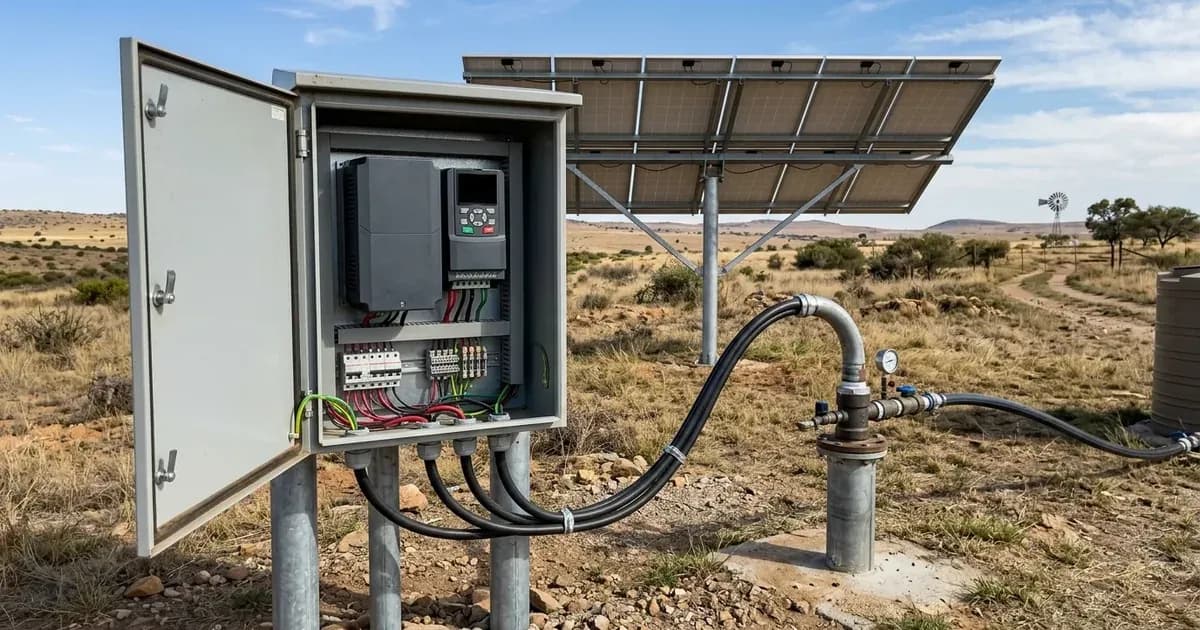
A Solar VSD inverter acts as the bridge between your solar panels and your pump. It takes the direct current (DC) electricity generated by the solar array and converts it into variable frequency 3-phase alternating current (AC). This AC power then drives a standard pump motor.
The VSD continuously adjusts the motor pump speed. This is achieved through built-in Maximum Power Point Tracking (MPPT) algorithms, which optimise power output from the solar array based on real-time solar irradiance. This means the pump runs faster when the sun is bright and slower during cloudy periods, making efficient use of available solar energy.
Key Technical Specifications for Solar Borehole Pumping
The following table outlines essential technical specifications and agricultural rules for solar borehole pumping systems, as guided by Eskom:
Parameter | What it means for your system |
|---|---|
Solar VSD Inverter Drive Technology | Solar VSD inverters convert DC power from solar arrays directly into variable frequency 3-phase AC to run standard pumps. |
Dynamic Maximum Power Point Tracking | Built-in MPPT algorithms continuously adjust motor pump speed based on real-time solar irradiance, optimising water delivery. |
Borehole Dynamic Head Calculations | Total dynamic head (TDH) sizing must account for static water level, drawdown, pipe friction losses, and elevation to ensure correct pump selection. |
Dry Run Well Sensor Protection | Automatic dry-run protection stops the pump when water levels drop below the intake sensor to prevent motor burnout. |
SANS 10142-1 Electrical Installation | All cabling, motor protection, and switchgear must comply with SANS 10142-1 low-voltage wiring regulations. |
Lightning and Surge Protection Standard | Install Class II DC and AC surge arresters and dedicated deep earth rods to protect borehole pump drives from lightning. |
Registered Electrician CoC Sign-Off | A registered Master or Installation Electrician must inspect, test, and issue a valid Certificate of Compliance (CoC). |
Safe Electrical Lockout Practice | Follow standard occupational health and safety electrical lockout procedures during switchboard modifications. |
South African Agricultural Scope | These systems are designed for agricultural borehole pumping, livestock watering, and irrigation systems across South Africa. |
What you can check yourself, and what you cannot
As a system owner, you can monitor the performance of your solar borehole pump system. This includes observing water flow rates, checking the solar array for obvious shading or dirt, and ensuring the VSD display shows normal operating parameters. You can also ensure the area around your borehole and electrical enclosures is kept clear and secure.
However, any work involving the electrical wiring, motor protection, switchgear, or the VSD itself requires a qualified professional. All cabling, motor protection, and switchgear must comply with SANS 10142-1 low-voltage wiring regulations. For your safety and compliance, a registered Master or Installation Electrician must inspect, test, and issue a valid Certificate of Compliance (CoC) for the installation. Never attempt to open electrical enclosures, modify wiring, or work on live circuits. Always follow standard occupational health and safety electrical lockout procedures during any switchboard modifications, which should only be performed by a registered electrician.
What the published sources do not tell you
While Eskom provides comprehensive guidance on the technical specifications and compliance requirements for solar borehole pumping systems, specific details regarding individual equipment models (such as INVT, Veichi, SAJ, Grundfos) are typically found in manufacturer datasheets, not in general utility guidelines.
The Eskom guidance focuses on the general principles and regulatory compliance applicable across South Africa, particularly for agricultural use. It does not detail specific sizing charts for every pump model, nor does it provide a complete list of all approved VSDs. For low-yield boreholes, the guidance notes that water storage tanks and header reservoirs provide buffering against intermittent cloud cover, but it does not specify optimal tank sizes or design considerations for such buffering. These details often require site-specific engineering and consultation with pump suppliers or hydraulic engineers.
Frequently asked questions
What is a Solar VSD inverter for borehole pumps?
A Solar VSD inverter converts direct current (DC) power from solar arrays directly into variable frequency 3-phase alternating current (AC). This allows it to run standard pumps, adjusting motor speed based on available solar power.
How is total dynamic head (TDH) calculated for borehole pumps in South Africa?
Total dynamic head (TDH) sizing must account for several factors. These include the static water level, the drawdown of the water table during pumping, pipe friction losses, and any elevation differences the water needs to overcome.
What is dry-run protection for a solar borehole pump?
Dry-run protection is an automatic safety feature that stops the pump when water levels drop below the intake sensor. This prevents the pump motor from operating without water, which can lead to overheating and burnout.
What electrical standards apply to solar borehole pump installations in South Africa?
All cabling, motor protection, and switchgear for solar borehole pump installations in South Africa must comply with SANS 10142-1. This is the low-voltage wiring regulations Code of Practice for Wiring of Premises.
Who must sign off on a solar borehole pump installation in South Africa?
A registered Master or Installation Electrician must inspect, test, and issue a valid Certificate of Compliance (CoC) for the electrical installation of a solar borehole pump system in South Africa.
Related guides
More from inverter errors & fixes.