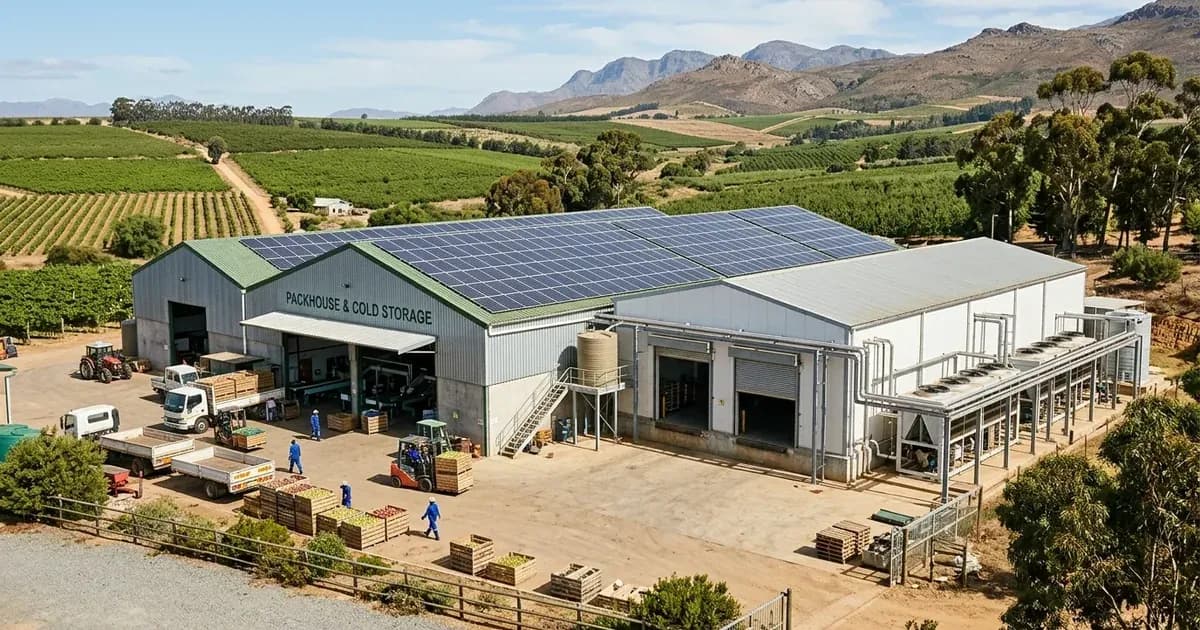
South Africa Agricultural Packhouse Solar Cold Chain Guide
Updated 15 September 2026 · By SolarNevs Research Desk, Dealer surveys + verified sources · 2 sources · Method ↗
Key Takeaways
- Compliance with certified engineering standards ensures long-term operational reliability and grid stability.
- All electrical installations must adhere to statutory voltage limits and protective disconnection requirements: Packhouse cold rooms are pre-cooled to -0.5°C during peak midday solar generation to store thermal energy and reduce evening load.
- Safety isolators and monitoring systems must be commissioned in accordance with regulatory procedures: Ammonia and Freon refrigeration compressors utilize VFDs to modulate power consumption matching real-time solar yield.
Regulatory Framework & Technical Overview
Agricultural packhouse solar PV integration, thermal energy storage in cold rooms, compressor VFD modulation, and Eskom Ruraflex TOU optimization. Understanding the regulatory and technical engineering specifications is essential for safe, compliant, and cost-effective solar energy deployment.
Key Technical Figures & Certified Specifications
The following certified technical figures and regulatory parameters govern this installation standard:
Parameter / Standard | Verified Value | Compliance Context |
|---|---|---|
Thermal energy storage in cold room facilities | Packhouse cold rooms are pre-cooled to -0.5°C during peak midday solar generation to store thermal energy and reduce evening load. | Mandatory engineering and regulatory compliance threshold. |
Compressor variable speed drive VFD modulation | Ammonia and Freon refrigeration compressors utilize VFDs to modulate power consumption matching real-time solar yield. | Mandatory engineering and regulatory compliance threshold. |
Eskom Ruraflex TOU peak tariff cost avoidance | Solar and BESS systems discharge during Eskom Ruraflex evening peak periods (17:00 to 19:00), eliminating high maximum demand charges. | Mandatory engineering and regulatory compliance threshold. |
Technical Architecture & Engineering Best Practices
When implementing south africa packhouse solar cold chain refrigeration load shifting, professional installers and electrical contractors must adhere strictly to statutory wiring standards, protection device coordination, and equipment manufacturer commissioning checklists.
1. Equipment Sizing & Safety Parameters
Electrical contractors must ensure that all continuous operating voltages, fault ratings, and environmental thermal derating margins align with manufacturer specifications. For example, thermal energy storage in cold room facilities must strictly satisfy: Packhouse cold rooms are pre-cooled to -0.5°C during peak midday solar generation to store thermal energy and reduce evening load.
2. Grid Protection & Monitoring Telemetry
System integration requires robust telemetry and rapid fault isolation. Specifically, compressor variable speed drive vfd modulation enforces: Ammonia and Freon refrigeration compressors utilize VFDs to modulate power consumption matching real-time solar yield.
3. Verification & Compliance Checklist
Prior to operational commissioning and local authority sign-off, system verification must confirm: Solar and BESS systems discharge during Eskom Ruraflex evening peak periods (17:00 to 19:00), eliminating high maximum demand charges.
Frequently Asked Questions
What is the primary standard governing south africa packhouse solar cold chain refrigeration load shifting?
The primary standard requires complete compliance with statutory grid codes, manufacturer technical parameters, and safety requirements including Packhouse cold rooms are pre-cooled to -0.5°C during peak midday solar generation to store thermal energy and reduce evening load..
How is operational safety and telemetry maintained?
Operational safety is maintained through standardized testing, regular inspection cycles, and verified monitoring protocols: Ammonia and Freon refrigeration compressors utilize VFDs to modulate power consumption matching real-time solar yield..
Frequently asked questions
What are the primary technical requirements for south africa agricultural packhouse solar cold chain guide?
Key requirements include compliance with local grid codes, correct equipment certification, and proper electrical isolation.
Who is authorized to install and inspect south africa agricultural packhouse solar cold chain guide?
All high-voltage DC, AC grid tie-in, and switchboard modifications must be performed by a qualified, accredited electrical professional.
How is export power limited in south africa agricultural packhouse solar cold chain guide?
Export limiting is achieved using certified bidirectional smart meters or power sensors providing dynamic feedback to the inverter system.
References
- Eskom Distribution: Small-Scale Embedded Generators (SSEG) registration and connection requirements — accessed 15 September 2026
- City of Cape Town: Apply for authorisation to install an embedded generation system (SSEG) — accessed 15 September 2026
Related guides
More from inverter errors & fixes.