Ohio Aep And Firstenergy Solar Interconnection Guide
Updated 17 September 2026 · By SolarNevs Research Desk, Dealer surveys + verified sources · 1 source · Method ↗
Key Takeaways
- You must receive written Permission to Operate (PTO) from your utility before energising your solar system.
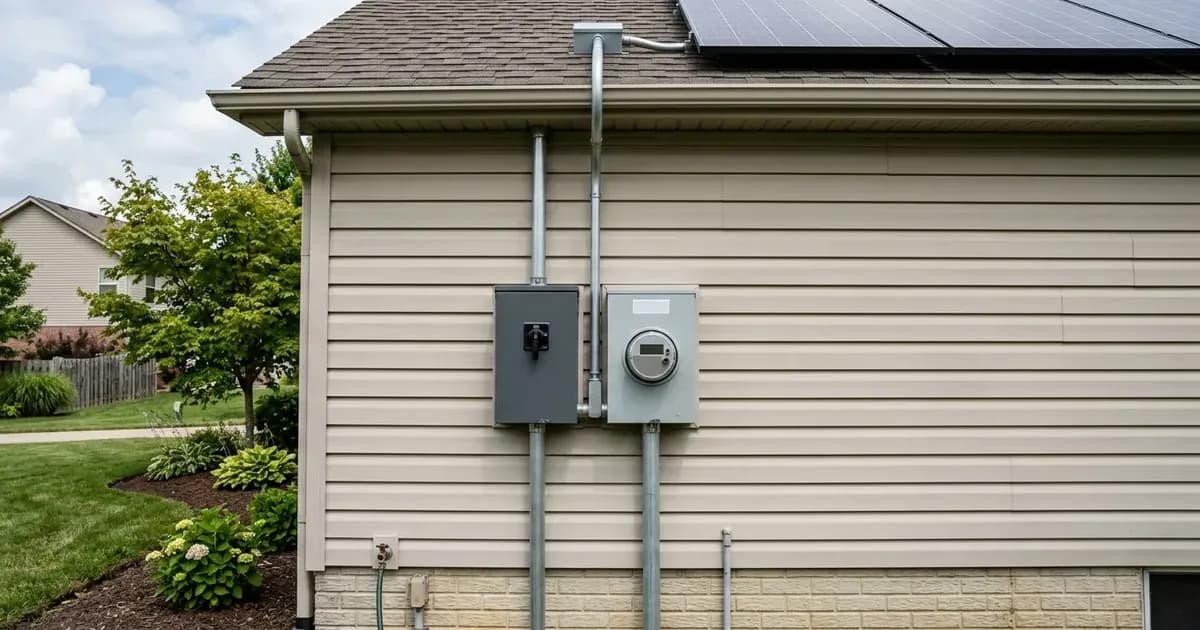
- A lockable, utility-accessible AC disconnect switch is required within 10 feet of the revenue meter.
- Grid-tied inverters must meet UL 1741-SB and IEEE 1547-2018 anti-islanding standards.
- Federal tax credits of 30% are available for qualified residential solar and energy storage expenditures.
Understanding Simplified Level 1 Solar Interconnection in Ohio
Connecting a solar photovoltaic (PV) system to the electrical grid in Ohio, particularly for customers of AEP Ohio and FirstEnergy (which includes Ohio Edison, Toledo Edison, and The Illuminating Company, formerly CEI), involves specific technical and administrative requirements. This guide focuses on simplified Level 1 interconnection, which typically applies to smaller, residential-scale systems. The process ensures that your solar installation operates safely, reliably, and in harmony with the existing grid infrastructure.
The primary goal of these interconnection standards is to protect utility workers, prevent damage to grid equipment, and ensure that your system does not negatively impact the quality or reliability of electricity for other customers. Adhering to these rules is mandatory for obtaining Permission to Operate (PTO) from your utility.
Key Requirements for Grid-Tied Solar Systems
Connecting a solar system to the grid requires careful attention to safety and regulatory compliance. The utility companies, AEP Ohio and FirstEnergy, mandate specific equipment and installation practices to ensure the stability and safety of the electrical network. These requirements cover everything from the inverter's behaviour during grid outages to the physical placement of safety disconnects.
The mechanism behind these rules is to ensure that your solar system can automatically and safely disconnect from the grid if there's a power outage (anti-islanding), preventing your system from energising lines that utility workers might be repairing. It also ensures that your system's electrical output is compatible with the grid's voltage and frequency.
Essential Interconnection Requirements
The following table summarises key technical and regulatory requirements for simplified Level 1 solar interconnection with AEP Ohio and FirstEnergy. These points are critical for a compliant and safe installation.
Requirement | Detail | What it means for you |
|---|---|---|
Inverter Standards | Grid-tied solar inverters must comply with UL 1741-SB and IEEE 1547-2018 anti-islanding parameters. | Your inverter must be certified to safely disconnect from the grid during outages. |
AC Disconnect | A lockable utility-accessible AC disconnect switch is required within 10 feet of the revenue meter. | This external switch allows utility personnel to manually shut down your system for safety or maintenance. |
Overcurrent Protection | Dedicated overcurrent protection devices must be sized according to NEC 705.12 120% busbar rules. | Circuit breakers and fuses must be correctly sized to prevent overloading electrical panels. |
Rapid Shutdown | Rooftop PV systems must incorporate rapid shutdown devices complying with NEC 690.12 specifications. | In an emergency, your rooftop solar array must be able to quickly reduce its voltage to safe levels. |
Grounding | Equipment grounding conductors must be bonded directly to the main building service grounding electrode. | Proper grounding protects against electrical shock and ensures fault currents are safely dissipated. |
Panelboard Connection | Connection of generating sources to panelboards must follow the 120% ampacity calculation in NEC 705.12. | This rule dictates how much solar power can be safely connected to your existing electrical panel. |
DC Arc-Fault Protection | Photovoltaic systems operating at 80 volts DC or greater require certified Type 1 AFCI protection. | This protection detects and mitigates dangerous electrical arcs in DC circuits, reducing fire risk. |
Permission to Operate (PTO) | Operating the generating facility prior to receiving written Permission to Operate is strictly prohibited. | You cannot turn on your solar system until your utility grants official approval after all inspections. |
What you can check yourself, and what you cannot
As a homeowner, you can perform certain checks and preparations, but many aspects of solar interconnection require the expertise of an accredited installer and licensed electrician.
What you can check yourself:
- Location of the AC Disconnect: Verify that the proposed location for the external AC disconnect switch is within 10 feet of your revenue meter and is easily accessible to utility personnel.
- System Documentation: Ensure all necessary permits, plans, and equipment specifications are prepared for submission to the utility and local authorities.
- Federal Tax Credit Eligibility: Confirm your system's eligibility for the 30% federal income tax credit. Qualified residential clean energy expenditures, including solar and energy storage property with a capacity of 3 kilowatt-hours or greater, are eligible.
What you cannot (and should not) do yourself:
- Electrical Wiring and Connections: All DC conductors, AC feeders, and auxiliary control cables must be installed by a licensed electrician in compliance with national electrical codes. Attempting this yourself is dangerous and will void warranties and approvals.
- Inverter Settings: Grid-protection settings on your inverter are configured by an accredited installer to comply with UL 1741-SB and IEEE 1547-2018. Changing these settings yourself can breach your connection agreement and compromise grid safety.
- Pre-Commissioning Checks: Complex checks such as insulation resistance testing and polarity verification must be performed by qualified professionals prior to final energisation.
- Operating Without PTO: You must never operate your generating facility prior to receiving written Permission to Operate from your utility. This is a strict prohibition to ensure grid safety and compliance.
What the published sources do not tell you
While the general requirements for solar interconnection are publicly available, specific details can vary.
- Site-Specific Capacity: The exact maximum size of a solar system allowed for simplified interconnection, or the specific capacity limits for your property, are determined by site-specific engineering drawings and your local utility's connection capacity. These details are not universally published but are part of your individual interconnection agreement.
- Utility-Specific Forms and Timelines: While the general process is outlined, the specific application forms, submission portals, and processing timelines for AEP Ohio and FirstEnergy can differ and are subject to change. Always refer to the most current documentation on your utility's dedicated interconnection webpage.
- Local AHJ Requirements: Beyond utility requirements, your local Authority Having Jurisdiction (AHJ) (e.g., city or county building department) will have its own permitting, inspection, and electrical code requirements. These are not covered by the utility's interconnection standards and must be researched separately.
- Specific Equipment Models: While standards like UL 1741-SB are cited, published guidance does not list specific approved inverter models or rapid shutdown devices. Installers typically work with a range of compliant products.
- Maintenance Schedules: official documentation outlines commissioning protocols but does not detail ongoing maintenance schedules or specific performance verification rules that may be required post-installation. ---
Frequently asked questions
What are the primary technical requirements for ohio aep and firstenergy solar interconnection guide?
Key requirements include compliance with local grid codes, correct equipment certification, and proper electrical isolation.
Who is authorized to install and inspect ohio aep and firstenergy solar interconnection guide?
All high-voltage DC, AC grid tie-in, and switchboard modifications must be performed by a qualified, accredited electrical professional.
How is export power limited in ohio aep and firstenergy solar interconnection guide?
Export limiting is achieved using certified bidirectional smart meters or power sensors providing dynamic feedback to the inverter system.
References
Related guides
More from schemes, subsidies & financing.