PECO and PPL Electric Pennsylvania Solar Net Metering Guide
Updated 17 September 2026 · By SolarNevs Research Desk, Dealer surveys + verified sources · 2 sources · Method ↗
Key Takeaways
- Pennsylvania utilities, including PECO and PPL Electric, offer 1:1 full retail rate credits for excess solar generation.
- Excess credits roll over monthly and are reconciled annually in May.
- Systems up to 10kW qualify for a simplified Level 1 interconnection review.
- You must receive formal written Permission to Operate (PTO) before energizing your system.
Understanding Net Metering in Pennsylvania
Net Metering Parameter | Chapter 75 Rule | PECO & PPL Implementation |
|---|---|---|
Export Crediting Rate | 1:1 full retail rate | Full retail credit per exported kWh |
Credit Rollover & True-Up | Monthly rollover | Annual reconciliation in May at Price-to-Compare rate |
Level 1 Interconnection Cap | Expedited screening | Inverter systems up to 10 kW AC |
Maximum System Sizing | Statutory capacity caps | Up to 50 kW AC (Residential) / Up to 3 MW (Commercial) |
Metering Requirement | Bidirectional recording | Certified bidirectional smart revenue meter |
Net metering allows you to receive credit for the excess electricity your solar panels generate and send back to the grid. In Pennsylvania, this system is governed by PA Code Title 52 Chapter 75 and applies to customers of utilities like PECO and PPL Electric.
Pennsylvania utilities provide 1:1 full retail rate credits for customer excess generation fed into the grid. This means that for every kilowatt-hour (kWh) of electricity your system exports, you receive a credit equal to the retail price of electricity you would otherwise pay.
How Your Credits Work
Your excess kilowatt-hour credits roll over monthly. This allows you to build up credits during sunnier months and use them to offset your consumption during periods when your solar system generates less, such as in winter or on cloudy days.
The system includes an annual reconciliation period ending in May. At this time, any remaining credits you have accumulated are compensated. These remaining credits are paid out at the utility's Price-to-Compare rate, which is the wholesale cost of electricity.
Interconnection and Approval Process
Connecting your solar system to the grid requires following specific procedures to ensure safety and compliance. The Pennsylvania Public Utility Commission (PA PUC) oversees these regulations.
Level 1 Simplified Interconnection
For smaller residential systems, the process is streamlined. Inverter systems up to 10kW qualify for expedited Level 1 interconnection screening. This simplified review helps speed up the approval process for many homeowners.
Essential Equipment and Safety
To ensure accurate billing and grid stability, certain equipment and safety measures are mandatory:
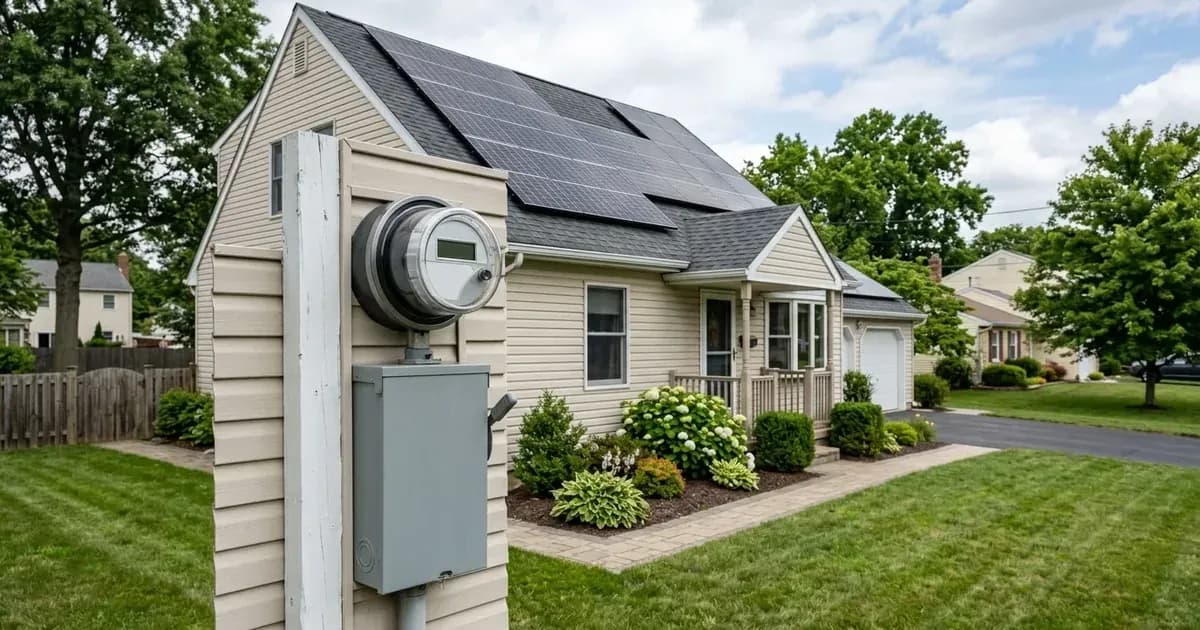
- Certified Bidirectional Smart Revenue Meter: The utility installs a certified bidirectional smart revenue meter. This device is crucial as it accurately records both the electricity you draw from the grid (import) and the electricity your solar system sends back (export).
- Lockable Exterior AC Disconnect Switch: For Tier 2 and larger installations, an exterior, lockable, visible-break manual disconnect switch is required. This switch must be located adjacent to the meter, allowing utility personnel to safely de-energize your system if needed.
- Anti-Islanding Inverter Protection: Grid-tied inverters must automatically isolate within milliseconds during distribution grid outages. This safety feature prevents your solar system from feeding electricity into a de-energized grid, which could endanger utility workers.
- Safe Working Earthing and Bonding: It is critical to verify earth continuity and bond all solar array frames to the main electrical installation earthing terminal. This protects against electrical shock hazards.
Permission to Operate (PTO)
Before you can energize your solar system and begin exporting electricity to the grid, you must receive formal written Permission to Operate from PECO or PPL. Operating your system without this official approval can lead to penalties and safety risks.
Federal Tax Credit for Solar and Battery Storage
Homeowners can benefit from federal incentives for installing solar and battery storage systems.
The Section 25D Federal Tax Credit allows homeowners claiming qualifying residential solar and battery installations to receive the 30% Section 25D credit on IRS Form 5695. This credit applies to the cost of your solar energy system.
Additionally, residential battery energy storage systems qualify for the federal 30% Section 25D tax credit with no solar requirement. This means you can claim the credit for a standalone battery installation, even if you don't install solar panels at the same time.
What you can check yourself, and what you cannot
As a homeowner, you can monitor your system's performance and ensure basic safety. You can check your utility bills for net metering credits and visually inspect your system for obvious damage. You can also ensure the area around your disconnect switch is clear and accessible.
However, you cannot change inverter settings related to grid protection or interconnection. Grid-protection settings are set by an accredited installer during commissioning, and changing them can breach your connection agreement with the utility. Any work involving electrical connections, wiring, or opening inverter enclosures must be performed by a qualified and accredited installer. This includes verifying earthing and bonding, installing meters, or connecting the system to the grid. Always contact your installer or utility for technical issues or before making any changes to your system's physical or electrical configuration.
What the published sources do not tell you
While the PA Code Title 52 Chapter 75 provides a comprehensive framework, specific utility requirements for interconnection applications can vary in detail and processing times between PECO and PPL Electric. These details are often found in utility-specific interconnection manuals or application portals, which are not covered by the general statutory regulations.
Official scheme guidelines also does not specify the exact "Price-to-Compare" rate for annual true-ups, as this rate fluctuates based on market conditions and is determined by the utility. Residential systems are permitted up to 50kW AC capacity, while commercial systems can net meter up to 3MW under Chapter 75, but the specific application tiers and review processes for systems between 10kW and 50kW are not detailed here.
Frequently asked questions
How does net metering work with PECO and PPL Electric in Pennsylvania?
Pennsylvania utilities provide 1:1 full retail rate credits for customer excess generation fed into the grid. These credits roll over monthly until an annual reconciliation period ending in May.
What happens to unused net metering credits at the end of the year?
Remaining credits at the annual true-up, which occurs in May, are compensated at the utility's Price-to-Compare rate.
Do I need a special meter for solar net metering?
Yes, the utility installs a certified bidirectional smart revenue meter to record both the electricity you import from and export to the grid.
What is a Level 1 interconnection review for solar systems?
Inverter systems up to 10kW qualify for an expedited Level 1 interconnection screening process, simplifying the approval for smaller residential installations.
Is there a federal tax credit for solar installations in Pennsylvania?
Yes, homeowners claiming qualifying residential solar and battery installations receive the 30% Section 25D credit on IRS Form 5695.
References
- PECO and PPL Electric Interconnection Guidelines — accessed 27 August 2026
- 52 Pa. Code Chapter 75, Subchapter B — Net Metering — accessed 27 August 2026
Related guides
More from schemes, subsidies & financing.