South Africa Agri Solar Section 12B Tax Incentives Guide
Updated 8 September 2026 · By SolarNevs Research Desk, Dealer surveys + verified sources · 1 source · Method ↗
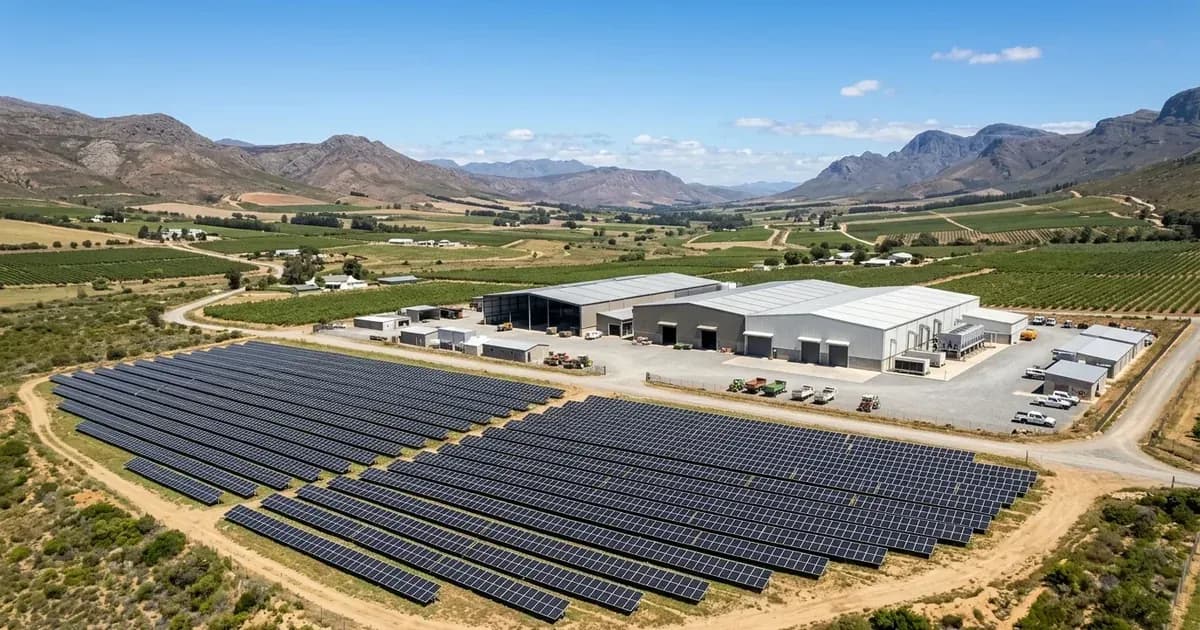
Key Takeaways
- Section 12B provides an accelerated capital allowance for assets used in generating electricity from specified sources of renewable energy under section 12B(1)(h) and (i).
- Solar PV systems with generation capacity not exceeding 1MW qualify for an immediate 100% upfront write-off in the year brought into use.
- Solar generation installations exceeding 1MW are depreciated over three tax years according to a 50/30/20 schedule.
- The deduction commences in the year of assessment in which the asset or improvement is brought into use by the taxpayer for the first time.
- No pro-rata apportionment applies: the full allowance is claimable even if the solar asset is brought into service on the final day of the financial year.
Section 12B Statutory Framework for Agriculture
South African agricultural enterprises—facing high electricity tariffs and frequent grid unreliability—rely heavily on capital tax incentives to finance on-farm renewable energy. The foundational tax mechanism is set out in section 12B of the Income Tax Act, which governs capital allowances for machinery and assets used in the generation of electricity from specified sources of renewable energy under section 12B(1)(h) and (i).
To qualify for this incentive, the farming business must satisfy fundamental statutory criteria:
- Trade Requirement: The renewable generation plant must be owned and operated for the purpose of that taxpayer’s trade, which encompasses agricultural production, crop farming, livestock handling, viticulture, and cold-chain packhouse operations.
- First-Time Commissioning: The allowance applies only if the asset is, amongst others, brought into use by the taxpayer for the first time.
- Unconditional Cost Incurral: The expenditure must be actual and legally binding; expenses that are conditional or contingent in any way will not be deductible.
Depreciation Rates: Sub-1MW vs Multi-MW Systems
The Income Tax Act creates two distinct deduction mechanisms depending on system generation capacity:
System Capacity Band | Year 1 Allowance | Year 2 Allowance | Year 3 Allowance | Total Deduction Schedule |
|---|---|---|---|---|
Sub-1MW (≤ 1MW PV) | 100% | — | — | 100% upfront write-off in Year 1 |
Large Scale (> 1MW PV) | 50% | 30% | 20% | 100% amortized over 3 years (50/30/20) |
- Sub-1MW Systems (100% Upfront): For most farming operations, rooftop and ground-mounted arrays fall below the one-megawatt ceiling. SARS allows a deduction of 100% in the case of an asset brought into use by the taxpayer to generate photovoltaic solar energy which does not exceed one megawatt. This provides a 100% write-off against taxable farming income in year one.
- Multi-Megawatt Systems (50/30/20 Schedule): For large agricultural estates, sugar mills, and commercial agro-processing plants where generation capacity exceeds 1MW, the capital cost must be amortized over three consecutive years:
- Year One: 50% of the cost in the year of assessment during which the asset is brought into use;
- Year Two: 30% of the cost in the second year of assessment; and
- Year Three: 20% of the cost in the third year of assessment.
System Generation Capacity | Year 1 Write-off | Year 2 Write-off | Year 3 Write-off | Statutory Depreciation Mechanism |
|---|---|---|---|---|
Solar PV ≤ 1MW | 100% | — | — | Immediate 100% upfront write-off under Section 12B(2) |
Solar PV > 1MW | 50% | 30% | 20% | 3-year accelerated schedule (50/30/20) |
Timing, Postponement, and Apportionment Rules
Understanding SARS procedural rules is essential for tax planning:
- Commencement: The deduction commences in the year of assessment in which the asset or improvement is brought into use by the taxpayer for the first time.
- No Postponement: Farm accountants cannot defer the tax benefit: the allowance must be claimed in the year of assessment that the asset or the improvement is brought into use for the first time and cannot be postponed to and claimed in a future year.
- Full In-Year Allowance: Even if a solar irrigation system is commissioned late in the financial period, no apportionment of the deduction is necessary if the asset is brought into use during a year of assessment or only used for part of the year of assessment.
- Continuity of Use: For systems depreciated over three years, continuous operational trade use is required. If a farmer discontinues use of the asset in year three, the deduction for the third year of assessment is forfeited and may not be claimed in the future should the taxpayer bring the asset back into use at a later stage.
Frequently asked questions
What is the Section 12B tax deduction rate for solar systems up to 1MW?
Under Section 12B(2), the deduction is 100% in the case of an asset brought into use by the taxpayer to generate photovoltaic solar energy which does not exceed one megawatt.
How are systems exceeding 1MW depreciated under Section 12B?
Systems exceeding 1MW follow a three-year schedule: 50% of the cost in the year of assessment during which the asset is brought into use, 30% of the cost in the second year of assessment, and 20% of the cost in the third year of assessment.
Can an agricultural business postpone a Section 12B deduction to a future tax year?
No, the deduction must be claimed in the year of assessment that the asset or the improvement is brought into use for the first time and cannot be postponed to and claimed in a future year.
Does SARS require apportionment if solar is commissioned partway through the tax year?
No apportionment of the deduction is necessary if the asset is brought into use during a year of assessment or only used for part of the year of assessment.
References
- SARS - Draft Guide on Allowances and Deductions for Electricity Generation Assets — accessed 28 August 2026
Related guides
More from inverter errors & fixes.