South Africa Commercial Solar Epc Certificates Guide
Updated 16 September 2026 · By SolarNevs Research Desk, Dealer surveys + verified sources · 1 source · Method ↗
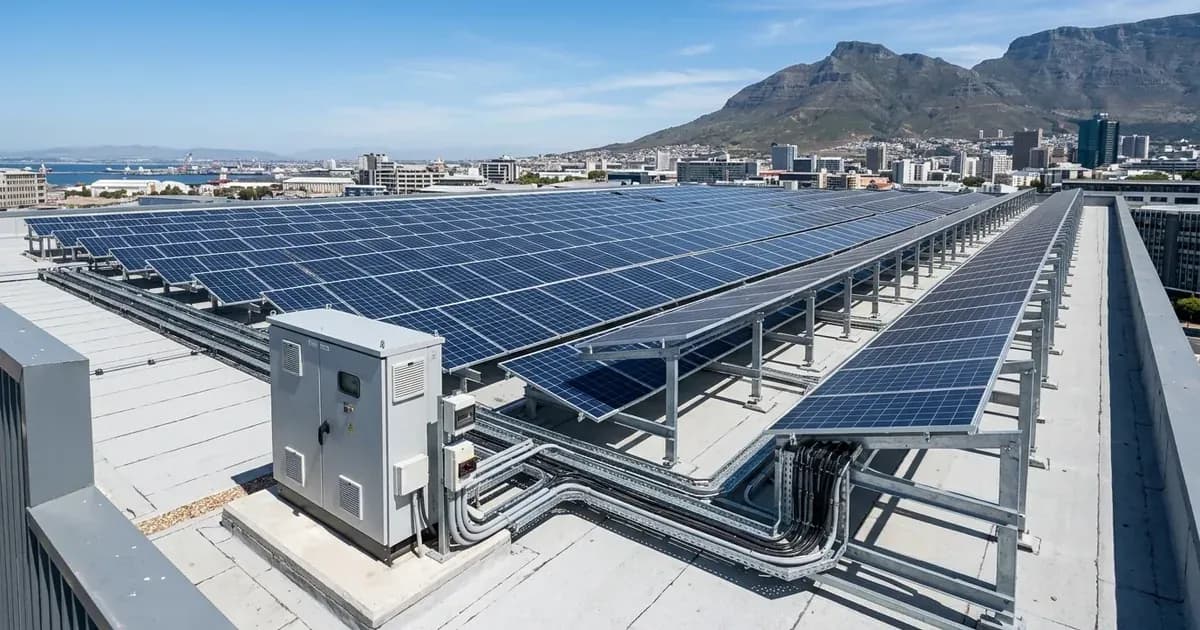
Key Takeaways
- Commercial solar systems in South Africa require registration with the electricity distributor.
- Grid-connected systems must adhere to NRS 097 standards for interconnection.
- All installations need a Certificate of Compliance from certified personnel.
- Work involving high-voltage DC, AC grid, or switchgear is strictly for licensed professionals.
Understanding Commercial Solar Requirements in South Africa
For commercial buildings in South Africa considering solar energy, several foundational requirements must be met. These ensure the safety, reliability, and legal operation of the solar photovoltaic (PV) system. While specific details regarding Energy Performance Certificates (EPC) under SANS 1544 and Energy Use Intensity (EUI) are not detailed in the available regulatory information, the general framework for embedded generation is clear.
Any solar PV system installed on a commercial property that generates electricity for self-consumption or export to the grid is considered embedded generation. Such systems must integrate safely and compliantly with the national electricity network.
What is Actually Going On: Compliance for Embedded Generation
Installing a commercial solar system in South Africa involves a series of compliance steps. These steps ensure that the system operates safely, does not negatively impact the grid, and meets national electrical standards. The primary focus is on proper registration, adherence to technical standards for grid connection, and obtaining necessary certifications.
The process typically begins with understanding the local electricity distributor's requirements. For many areas, this will be Eskom, or a municipal distributor. These entities govern how embedded generation connects to their networks. The goal is to manage the flow of electricity, maintain grid stability, and protect personnel and equipment.
Key Compliance Steps for Commercial Solar
Commercial solar installations in South Africa must follow specific regulatory and technical requirements. These steps ensure the system is legally compliant and safely integrated into the existing electrical infrastructure.
Compliance Step | Governing Standard / Entity | Technical Scope & Objective | Mandatory Verification Document |
|---|---|---|---|
1. Distributor Registration | Eskom / Municipal Electricity Distributor | Informs network operator of embedded generation capacity for grid management | Distributor registration submission & acknowledgement |
2. Grid Interconnection | NRS 097 Standards | Defines voltage, frequency, power quality, and protection relay parameters | Inverter NRS 097 certification & protection test settings |
3. Safety Certification | Occupational Health and Safety (OHS) Act | Verifies physical wiring, earthing, and electrical safety benchmarks | Certificate of Compliance (CoC) signed by qualified electrician |
- Registration with the Distributor: Any embedded generation system must be registered with the relevant electricity distributor. This step informs the network operator of the new power source and allows them to account for it in their grid management.
- Compliance with Grid Interconnection Standards: Systems connecting to the national grid must comply with NRS 097 standards. These standards specify the technical requirements for grid interconnection, covering aspects such as voltage, frequency, power quality, and protection settings. Adherence to NRS 097 is critical for grid stability and safety.
- Certification of the Installation: All installations must be certified with a Certificate of Compliance (CoC). This document confirms that the electrical installation meets the safety standards outlined in the Occupational Health and Safety Act and its regulations. A qualified electrician issues the CoC after inspecting and testing the installation.
What You Can Check Yourself, and What You Cannot
As a building owner or facility manager, your role primarily involves ensuring that all work is performed by qualified professionals and that documentation is correctly managed.
What you can check yourself:
- Documentation: Verify that your chosen installer provides all necessary documentation, including proof of registration submission to the distributor and the final Certificate of Compliance.
- Installer Credentials: Confirm that the personnel performing the installation are certified and licensed for electrical work in South Africa.
- System Operation (Post-Installation): Monitor the system's performance through its monitoring portal, if available, to ensure it is generating power as expected.
What you cannot check yourself:
- High-Voltage Work: Any work involving high-voltage DC circuits from solar panels, AC grid interconnection, or modifications to switchgear must be performed exclusively by certified, licensed personnel. Attempting these tasks without proper qualifications and safety equipment is extremely dangerous and illegal.
- Grid Protection Settings: The settings for grid protection relays, which ensure the solar system disconnects safely during grid disturbances, are complex and must be configured by qualified technicians according to NRS 097 standards.
- Electrical Wiring and Connections: All internal and external wiring, earthing, and connections must be installed and verified by a qualified electrician to ensure safety and compliance.
Opening the inverter enclosure, working with live electrical circuits, or modifying grid connection points are tasks reserved for accredited professionals.
What the Published Sources Do Not Tell You
The provided regulatory information outlines general requirements for embedded generation in South Africa but does not detail specific aspects of Energy Performance Certificates (EPCs) under SANS 1544. This means that while solar installations contribute to a building's energy profile, the exact methodology for calculating solar PV's impact on a building's Energy Use Intensity (EUI) for EPC purposes is not specified within these general guidelines.
Furthermore, specific thresholds for solar offsetting, detailed procedures for EPC submission, or the precise interplay between general embedded generation compliance and the SANS 1544 framework are not covered. Building owners seeking to understand the direct impact of solar on their EPC rating will need to consult specific SANS 1544 documentation and potentially engage with energy auditors specialising in building performance. The general requirements focus on the safe and compliant operation of the solar system itself, rather than its specific accounting within broader building energy efficiency schemes.
Frequently asked questions
What are the primary technical requirements for south africa commercial solar epc certificates guide?
Key requirements include compliance with local grid codes, correct equipment certification, and proper electrical isolation.
Who is authorized to install and inspect south africa commercial solar epc certificates guide?
All high-voltage DC, AC grid tie-in, and switchboard modifications must be performed by a qualified, accredited electrical professional.
How is export power limited in south africa commercial solar epc certificates guide?
Export limiting is achieved using certified bidirectional smart meters or power sensors providing dynamic feedback to the inverter system.
References
- Eskom Distribution: Small-Scale Embedded Generators (SSEG) registration and connection requirements — accessed 15 September 2026
Related guides
More from inverter errors & fixes.