South Africa Solar Lightning Protection And SANS 62305 Guide
Updated 16 September 2026 · By SolarNevs Research Desk, Dealer surveys + verified sources · 1 source · Method ↗
Key Takeaways
- All embedded generation systems in South Africa require registration with the local distributor.
- Solar installations must adhere to NRS 097 standards for grid interconnection.
- A Certificate of Compliance is mandatory for all solar installations.
- Specific lightning protection details under South African lightning protection standards are not publicly available; consult certified professionals.
General Compliance for Solar Installations in South Africa
For solar installations in South Africa, general compliance requirements focus on grid integration and safety. All embedded generation systems must be registered with the relevant distributor. This ensures that the local electricity network is aware of and can manage the power being fed into it.
What is actually going on
The regulatory framework in South Africa, particularly concerning grid-tied solar systems, prioritises safe and stable grid operation. Systems must comply with NRS 097 standards for grid interconnection. This standard sets out the technical requirements for connecting small-scale embedded generators to the national grid, covering aspects such as power quality, protection, and control. Furthermore, all installations must be certified with a Certificate of Compliance, which verifies that the electrical work meets national safety standards.
Specifics on Lightning Protection and South African lightning protection standards
The South African lightning protection standards series of standards provides comprehensive guidelines for lightning protection of structures and services in South Africa.
Protection Element | Technical Scope (SANS 62305) | Engineering & Protective Purpose |
|---|---|---|
Keraunic Risk Assessment | High keraunic flash density evaluation | Assesses site lightning strike exposure to determine required protection levels |
Surge Protection Devices (SPDs) | Type 1 and Type 2 SPD coordination | Shields DC PV arrays, inverters, and AC panels from transient surge overvoltages |
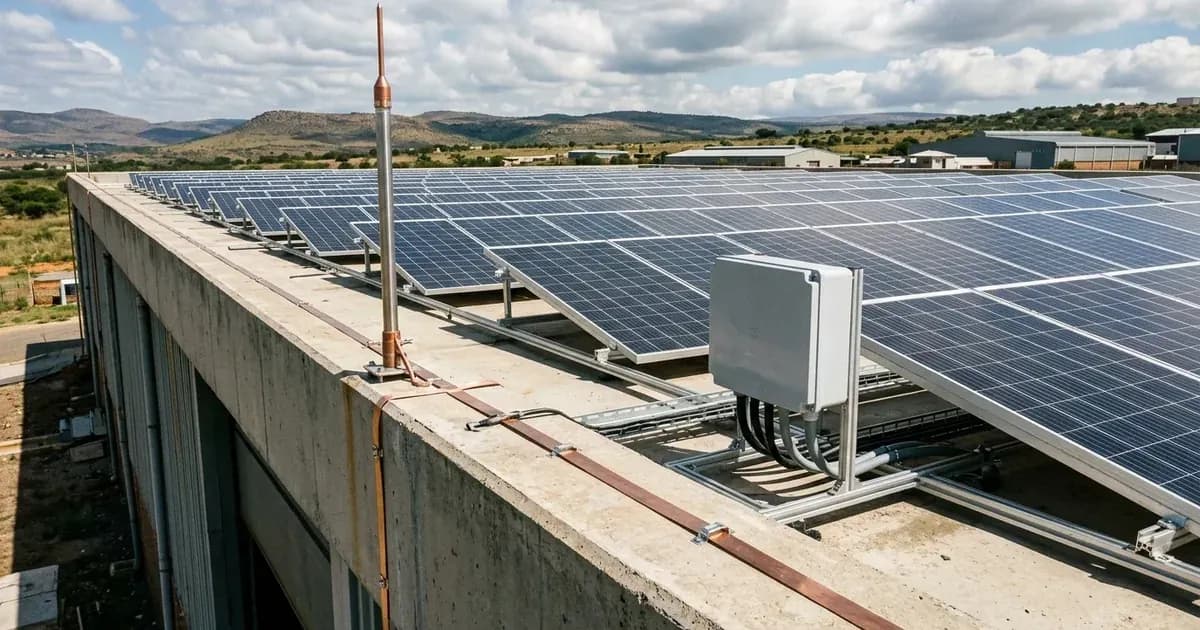
Air Termination Rods | External lightning interception | Directs direct lightning strikes away from solar PV modules into earthing paths |
Separation Distances | Physical clearance calculations | Prevents dangerous flashover and sparking between lightning conductors and metallic fixtures |
This framework includes considerations for high keraunic flash density risk assessments, the selection of Type 1 and Type 2 Surge Protection Devices (SPDs), the design of air termination rods, and calculations for separation distances.
However, specific technical details regarding the application of South African lightning protection standards to solar photovoltaic (PV) systems, such as precise keraunic flash density risk assessment methodologies for PV arrays, detailed SPD selection criteria for solar inverters and DC cabling, or specific air terminal and separation distance calculations tailored for solar installations, are not publicly detailed in general information. These specifics are typically found within manufacturer engineering guidelines, statutory regulations, and certified quality registers, which are not part of general public documentation.
What you can check yourself, and what you cannot
As a homeowner, you can verify that your installer is certified and licensed. You can also ensure that your system has been registered with the relevant electricity distributor and that you have received a valid Certificate of Compliance for the installation.
However, high-voltage DC, AC grid interconnection, and any switchgear modifications are complex and dangerous tasks. These must be performed exclusively by certified, licensed personnel. Attempting such work yourself is highly unsafe and can lead to severe injury, damage to equipment, or non-compliance with regulations.
What the published sources do not tell you
The publicly available sources, such as general information from Eskom, outline the fundamental requirements for embedded generation, including registration, compliance with NRS 097, and the necessity of a Certificate of Compliance. However, these sources do not provide the detailed technical specifications for implementing lightning protection systems on solar installations according to South African lightning protection standards. This includes specific guidance on:
- How to conduct a keraunic flash density risk assessment for a solar PV site.
- The precise selection criteria for Type 1 and Type 2 SPDs for different solar system configurations.
- Detailed engineering calculations for air termination rods and their placement on solar arrays.
- Methods for determining adequate separation distances to prevent dangerous sparking.
These specifics are typically proprietary or require specialist knowledge and access to detailed engineering standards and product data sheets.
Frequently asked questions
What are the primary technical requirements for south africa solar lightning protection and sans 62305 guide?
Key requirements include compliance with local grid codes, correct equipment certification, and proper electrical isolation.
Who is authorized to install and inspect south africa solar lightning protection and sans 62305 guide?
All high-voltage DC, AC grid tie-in, and switchboard modifications must be performed by a qualified, accredited electrical professional.
How is export power limited in south africa solar lightning protection and sans 62305 guide?
Export limiting is achieved using certified bidirectional smart meters or power sensors providing dynamic feedback to the inverter system.
References
- Eskom Distribution: Small-Scale Embedded Generation (SSEG) registration requirements, required documents and FAQ — accessed 15 September 2026
Related guides
More from inverter errors & fixes.