13kW Solar System Australia: Panels, Daily Output, and Costs
Updated 19 September 2026 · By SolarNevs Research Desk, Dealer surveys + verified sources · 3 sources · Method ↗
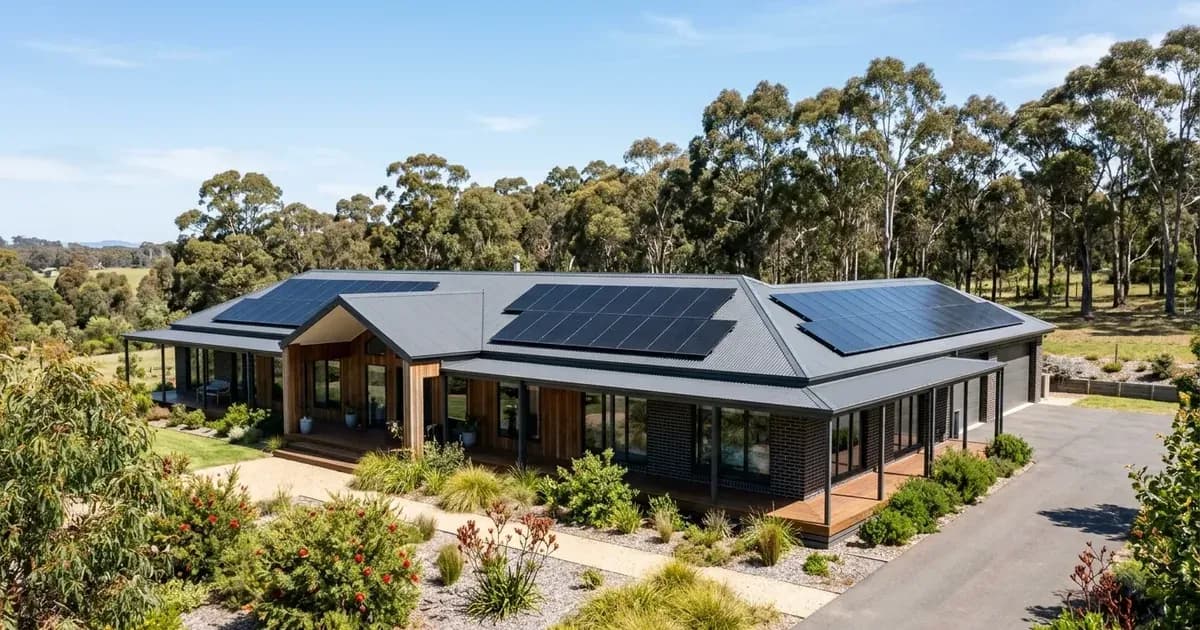
Key Takeaways
- A 13kW solar array generates substantial daily electricity, yielding between 42 kWh and 59 kWh per day depending on location across Australian capital cities.
- A typical system uses approximately 32 panels rated at 420W, occupying roughly 81m2 of roof area.
- The national average cost of a fully installed 13kW solar panel system in Australia is around $13,566 or $1.02 per watt after deducting the STC rebate and including GST.
- Single-phase connections often limit installations to a 5kVA inverter accommodating 6.6kW of panels, making 13kW systems primarily suited to three-phase properties.
- Many electricity retailer feed-in tariff plans are capped at systems with a 10kW inverter.
Sizing and Layout: Panels and Roof Area for a 13kW System
For Australian households with substantial electricity consumption—such as properties running multi-zone ducted air conditioning, electric vehicle chargers, swimming pool heating, or extensive home workshops—a 13kW solar PV array represents an ideal upper-tier residential installation.
Standard sizing models for a 13kW array utilize modules with a 420W rating. A typical 13kW system requires an approximate number of panels around 32 modules. Because each panel occupies physical space, the solar panel array requires approximately 81m2 of roof area for installation.
Accommodating 32 modules requires careful roof planning. In most suburban installations, panels are divided across multiple orientations using dual or triple maximum power point tracking inputs on a three-phase inverter:
- North-facing panels deliver peak generation around solar noon.
- East-facing panels capture early morning irradiance to supply breakfast heating and appliance loads.
- West-facing panels provide sustained late afternoon output to offset peak evening tariffs.
Homeowners comparing smaller setups can review our 6-6kw-solar-system-guide-australia and 10kw-solar-system-guide-australia to evaluate how roof footprint and output scale across sizes.
Daily and Annual Output Across Australian Cities
Solar output varies across states due to differences in solar exposure and seasonal daylight hours. Across Australian capital cities, a well-sited 13kW array produces substantial renewable power throughout the year:
Capital City | Average Daily Generation (kWh) | Annual Total Generation (kWh) |
|---|---|---|
Adelaide | 51 kWh per day | 18771 kWh |
Brisbane | 53 kWh per day | 19418 kWh |
Canberra | 51 kWh per day | 18771 kWh |
Darwin | 59 kWh per day | 21360 kWh |
Hobart | 42 kWh per day | 15211 kWh |
Melbourne | 44 kWh per day | 16182 kWh |
Perth | 56 kWh per day | 20389 kWh |
Sydney | 48 kWh per day | 17476 kWh |
In northern regions such as Darwin, expected output reaches 59 kWh per day and 21360 kWh per year. In southern climates like Hobart, daily output averages 42 kWh per day and 15211 kWh annually. Sydney homes average 48 kWh per day and 17476 kWh per year, providing abundant daytime power to offset high domestic consumption.
Grid Connection Rules: Inverter Sizing and Retailer Limits
Connecting a large solar array to the electricity grid requires adherence to Distribution Network Service Provider guidelines:
- Single-Phase Connection Limits: Often for single-phase connections the limit is a 5kVA inverter which can accommodate 6.6kW of solar panels. Connecting an array as large as 13kW on a single-phase property generally requires special DNSP network approval, export limiting hardware, or an upgrade to three-phase supply.
- Three-Phase Connection Freedom: On a three-phase supply, homeowners can pair a 13kW panel array with a 10kW three-phase inverter with standard network pre-approval.
- Retailer Feed-in Tariff Caps: Homeowners must note that many of the electricity retailer’s feed-in tariff plans are capped at systems with a 10kW inverter. Systems paired with larger inverters may be excluded from standard feed-in tariff contracts.
[!IMPORTANT]All three-phase inverter installations, DC string cabling, and switchboard work must be completed by a Clean Energy Council accredited licensed electrician in accordance with Australian electrical safety standards.
System Pricing and Regional Cost Breakdown
The national average cost of a fully installed 13kW solar panel system in Australia is around $13,566 or $1.02 per watt after deducting the STC rebate and including GST. Pricing varies across state capital markets due to installer competition, freight, and local market factors:
Market | Average Net Installed Cost | Cost per Watt |
|---|---|---|
Perth, WA | $10,374 | $0.78 |
Sydney, NSW | $11,305 | $0.85 |
Melbourne, VIC | $13,034 | $0.98 |
Brisbane, QLD | $13,300 | $1.00 |
Perth offers the lowest average pricing, with systems averaging $10,374 or $0.78 per watt. In Sydney, NSW, average net pricing for a 13kW system sits around $11,305, representing $0.85 per watt. In Melbourne, VIC, average installed net pricing is $13,034 or $0.98 per watt, while Brisbane, QLD averages $13,300 or $1.00 per watt.
Federal incentives through the Small-scale Renewable Energy Scheme discount these capital costs at the point of sale. Under Clean Energy Regulator guidelines, eligible small-scale installations must have a capacity less than 100 kW and have a total annual electricity output less than 250 MWh. Small-scale Technology Certificates trade in the open spot market at a usual price of $33 – $38 per certificate. Under the Small-scale Renewable Energy Scheme, certificates can be created over one or 5 years or across a single maximum deeming period. To see how certificates are applied to reduce purchase prices, read solar rebate Australia how stcs work.
Pairing a 13kW Solar System with Battery Storage
Given that a 13kW system generates between 42 kWh and 59 kWh per day, substantial electricity will be generated during daytime hours when household demand is low. Adding home battery storage ensures that daytime surplus is retained for evening peak periods.
Homeowners can explore current storage economics in our comprehensive home battery price Australia guide. By pairing a 13kW array with a residential battery, households can achieve virtually complete daytime and overnight energy independence.
References
- Solar Choice - 13kW Solar Systems: Sizing, Output, and Pricing — accessed 28 August 2026
- Clean Energy Regulator - Rooftop Solar Small-scale Renewable Energy Scheme — accessed 28 August 2026
- Clean Energy Regulator - Calculate Small-scale Technology Certificate Entitlements — accessed 28 August 2026
Related guides
More from what to buy — and how not to get cheated.