2kW Solar System Australia: Cost, Daily Output, and Payback Guide
Updated 19 September 2026 · By SolarNevs Research Desk, Dealer surveys + verified sources · 2 sources · Method ↗
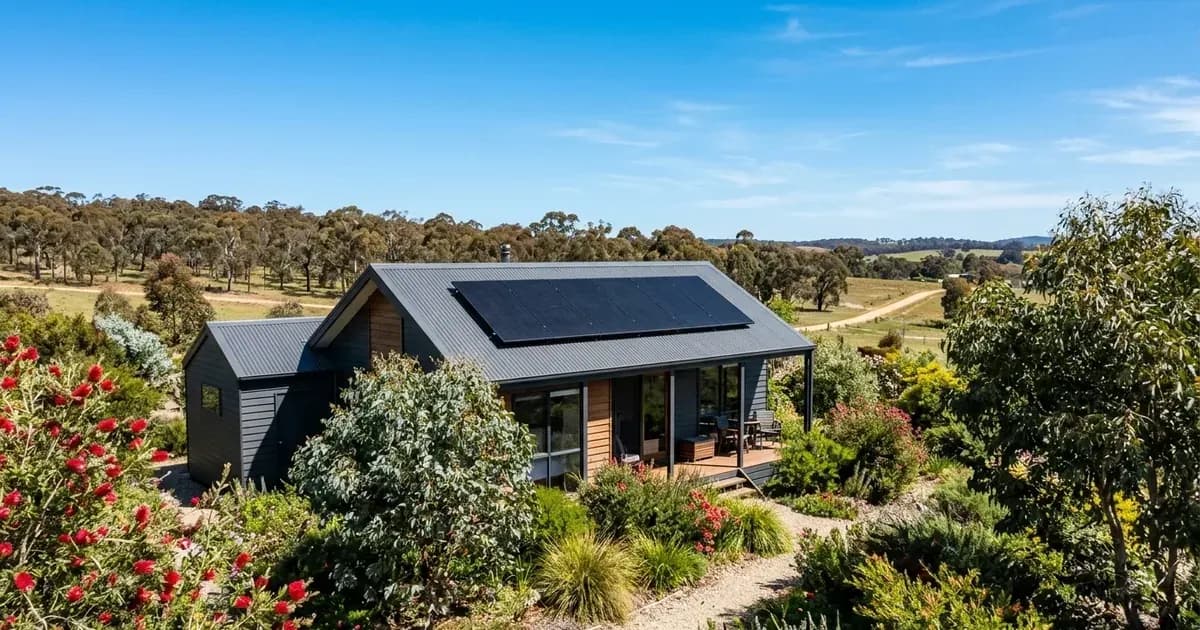
A 2kW solar system represents the historical foundation of residential grid-connected solar power in Australia. While larger capacities such as 6.6kW or 10kW now dominate suburban rooftops, the 2kW tier remains an important sizing benchmark for small urban households, inner-city terraces, granny flats, and properties with strict roof area constraints.
Understanding the real-world generation, pricing trends, and financial returns of a 2kW array enables homeowners to evaluate whether an entry-level capacity aligns with their daytime electricity consumption profile.
2kW Solar System Hardware and Roof Footprint
An entry-level 2kW solar photovoltaic array delivers 2,000 watts of nominal DC generation capacity. When configuring an array of this size, panel selection and inverter pairing dictate total surface requirements:
- Panel Count: Depending on module wattage, an array requires between 5 and 6 modern solar panels. Older installations frequently used 8 to 10 smaller wattage modules.
- Roof Space Required: A compact 2kW array requires approximately 10 to 12 square metres of unshaded roof surface. This compact physical footprint makes it viable for townhouses or roofs interrupted by dormers, vents, and chimneys.
- Inverter Configuration: Most 2kW installations connect to a single-phase string inverter. Clean Energy Council (CEC) accredited installers ensure installation safety and grid connection compliance. Under no circumstances should unqualified personnel attempt to touch live DC isolators or service switchboard equipment.
Historical Pricing Benchmarks for 2kW Systems
The economics of residential solar in Australia have evolved significantly over the past decade. Turnkey market pricing reflects substantial technological scaling:
Pricing Metric | Benchmark Figure | Context |
|---|---|---|
Market Price Range | $2,100 to $5,700 | Historical low-end budget to premium turnkey installations |
Average Cost per Watt | $1.86 per watt ($/W) | Benchmark average installed cost per watt of capacity |
Average Installed Price | $3,700 | Representative average turnkey cost including STC incentives |
Cost Deflation Rate | 25% | Percentage drop in 2kW system costs across market maturation |
Historical market records document that 2kW solar system prices range from about $2,100 on the low end to $5,700 on the high end. Within this historical band, the average price is about $1.86 per watt ($/w) or about $3,700. As manufacturing scale and balance-of-system efficiencies advanced across Australia, the cost of a 2kW solar system has fallen about 25% since that time.
Because fixed balance-of-system expenses—such as scaffolding, electrical compliance sign-off, inverter installation, and transport—remain constant regardless of array size, the cost per watt of smaller systems ($1.86 per watt) is structurally higher than 6.6kW or 10kW installations, which typically benefit from economies of scale.
Daily Electricity Output Across Australian Capital Cities
Solar electricity production varies according to geographic latitude, local solar irradiance, and seasonal sunlight hours. Technical modelling assumes solar panels tilted at latitude and an overall system efficiency of 85% to account for ambient temperature derating, dust accumulation, inverter clipping, and cabling resistance.
Under these baseline parameters, average daily generation figures across key Australian capitals are:
Capital City | Average Daily Generation |
|---|---|
Sydney (NSW) | 7.6 kWh per day |
Brisbane (QLD) | 8.3 kWh per day |
Perth (WA) | 9.1 kWh per day |
Perth achieves the highest annual daily yield among major metropolitan centres, generating an average 9.1 kWh per day due to high sun exposure and clear skies. Brisbane follows with 8.3 kWh per day, while Sydney generates an average 7.6 kWh per day across the full seasonal calendar.
Seasonal Output Variations: Winter vs Summer
Solar production fluctuates substantially between summer and winter solstice periods due to sun angle and day length:
Capital City | Summer Daily Output Peak | Winter Daily Output Trough |
|---|---|---|
Sydney (NSW) | 8.9 kWh per day | 6.1 kWh per day |
Brisbane (QLD) | 9.4 kWh per day | 6.6 kWh per day |
Perth (WA) | 10.5 kWh per day | -- |
Melbourne (VIC) | -- | 5.1 kWh per day |
In summer, Sydney arrays achieve an average peak of 8.9 kWh per day, Brisbane yields 9.4 kWh per day, and Perth reaches an impressive 10.5 kWh per day. During winter months, generation dips across southern locations: Sydney delivers 6.1 kWh per day, Brisbane averages 6.6 kWh per day, and Melbourne experiences a seasonal winter trough of approximately 5.1 kWh per day.
Financial Payback and Self-Consumption Economics
The return on investment for a 2kW solar system depends directly on how much generated electricity is consumed within the home rather than exported to the grid. Because feed-in tariffs in Australia are modest compared to retail grid electricity rates, self-consumption drives financial returns:
Capital City | 50% Self-Consumption Payback | 70% Self-Consumption Payback |
|---|---|---|
Sydney (NSW) | ~8.2 year payback | ~6.8 year payback |
Brisbane (QLD) | ~7.2 year payback | -- |
Perth (WA) | ~5.2 year payback | ~4.3 year payback |
Financial modelling demonstrates the direct impact of daytime utilisation:
- Sydney: A home with a 50% self-consumption rate achieves an estimated ~8.2 year payback. Increasing daytime utilisation to 70% self-consumption reduces the payback period to ~6.8 years.
- Brisbane: Strong solar irradiance and local tariff structures deliver an estimated ~7.2 year payback under a 50% self-consumption scenario.
- Perth: High insolation and favourable retail electricity margins yield a ~5.2 year payback at 50% self-consumption. When daytime consumption reaches 70%, the payback period accelerates to ~4.3 years.
Households that run washing machines, pool filtration, and climate control during daytime solar hours maximise electricity savings and shorten payback timelines.
Small-scale Renewable Energy Scheme (SRES) Eligibility
Rooftop solar systems installed in Australia benefit from federal incentives administered by the Clean Energy Regulator (CER) under the Small-scale Renewable Energy Scheme (SRES):
- System Capacity Limit: To qualify for Small-scale Technology Certificates (STCs), the system must have a capacity less than 100 kW. A 2kW array easily complies with this threshold.
- Annual Generation Ceiling: The installation must have a total annual electricity output less than 250 MWh. A residential 2kW system produces less than 4 MWh annually, remaining well within scheme bounds.
- Accredited Equipment and Installation: Panels and inverters must be listed on the Clean Energy Council approved equipment list, and the installation must be executed by a CEC-accredited solar installer to assign STCs as an upfront point-of-sale discount.
Documentation Gaps and Sizing Considerations
When evaluating a 2kW system, property owners should keep several practical boundaries in mind:
- The documentation does not specify modern 2kW tier-1 package costs due to industry transition to 6.6kW standards. Most current turnkey offerings in Australia start at 5kW or 6.6kW because fixed installation labour and regulatory compliance costs make larger arrays significantly more cost-effective on a per-watt basis.
- Upgrading to a larger array in the future often requires replacing the inverter and revising network connection approvals. If roof space allows, installing a larger array initially provides greater long-term economic resilience against rising retail power tariffs.
Frequently asked questions
What is the historical price range for a 2kW solar system in Australia?
Turnkey 2kW solar system prices historically ranged from about $2,100 on the low end to $5,700 on the high end, with an average benchmark of $1.86 per watt or about $3,700.
How much electricity does a 2kW solar system produce daily across Australia?
Assuming panels tilted at latitude and an overall system efficiency of 85%, average daily output reaches 7.6 kWh in Sydney, 8.3 kWh in Brisbane, and 9.1 kWh in Perth.
What are the Clean Energy Regulator requirements for residential solar rebates?
Under the Small-scale Renewable Energy Scheme (SRES), eligible solar PV systems must have a capacity less than 100 kW and total annual electricity output less than 250 MWh.
References
- Solar Choice - 2kW Solar System Sizing, Output, and Pricing — accessed 28 August 2026
- Clean Energy Regulator - Rooftop Solar Small-scale Renewable Energy Scheme — accessed 28 August 2026
Related guides
More from what to buy — and how not to get cheated.