15kW Solar System Australia: Cost, Output, Payback, and Grid Rules
Updated 19 September 2026 · By SolarNevs Research Desk, Dealer surveys + verified sources · 2 sources · Method ↗
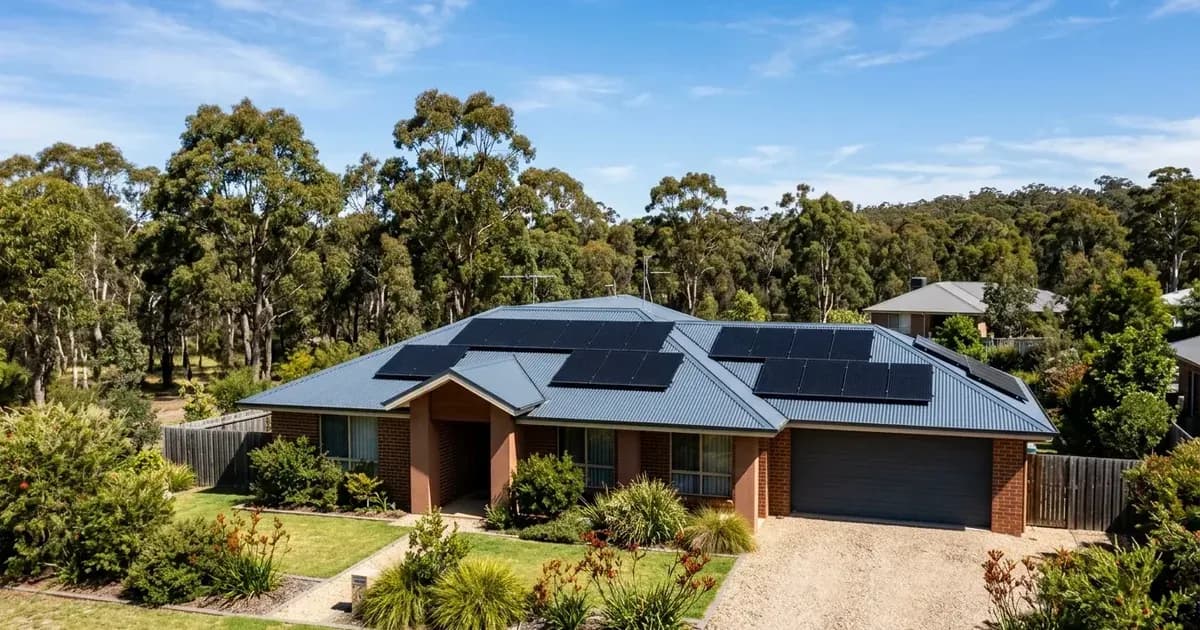
A 15kW solar system bridges high-demand residential applications and small-scale commercial installations in Australia. Designed for premises using over 50kwh of energy on average per day, a 15kW array generates massive energy volumes capable of powering multi-zone ducted air conditioning, electric vehicle fleets, swimming pool heat pumps, cold storage, and three-phase workshop machinery.
However, sizing up to 15kW introduces distinct regulatory and network considerations, including phase balance rules, inverter capacity restrictions, and retailer export caps.
Grid Connection Rules: Single-Phase vs Three-Phase Limits
Connecting a 15kW solar array requires careful coordination with the local Distribution Network Service Provider (DNSP):
- Single-Phase Grid Constraints: Often for single phase connections the limit is a 5kva inverter which can accommodate 6.6kw of solar panels. Consequently, installing a 15kW system virtually always necessitates a three-phase electrical supply.
- Retailer Export Caps: Many of the electricity retailers feed-in tariff plans are capped at systems with a 10kw inverter. When installing a 15kW solar array with a matching three-phase inverter, feed-in credits on exported energy may be reduced or excluded, making self-consumption the overriding economic objective.
- Electrical Safety Standards: Installations must be carried out by a Clean Energy Council (CEC) accredited commercial installer. Technicians must strictly observe isolation procedures. Personnel must never open live electrical enclosures.
Turnkey Installed Costs Across Capital Cities
Commercial-scale economies of scale keep the cost per installed watt low on a 15kW array:
Capital City / Territory | Installed Cost Benchmark (Inc. STC & GST) |
|---|---|
Adelaide (SA) | $14,700 |
Brisbane (QLD) | $14,850 |
Canberra (ACT) | $14,850 |
Melbourne (VIC) | $15,150 |
Sydney (NSW) | $15,450 |
Perth (WA) | $15,600 |
Hobart (TAS) | $16,200 |
Darwin (NT) | $18,750 |
Adelaide records the lowest installed cost at $14,700. Brisbane and Canberra sit at $14,850, followed by Melbourne at $15,150, Sydney at $15,450, and Perth at $15,600. Specialised commercial logistics result in higher costs in Hobart ($16,200) and Darwin ($18,750).
Daily Output and Efficiency Modelling
In Sydney, technical modelling that conservatively assumes that the systems efficiency is 75% indicates robust energy generation:
- Daily Yield: Sydney averages 54 kWh per day throughout the calendar year.
- Annual Yield: Sydney produces 19710 kWh per year (19.7 MWh).
This massive generation volume ensures that high daytime energy users eliminate peak retail electricity charges.
Financial Returns: 30% vs 60% Self-Consumption Sensitivity
Because 15kW arrays produce large energy volumes, financial returns depend heavily on the proportion of solar energy consumed on-site:
Capital City | Installed Cost | Tariff / FiT Rates | 30% Self-Consumption Payback (ROI) | 60% Self-Consumption Payback (ROI) |
|---|---|---|---|---|
Adelaide (SA) | $14,700 | 35c / 8c | 4.5 years ($3,213 / 22% ROI) | 3.0 years ($4,884 / 35% ROI) |
Hobart (TAS) | $16,200 | 33c / 8c | 5.2 years ($2,772 / 19% ROI) | 3.3 years ($4,323 / 31% ROI) |
Perth (WA) | $15,600 | 31c / 6c | 5.4 years ($2,814 / 18% ROI) | 3.5 years ($4,351 / 29% ROI) |
Canberra (ACT) | $14,850 | 29c / 7c | 5.4 years ($2,697 / 17% ROI) | 3.6 years ($4,062 / 29% ROI) |
Sydney (NSW) | $15,450 | 29c / 7c | 5.7 years ($2,631 / 17% ROI) | 3.8 years ($3,995 / 27% ROI) |
Brisbane (QLD) | $14,850 | 26c / 6c | 5.9 years ($2,471 / 17% ROI) | 3.9 years ($3,710 / 26% ROI) |
Darwin (NT) | $18,750 | 27c / 9c | 5.7 years ($3,261 / 17% ROI) | 4.2 years ($4,400 / 24% ROI) |
Melbourne (VIC) | $15,150 | 22c / 5c | 7.8 years ($1,884 / 12% ROI) | 5.0 years ($2,936 / 20% ROI) |
Across all mainland capitals, doubling self-consumption from 30% to 60% shortens the payback period by approximately 1.5 to 2.8 years:
- Adelaide: Accelerates from 4.5 years to 3.0 years, with annual bill savings jumping from $3,213 to $4,884.
- Sydney: Payback drops from 5.7 years ($2,631 savings) to 3.8 years ($3,995 savings).
- Perth: Improves from 5.4 years ($2,814 savings) to 3.5 years ($4,351 savings).
- Brisbane: Moves from 5.9 years ($2,471 savings) to 3.9 years ($3,710 savings).
- Melbourne: Shortens from 7.8 years ($1,884 savings) to 5.0 years ($2,936 savings).
SRES Scheme Rules for Commercial Solar
Federal incentives under the Small-scale Renewable Energy Scheme provide substantial upfront certificate discounts for 15kW arrays:
- Capacity Limit: Eligible commercial and residential systems must have a capacity less than 100 kW. A 15kW installation falls well under this threshold.
- Annual Generation Ceiling: Systems must have a total annual electricity output less than 250 MWh. A 15kW array yields approximately 20 MWh annually, easily qualifying for Small-scale Technology Certificates (STCs).
- Accreditation Requirements: Installation sign-off and certificate creation must be executed by Clean Energy Council accredited personnel.
Commercial Load Profiles and Demand Management
For businesses, rural properties, and high-demand residential estates, a 15kW solar installation aligns directly with daytime operational load profiles. Understanding electricity load curves allows commercial operators to extract maximum value:
- Daytime Operational Alignment: Facilities operating refrigeration, commercial kitchen equipment, electric workshop tools, or office computer networks consume the bulk of their power between morning and late afternoon. A 15kW array directly displaces expensive commercial grid tariffs during peak business hours.
- Mitigating Demand Charges: In commercial electricity tariffs, network charges are frequently calculated based on peak half-hourly demand (measured in kVA or kW). By shaving daytime demand peaks, a 15kW solar array lowers both standard volumetric energy charges and capacity-based network demand tariffs.
- Three-Phase Phase Balance: Connecting across three phases ensures that generation distributes symmetrically, preventing voltage imbalance across workshop phases and protecting sensitive three-phase motors and air conditioning compressors.
Commercial Inverter Infrastructure and Telemetry
Large-scale 15kW installations utilize commercial-grade three-phase inverters equipped with dual or triple Maximum Power Point Trackers (MPPTs):
- Multiple MPPT Tracking: Multiple independent tracking channels enable panels to be mounted across disparate roof sections with different tilts and azimuths without mismatch losses.
- Advanced Grid Telemetry: Commercial systems feature Ethernet and serial Modbus communications alongside Wi-Fi, allowing integration with building management systems (BMS) and automated facility monitoring.
- Comprehensive Electrical Compliance: System design must incorporate appropriate AC and DC circuit breakers, surge protection devices (SPDs), and lockable DC isolators compliant with Australian commercial electrical safety regulations. Regular scheduled maintenance by CEC-accredited commercial technicians ensures system integrity and workplace safety compliance.
Documentation Gaps and Considerations
- The documentation does not address three-phase secondary protection relay engineering requirements above 30kVA. While a 15kW array uses a standard inverter and typically avoids grid protection relay mandates, sites planning future expansion should verify DNSP central protection thresholds.
- Businesses operating standard Monday-to-Friday operating hours achieve optimal economic returns because solar generation perfectly coincides with peak commercial electricity demand.
Frequently asked questions
What energy consumption profile justifies installing a 15kW solar system?
A 15kW solar system is ideally suited for properties using over 50 kWh of energy on average per day, such as large residences, semi-rural properties, and commercial sites.
What grid connection and feed-in tariff limits affect 15kW solar systems?
Single-phase connections are often limited to a 5 kVA inverter accommodating 6.6kW of panels, and many electricity retailer feed-in tariffs cap eligibility at 10 kW inverters.
How much does a 15kW system cost and how quickly does it pay back across Australia?
Installed costs range from $14,700 in Adelaide to $18,750 in Darwin. At 60% self-consumption, payback takes 3.0 years in Adelaide ($4,884 annual saving) and 3.8 years in Sydney ($3,995).
References
- Solar Choice - 15kW Solar System Sizing, Output, and Pricing — accessed 28 August 2026
- Clean Energy Regulator - Rooftop Solar Small-scale Renewable Energy Scheme — accessed 28 August 2026
Related guides
More from what to buy — and how not to get cheated.