4kW Solar System Australia: Cost, Output, and Payback Guide
Updated 19 September 2026 · By SolarNevs Research Desk, Dealer surveys + verified sources · 2 sources · Method ↗
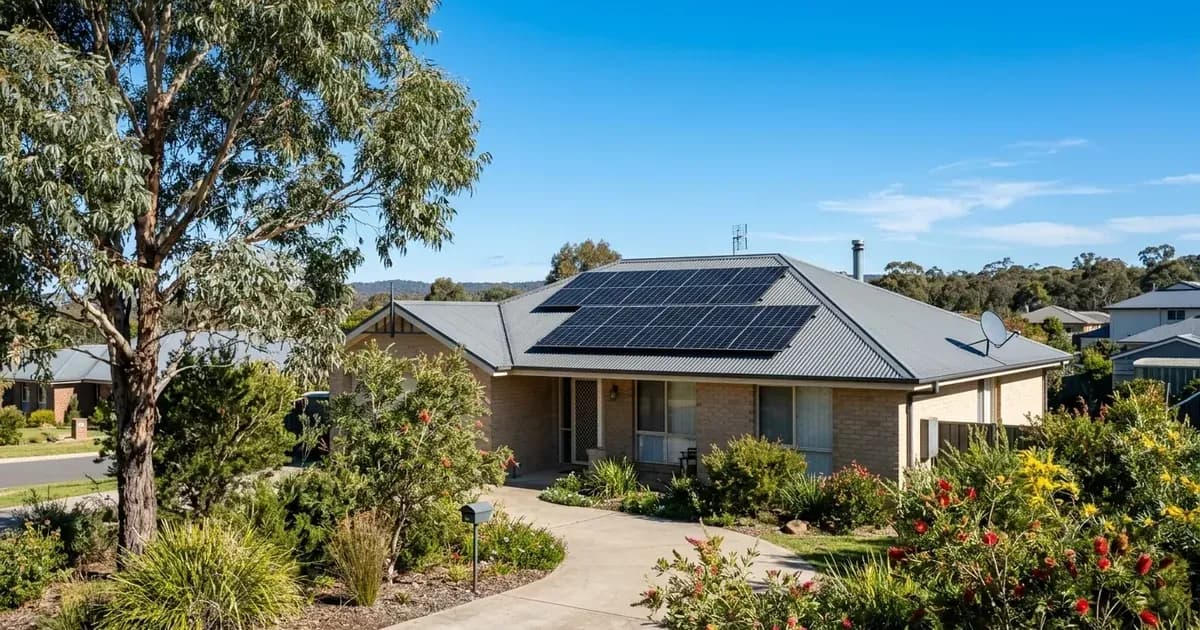
A 4kW solar system occupies a practical middle tier between compact starter systems and full-sized suburban arrays. For small-to-medium households with moderate daytime electricity usage, a 4kW system delivers substantial utility bill savings while accommodating limited roof geometry or shaded sections.
Here is an analysis of capital city pricing benchmarks, seasonal electricity generation, financial savings, and payback schedules for a 4kW array in Australia.
Turnkey Installation Pricing Across Capital Cities
System pricing in Australia benefits from federal incentives that lower upfront capital requirements. On average a 4kw solar system would cost $4550 including the STC rebate and GST, while the broader all-cities benchmark across all state capitals records $4,910:
Capital City / Territory | Installed Cost Benchmark |
|---|---|
Perth (WA) | $3,670 |
Adelaide (SA) | $4,060 |
Sydney (NSW) | $4,260 |
Melbourne (VIC) | $4,460 |
Canberra (ACT) | $4,590 |
Brisbane (QLD) | $4,900 |
Hobart (TAS) | $5,510 |
Darwin (NT) | $7,830 |
All Cities National Average | $4,910 |
Western Australia records the most competitive turnkey pricing at $3,670 for a fully installed 4kW array. Adelaide follows closely at $4,060, Sydney at $4,260, and Melbourne at $4,460. Canberra records $4,590 and Brisbane averages $4,900. Pricing increases in Hobart ($5,510) and Darwin ($7,830) due to localized freight and logistics costs.
Daily Electricity Output: Summer vs Winter Dynamics
Solar generation is influenced by seasonal daylight duration and sun elevation angles. In Sydney, engineering performance benchmarks demonstrate the seasonal output spread:
- Winter Production: An 85% efficient 4kW solar system in Sydney would produce about 14 kWh of power on a day in the middle of winter.
- Summer Production: In the summer output from the same 4kW solar PV system would be around 20 kWh.
This seasonal swing illustrates why sizing an array to cover winter baseload ensures surplus summer generation that can power air conditioning or export clean energy back into the grid.
Payback Schedules and Annual Electricity Bill Savings
Financial returns depend on self-consumption rates, local electricity tariffs, and solar export feed-in credits:
Capital City | System Cost | Grid Tariff | Feed-in Tariff | Annual Bill Savings | Payback Period |
|---|---|---|---|---|---|
Adelaide (SA) | $4,040 | 45c / kWh | 8c / kWh | $1,636 | 2.5 years |
Perth (WA) | $3,880 | 31c / kWh | 6c / kWh | $1,171 | 3.3 years |
Brisbane (QLD) | $4,360 | 34c / kWh | 6c / kWh | $1,256 | 3.5 years |
Canberra (ACT) | $4,160 | 30c / kWh | 7c / kWh | $1,126 | 3.7 years |
Sydney (NSW) | $4,210 | 23c / kWh | 7c / kWh | $882 | 4.8 years |
Melbourne (VIC) | $4,410 | 25c / kWh | 5c / kWh | $886 | 5.0 years |
Financial outcomes highlight distinct state advantages:
- Adelaide: Highest electricity tariff rates (45c grid rate and 8c feed-in credit) deliver $1,636 in annual bill savings on an initial $4,040 outlay, achieving a swift 2.5 years payback.
- Perth: Under a 31c grid tariff and 6c feed-in tariff, a $3,880 investment produces $1,171 in annual electricity savings, recovering capital in 3.3 years.
- Brisbane: A 34c grid tariff and 6c feed-in tariff generates $1,256 in annual savings against a $4,360 cost, paying back in 3.5 years.
- Canberra: Delivers $1,126 annual savings on a $4,160 system cost (30c tariff, 7c feed-in credit), achieving payback in 3.7 years.
- Sydney: At 23c grid tariff and 7c feed-in credit, annual savings reach $882 against a $4,210 installation cost, delivering payback in 4.8 years.
- Melbourne: A 25c grid rate and 5c export credit produces $886 in annual savings on a $4,410 system cost, achieving payback in 5.0 years.
SRES Rebates and Scheme Qualification
Federal incentives under the Small-scale Renewable Energy Scheme (SRES) provide upfront financial support through Small-scale Technology Certificates (STCs):
- System Capacity Limit: The system must have a capacity less than 100 kW. A 4kW array easily complies.
- Annual Output Ceiling: The installation must have a total annual electricity output less than 250 MWh. A residential 4kW installation generates approximately 5 to 6 MWh annually, remaining well below the ceiling.
- Safety and Compliance: Grid connection requires certified equipment installed by a Clean Energy Council (CEC) accredited professional. Homeowners must never handle live electrical wiring or switchgear isolators.
Orientation Strategies for 4kW Residential Systems
A 4kW solar array provides sufficient capacity to implement split-orientation designs across multiple roof pitches. Depending on household occupancy patterns, solar designers evaluate three common configurations:
- True North Orientation: Maximises overall annual kilowatt-hour generation, producing a steep bell curve centered around midday. This setup is ideal for households with continuous daytime occupancy or those utilizing smart timers for pool filtration and hot water heating.
- East-West Split Array: By placing modules across both eastern and western roof facets, generation begins earlier in the morning and sustains output later into the afternoon. This flattens the production curve, delivering a broader solar envelope that matches real-world domestic routines.
- West-Dominant Array: Ideal for homes where daytime occupancy is low but evening power demand is high, mitigating steep peak retail tariffs during late afternoon hours.
Choosing the right orientation ensures that households maximise self-consumption and capture the greatest possible reduction in their electricity bills.
Smart Energy Management and Shifting Electrical Loads
Because daytime electricity generation exceeds export feed-in credits, actively managing household loads dramatically enhances the financial performance of a 4kW system:
- Staggering High-Draw Appliances: Rather than running washing machines, dryers, and dishwashers concurrently, running them sequentially during peak sunshine hours prevents household demand from exceeding solar production.
- Pre-Cooling and Pre-Heating: Running reverse-cycle climate control during peak afternoon generation cools or warms the home using free solar energy, minimising grid power consumption when evening rates apply.
- Smart Inverter Telemetry: Utilizing built-in Wi-Fi monitoring portals provides transparent visibility into generation curves and consumption patterns, helping families identify residual standby loads and fine-tune their energy habits.
Documentation Gaps and Considerations
- The documentation does not detail microinverter premium options for 4kW installations. While standard string inverters provide excellent economics, microinverters or DC optimisers may offer yield advantages on roofs with complex shading profiles.
- With modern solar modules, a 4kW array requires approximately 9 to 10 panels. Where roof space allows, upgrading to a 5kW system often delivers lower cost per installed watt.
Frequently asked questions
What is the average cost of a 4kW solar system in Australia?
On average a 4kW solar system costs $4,550 including the STC rebate and GST, with the all-cities average at $4,910. City prices range from $3,670 in Perth to $7,830 in Darwin.
How much power does an 85% efficient 4kW system produce in summer versus winter?
An 85% efficient 4kW solar system in Sydney produces about 14 kWh of power in the middle of winter and around 20 kWh during peak summer conditions.
How quickly does a 4kW solar system pay for itself in Australian capital cities?
Typical payback times range from 2.5 years in Adelaide (saving $1,636 annually) and 3.3 years in Perth ($1,171) to 3.5 years in Brisbane ($1,256) and 5.0 years in Melbourne ($886).
References
- Solar Choice - 4kW Solar System Sizing, Output, and Pricing — accessed 28 August 2026
- Clean Energy Regulator - Rooftop Solar Small-scale Renewable Energy Scheme — accessed 28 August 2026
Related guides
More from what to buy — and how not to get cheated.