Australian Cyclone Rated Solar Mounting and Engineering Guide
Updated 18 September 2026 · By SolarNevs Research Desk, Dealer surveys + verified sources · 1 source · Method ↗
Key Takeaways
- Rooftop solar installations in cyclone-prone regions are strictly regulated to prevent catastrophic structural failure during extreme wind events.
- In declared Building Control Areas, installing solar PV arrays mandates obtaining a formal building permit prior to commencing construction.
- Wind Region C carries a strict zero-exemption rule: every solar PV installation requires structural engineering certification.
- Support frames and fixings must comply with drawings in the Northern Territory Deemed to Comply Manual (DTCM).
- Private registered building certifiers oversee statutory compliance under Section 55 of the Building Act 1993.
Regulatory Framework for Cyclonic Solar Engineering
Severe tropical cyclones subject rooftop solar arrays to intense dynamic uplift pressures, cyclic fatigue, and projectile impacts. To ensure public safety, regulators enforce comprehensive engineering oversight:
"This is a general guide to the building certification requirements in the Northern Territory for the installation of solar photovoltaic (PV) panels on buildings."
Installers carry specific legal verification responsibilities before mounting equipment to roofs:
"Prior to installing solar PV panels on buildings, installers should ensure they obtain confirmation from their customer that building certification has been achieved.""In declared Building Control Areas of the Northern Territory, all building works, including installation of solar PV panels on buildings, requires a building permit"
Rooftop solar site wind region assessment framework:
- Non-Cyclonic (Reg A & B): Building Note 83 Exemption, Standard CEC Guidelines.
- Cyclonic (Wind Reg C): ZERO EXEMPTIONS ALLOWED, Mandatory Permit & DTCM.
- NT Registered Engineer: Form 40 / Certification.
Zero-Exemption Mandate for Wind Region C
Unlike non-cyclonic inland zones where simplified permit exemptions exist, coastal cyclone zones require absolute structural compliance:
"Installation of solar PV panels in Cyclonic regions (region C) requires certification; there are no exemptions to this requirement."
Technical compliance is referenced to certified design drawings:
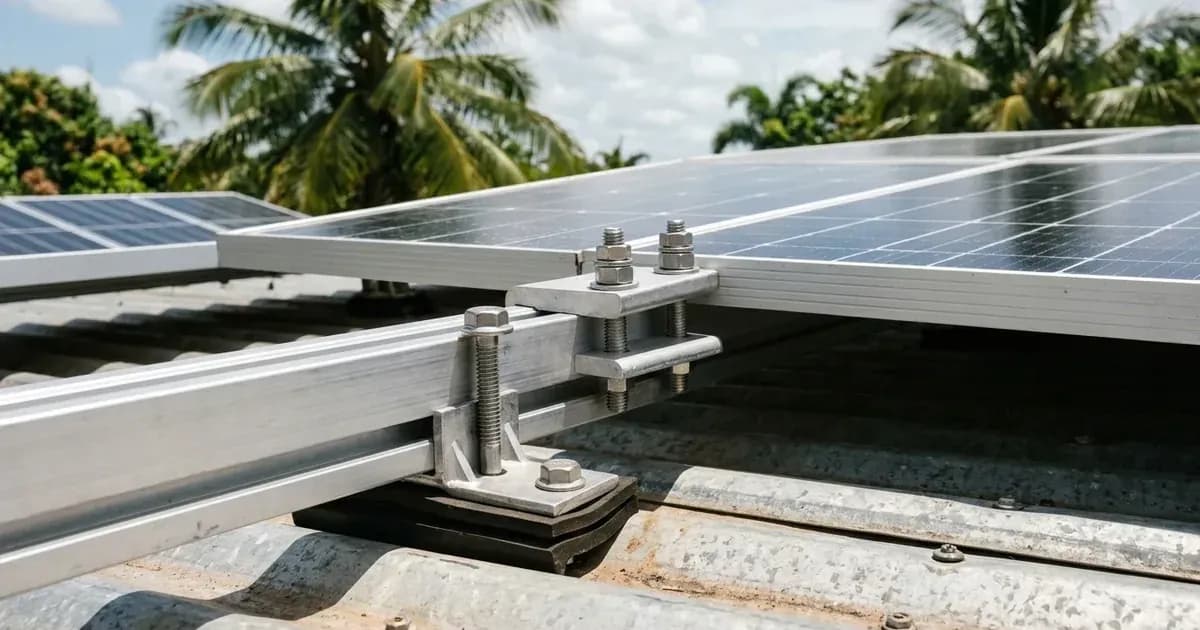
"The NT Deemed to Comply Manual (DTCM) contains approved PV panels support frames and fixings to metal clad roof for use by the building industry in cyclonic regions.""All components, including PV panels support frames and fixings to metal clad roof must be approved by the DTCM and installed in accordance with DTCM drawings"
Installers must verify that mounting rails, mid-clamps, end-clamps, and roof screw fixings match the exact drawing numbers listed in the DTCM register.
Non-Cyclonic Exemptions and Professional Engineering Oversight
In moderate wind environments, simplified administrative procedures apply:
"In non-cyclonic wind regions (regions A and B) building permit exemptions may be gained if the requirements of Building Note 83 and BAC Policy BAC2011/001 are met"
However, where custom tilt legs, ballast blocks, or unlisted roof profiles are used:
"If the above exemptions are not met, an NT registered engineer is required to design the installation and certify the installation with an approved certification form"
Statutory oversight is administered through accredited certifiers:
"In the NT, building certification is overseen by private registered building certifiers.""Building Act 1993 (Section 55 - Building permits)"
Installers seeking technical clarification can consult official regulatory channels:
"For electrical and safety information please contact NT WorkSafe on 1800 019 115 or email AGD.NTWorkSafe@nt.gov.au""Building certification requirements for installing solar PV in cyclonic regions (wind regions C)"
Safety Engineering and Wind Action Calculations
All solar array structural calculations must comply with AS/NZS 1170.2 (Structural design actions - Wind actions) and AS/NZS 5033 (Installation and safety requirements for photovoltaic arrays). Purlin screw embedment depths, timber rafter edge distances, and clamp torque tolerances must be verified on site by licensed tradespersons. Working at heights during high wind conditions poses severe risks and requires full safety harness systems.
Frequently asked questions
Are solar installations in cyclonic regions exempt from building permits?
No. Installation of solar PV panels in Cyclonic regions (region C) requires certification; there are no exemptions to this requirement.
What standard manual governs cyclone-rated solar mounting in the Northern Territory?
The NT Deemed to Comply Manual (DTCM) contains approved PV panels support frames and fixings to metal clad roof for use by the building industry in cyclonic regions.
Who must design non-standard solar mounting systems in cyclonic zones?
If standard exemptions are not met, an NT registered engineer is required to design the installation and certify the installation with an approved certification form.
References
- NT WorkSafe Certification Requirements for Solar PV Panels — accessed 26 August 2026
Related guides
More from schemes, subsidies & financing.