Commercial Rooftop Solar for Shops, Schools, and Mosques: SME Bridge
Updated 2 August 2026 · By SolarNevs Research Desk, Dealer surveys + verified sources · 3 sources · Method ↗
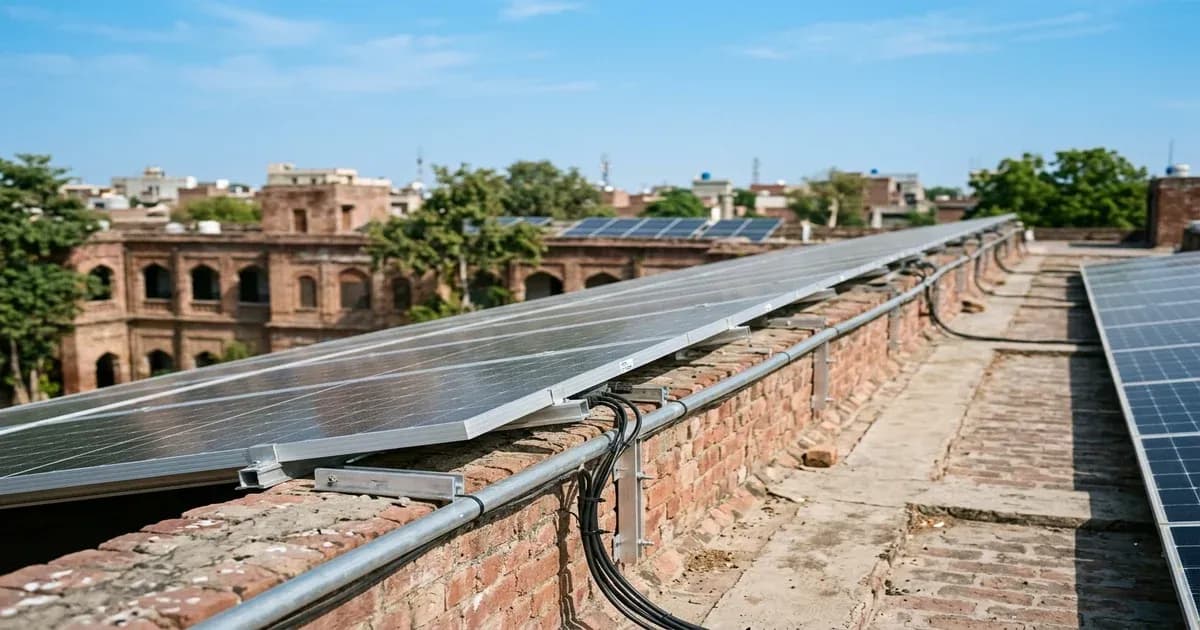
Commercial Rooftop Solar for Shops, Schools, and Mosques - SME Bridge Guide
{/* visual_plan: stat_block */}
Key Takeaways
- Commercial electricity tariffs in Pakistan exceed Rs. 70/kWh (July 2026) for retail shops and SMEs, making commercial rooftop solar highly profitable.
- A 20 kW commercial solar system generates roughly 85 kWh daily, cutting monthly commercial electricity bills from Rs. 180,000 (July 2026) to under Rs. 25,000 (July 2026).
- Mosques and educational institutions qualify for specialized AEDB net metering approval processes and non-profit tariff subsidies.
- Initial capital investment in a 20 kW commercial solar setup is fully recovered within 22 months of regular operation.
Introduction
Commercial enterprises, retail shops, private schools, and community mosques across Pakistan face severe operating stress from high utility electricity tariffs. Installing commercial rooftop solar systems (ranging from 10 kW to 50 kW) allows small and medium enterprises (SMEs) to slash utility overhead costs and lock in predictable, low-cost solar electricity for decades.
Why is commercial rooftop solar essential for Pakistani SMEs?
Commercial electricity consumers in Pakistan pay the country's highest utility tariffs. Commercial billing rates from DISCOs average Rs. 72/kWh (July 2026) during peak hours, supplemented by heavy fixed peak-demand charges and taxation.
For retail shops running air conditioning, private schools operating IT labs, or mosques powering large hall fans and lighting, monthly electricity bills frequently represent the single largest operating expense.
Rooftop solar PV systems convert unused commercial roof space into productive assets. A 20 kW solar array produces approximately 2,550 kWh of clean electricity monthly, directly eliminating expensive commercial grid units.
What are the system specifications and investment requirements?
SME solar installations require heavy-duty three-phase inverters, Tier-1 panels, and durable mounting frames designed for flat commercial concrete roofs.
The system sizing and cost matrix below details technical specifications across common SME capacity ratings:
System Capacity | Target SME Facility Type | Expected Monthly Generation | Estimated System Outlay | Monthly Bill Reduction |
|---|---|---|---|---|
10 kW Three-Phase | Retail Shops & Pharmacies | 1,280 kWh | Rs. 1,180,000 | Rs. 88,000 |
20 kW Three-Phase | Private Schools & Clinics | 2,560 kWh | Rs. 2,250,000 | Rs. 178,000 |
30 kW Three-Phase | Large Mosques & Marriage Halls | 3,840 kWh | Rs. 3,300,000 | Rs. 265,000 |
50 kW Three-Phase | Small Factories & Plazas | 6,400 kWh | Rs. 5,400,000 | Rs. 445,000 |
Figures as of July 2026.
Investing in three-phase commercial solar systems delivers a rapid return on investment, freeing up cash flow for core business growth.
What special provisions apply to schools, mosques, and non-profits?
Educational institutions and places of worship receive specific regulatory considerations under NEPRA net billing frameworks.
Schools operate primarily during daytime hours (8:00 AM to 2:00 PM), matching solar generation curves perfectly. During summer vacations, excess solar generation exported to the DISCO grid creates massive monetary credits that offset winter electricity usage.
Mosques benefit from dedicated community funding drives and simplified AEDB net metering approval pathways, allowing non-profit committees to convert monthly utility bill donations into permanent rooftop solar assets.
What is the financial payback period and lifetime ROI?
A 20 kW commercial solar installation priced at Rs. 2,250,000 (July 2026) generates monthly billing savings of Rs. 178,000 (July 2026).
Dividing total capital cost by monthly savings yields a financial payback timeframe of just 12.6 months. Over a 25-year panel service lifecycle, a 20 kW system generates over Rs. 45,000,000 (July 2026) in cumulative energy value, representing one of the highest-yielding capital investments available to Pakistani business owners.
Call to Action
Contact certified AEDB commercial solar contractors to request an on-site energy audit and customized net billing payback proposal for your enterprise.
Frequently Asked Questions
Can commercial solar inverters operate during daytime load shedding?
Yes, three-phase hybrid inverters equipped with commercial battery banks continue powering business operations seamlessly during grid power cuts.
How long does NEPRA net metering approval take for commercial systems?
Commercial net metering approvals through local DISCOs typically take between 30 and 45 days from initial application submission.
What maintenance is required for commercial rooftop solar panels?
Commercial flat roofs require regular panel cleaning every 2 weeks to clear atmospheric dust and maintain peak energy generation.
References
- nepra.org.pk Source - NEPRA Commercial Net Metering Tariff Rules (Verified)
- pbs.gov.pk Source - Pakistan Bureau of Statistics Commercial Energy Index (Verified)
- aedb.org.pk Source - Alternative Energy Development Board SME Solar Guidelines (Verified)
Frequently asked questions
Can commercial solar inverters operate during daytime load shedding?
Yes, three-phase hybrid inverters equipped with commercial battery banks continue powering business operations seamlessly during grid power cuts.
How long does NEPRA net metering approval take for commercial systems?
Commercial net metering approvals through local DISCOs typically take between 30 and 45 days from initial application submission.
What maintenance is required for commercial rooftop solar panels?
Commercial flat roofs require regular panel cleaning every 2 weeks to clear atmospheric dust and maintain peak energy generation.
References
- NEPRA — accessed 25 July 2026
- Pakistan Bureau of Statistics — accessed 25 July 2026
- AEDB — accessed 25 July 2026
Related guides
More from going electric in pakistan.