Electric Rickshaw Price in Pakistan: Sazgar Rs. 450,000 to Rs.
Updated 2 August 2026 · By SolarNevs Research Desk, Dealer surveys + verified sources · 3 sources · Method ↗
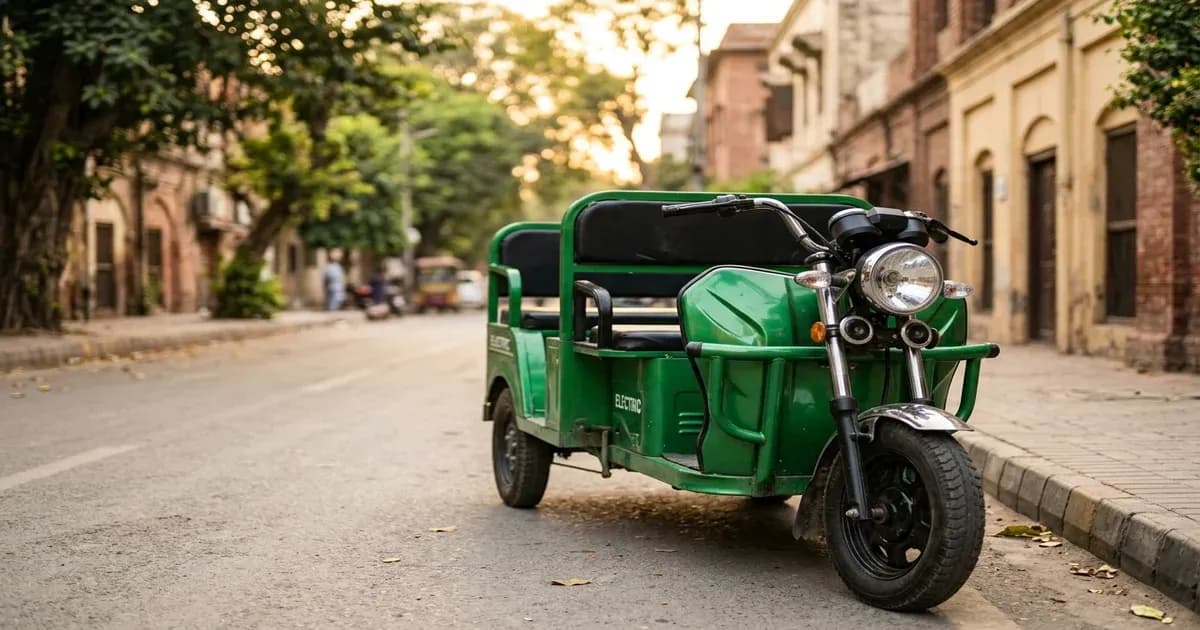
Electric Rickshaw Price in Pakistan - Sazgar Rs. 450,000 to Rs. 650,000 (July 2026) and All Brands
{/* visual_plan: stat_block */}
Key Takeaways
- Sazgar electric rickshaws in Pakistan range in price from Rs. 450,000 to Rs. 650,000 (July 2026) depending on battery chemistry and passenger capacity.
- Lithium Iron Phosphate (LiFePO4) battery models offer 100 km to 120 km single-charge operating range with a 5-year battery operational lifespan.
- Lead-acid electric rickshaw models cost approximately Rs. 380,000 to Rs. 440,000 (July 2026), but require battery replacement every 14 months.
- Operating an electric 3-wheeler reduces daily fuel costs by 75 percent compared to traditional 4-stroke petrol auto rickshaws.
Introduction
Electric rickshaws are rapidly replacing traditional petrol 3-wheelers across urban passenger routes in Pakistan. Offering silent operation, zero direct tailpipe emissions, and massive fuel cost reductions, electric 3-wheelers provide commercial operators superior financial returns.
What are the current electric rickshaw prices across top Pakistani brands?
Prices for commercial electric rickshaws in Pakistan vary based on manufacturer brand reputation, motor power rating, chassis build quality, and battery technology.
Sazgar Engineering Works, Pakistan's market leader in 3-wheelers, manufactures premium electric rickshaws priced between Rs. 450,000 and Rs. 650,000 (July 2026). Other local manufacturers and importers offer budget models starting around Rs. 380,000 (July 2026).
The comprehensive brand price comparison table below details current market options:
Manufacturer & Model | Motor Power | Battery Chemistry | Single Charge Range | Retail Price |
|---|---|---|---|---|
Sazgar E-Auto Passenger | 2.5 kW PMSM | 60V 100Ah LiFePO4 | 110 km | Rs. 580,000 |
Sazgar E-Auto Deluxe | 3.0 kW PMSM | 72V 120Ah LiFePO4 | 130 km | Rs. 650,000 |
Metro E-Rickshaw Standard | 1.8 kW BLDC | 60V 100Ah Lead-Acid | 80 km | Rs. 410,000 |
Crown E-Cargo / Passenger | 2.0 kW BLDC | 60V 100Ah LiFePO4 | 95 km | Rs. 490,000 |
Osaka E-Vehicle Compact | 1.5 kW BLDC | 48V 100Ah Lead-Acid | 70 km | Rs. 380,000 |
Figures as of July 2026.
Lithium-ion models command a higher initial purchase price but deliver significantly longer operational life and lower total cost of ownership than lead-acid alternatives.
What is the difference between Lithium-Ion and Lead-Acid e-rickshaws?
Battery chemistry represents the most critical choice when purchasing an electric rickshaw in Pakistan.
Lead-acid battery packs reduce initial vehicle purchase price by approximately Rs. 120,000 (July 2026). However, lead-acid batteries suffer heavy degradation under Pakistani summer temperatures, requiring full pack replacement every 12 to 15 months at a cost of Rs. 95,000 (July 2026).
By contrast, Lithium Iron Phosphate (LiFePO4) battery packs withstand over 2,500 charge cycles, serving 5 to 7 years of daily commercial use. Lithium batteries also charge 40 percent faster and weigh 60 percent less, improving vehicle hill-climb performance and passenger capacity.
What are the official registration and licensing requirements in Pakistan?
Commercial electric rickshaws in Pakistan must be registered with provincial Excise and Taxation Departments (such as Punjab Excise, Sindh Excise, or KPK Excise).
Registration fees for electric 3-wheelers average Rs. 12,000 to Rs. 16,000 (July 2026), which is lower than registration charges for petrol auto rickshaws. Operators must hold a valid 3-wheeler commercial permit, and vehicles must display official yellow commercial license plates.
How do daily operating expenses compare against petrol rickshaws?
Operating a 4-stroke petrol rickshaw for 100 km consumes roughly 5.5 liters of petrol costing Rs. 1,512 (July 2026) at current fuel prices of Rs. 275/L (July 2026).
By comparison, charging a 6 kWh electric rickshaw battery using residential grid electricity costs Rs. 360 (July 2026) at an average electricity tariff of Rs. 60/kWh (July 2026). Charging from rooftop solar drops fuel expense to Rs. 0 (July 2026). A commercial operator saves over Rs. 30,000 (July 2026) per month in operating expenses by choosing electric.
Call to Action
Visit authorized Sazgar or Metro dealership showrooms in Lahore, Karachi, or Multan to schedule a test drive and review commercial micro-finance options.
Frequently Asked Questions
What is the maximum seating capacity of a Sazgar electric rickshaw?
Sazgar electric passenger rickshaws accommodate 1 driver plus 4 to 5 adult passengers comfortably.
How long does it take to charge an electric rickshaw battery fully?
Lithium LiFePO4 batteries charge in 3 to 4 hours using a 25A fast charger, whereas lead-acid batteries require 7 to 9 hours of slow charging.
Are spare parts readily available for electric rickshaws in Pakistan?
Yes, major manufacturers such as Sazgar, Metro, and Crown maintain local assembly plants in Punjab, ensuring full spare part availability for motors, controllers, and body panels.
References
- edb.gov.pk Source - Engineering Development Board 3-Wheeler Price Index (Verified)
- pbs.gov.pk Source - Pakistan Bureau of Statistics Transport Report (Verified)
- aedb.org.pk Source - Alternative Energy Development Board EV Benchmarks (Verified)
Frequently asked questions
What is the maximum seating capacity of a Sazgar electric rickshaw?
Sazgar electric passenger rickshaws accommodate 1 driver plus 4 to 5 adult passengers comfortably.
How long does it take to charge an electric rickshaw battery fully?
Lithium LiFePO4 batteries charge in 3 to 4 hours using a 25A fast charger, whereas lead-acid batteries require 7 to 9 hours of slow charging.
Are spare parts readily available for electric rickshaws in Pakistan?
Yes, major manufacturers such as Sazgar, Metro, and Crown maintain local assembly plants in Punjab, ensuring full spare part availability for motors, controllers, and body panels.
References
- Engineering Development Board — accessed 25 July 2026
- Pakistan Bureau of Statistics — accessed 25 July 2026
- AEDB — accessed 25 July 2026
Related guides
More from going electric in pakistan.